
How Daily Listening, Targeted Supplies, and Home-School-Community Triad
Stop Post-Crisis Dropout in Surin
Beyond physical reopening, true educational recovery along the Thai–Cambodian border requires healing hidden trauma, relieving family financial hardship, and uniting schools with local communities so every child stays safe, supported, and in class.
When conflict erupted along the Thai–Cambodian border in 2025, schools in rural Surin faced prolonged, indefinite shutdowns on two separate occasions. For months, education existed in evacuation centers—improvised spaces where classrooms were invented day by day amid sirens and constant displacement. Yet, as the noise of conflict faded in 2026, educators on the frontlines encountered a quiet, far more complex crisis: not until physical facilities reopened did the invisible burdens of emotional instability and economic shock fully surface.
Beyond Safety: Where Educational Recovery Begins
Crises rarely end with physical safety—this is especially true for vulnerable rural learners. Structural disruptions linger, threatening learning continuity long after emergencies pass. At Nikom Sang Ton Aeng Prasat 2 School in Kap Choeng District, local teacher Saowanee Suksaensri—known as “Teacher Nudee” and a recipient of Equitable Education Fund (EEF) Thailand’s Homegrown Teacher scholarship—exemplifies how post-crisis recovery must prioritize emotional grounding over textbook delivery. “Appearances are not yet reality,” Teacher Nudee reflects on the reopening. “We see children running around, eating lunch in the canteen, and doing activities—the picture every teacher holds of what a school should be.”
Hidden Crisis: When Physical Reopening Masks Structural Disruption
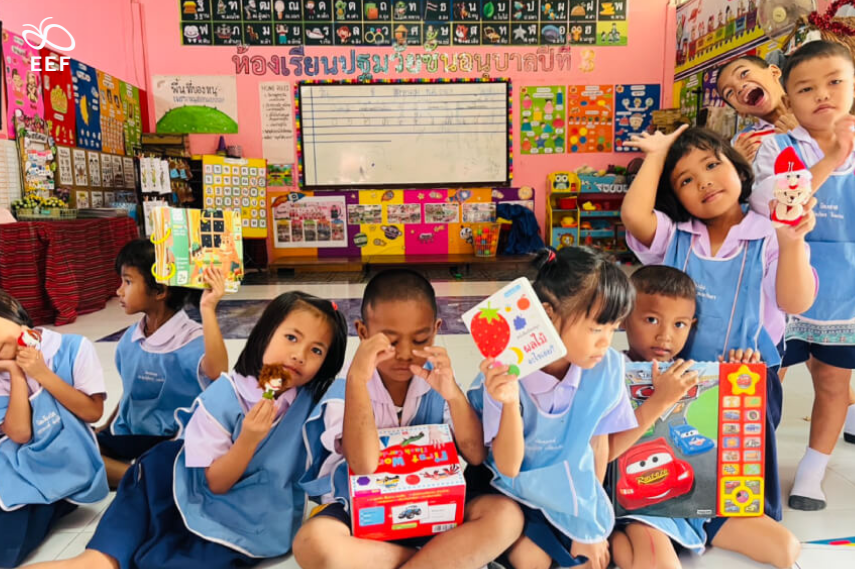
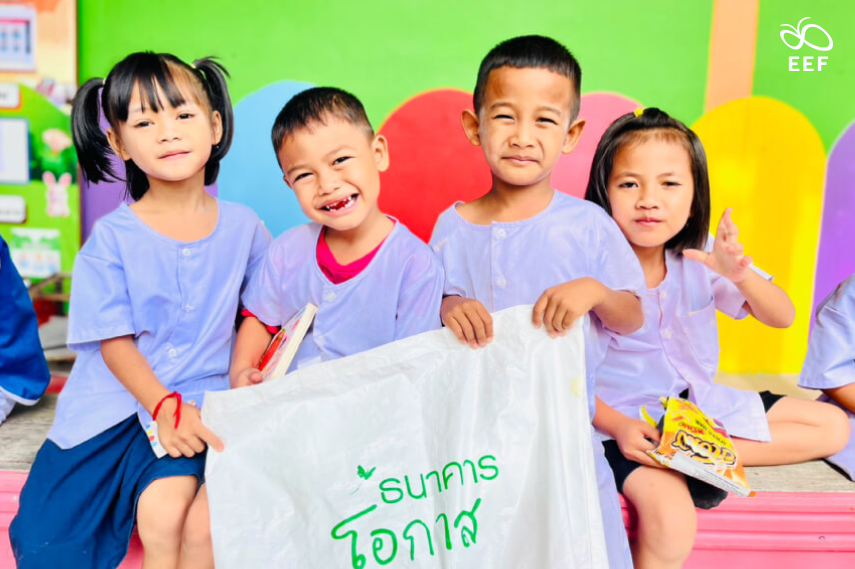
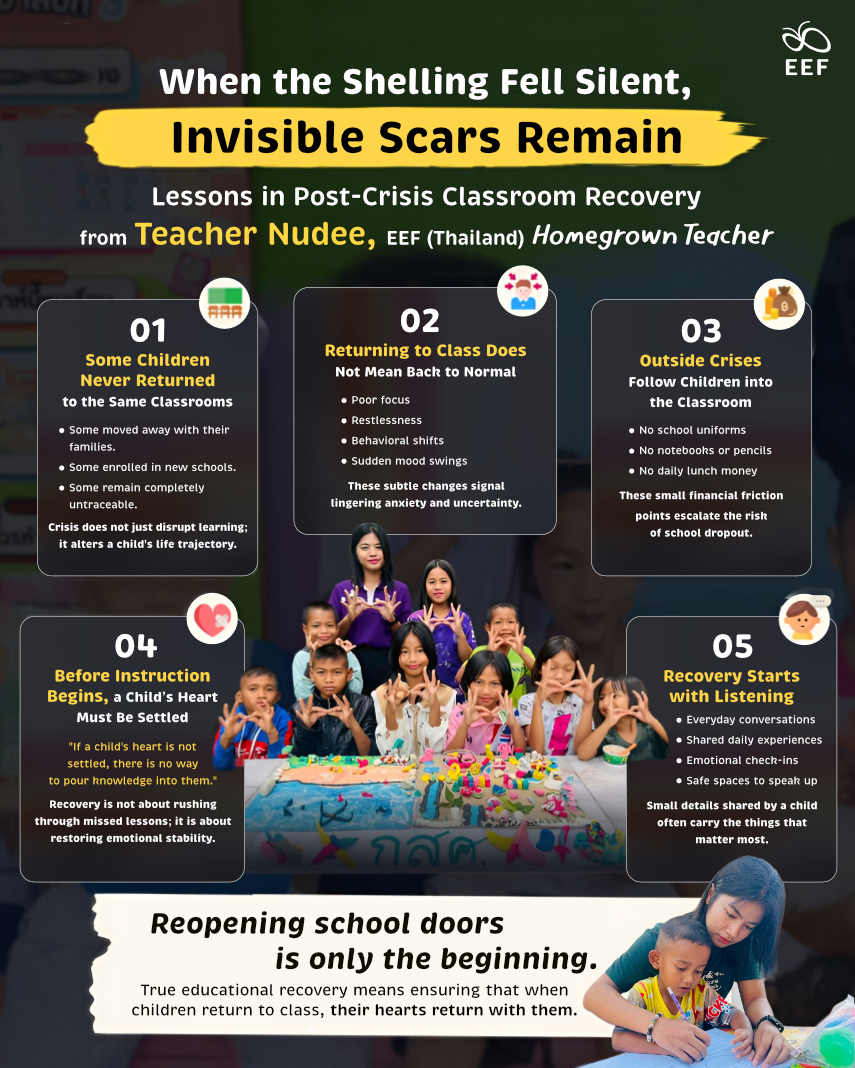
Active playgrounds and daily lunches suggest a return to routine, yet beneath the surface, much has changed. At Teacher Nudee’s school, student enrollment dropped sharply from 170 to 120 upon reopening. While some displaced children successfully transferred to new schools elsewhere, others vanished from registration records into unverified educational status. Seldom do physical doors reopen without revealing deeper household strain. “Many of our students live with grandparents who have no regular income, and acute shortages of supplies have only worsened,” Teacher Nudee explains. “Not only do children arrive without uniforms or daily allowance, but these small friction points—coupled with emotional distress stemming from disrupted home lives—also accelerate their risk of dropping out.
Teachers: When Healing Precedes Instruction
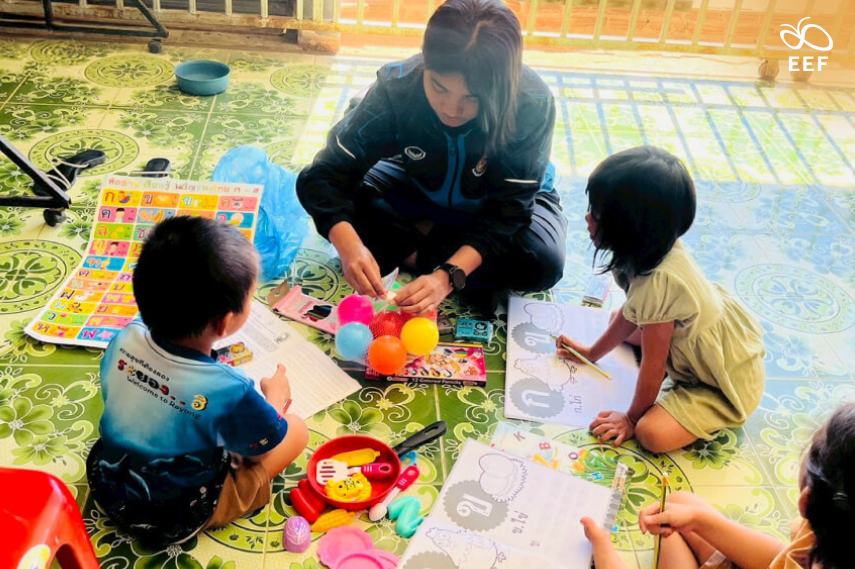
“If a child’s heart is not settled, there is no way to pour knowledge into them,” Teacher Nudee emphasizes, drawing on months of teaching in evacuation shelters. Each school day begins not with standard academic lectures, but with structured listening circles where students express daily feelings and domestic concerns without judgment. These micro-narratives serve as diagnostic indicators; teachers spot household distress, food insecurity, and trauma early. By actively listening, educators convert the classroom into a safe harbor, intervening long before temporary distress turns into permanent withdrawal.
Material Supports: Tangible Anchors of Belonging
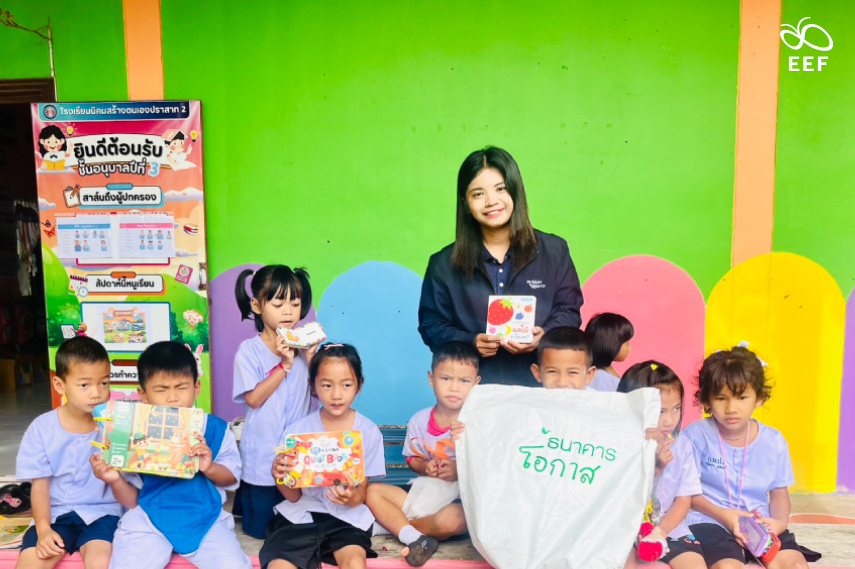
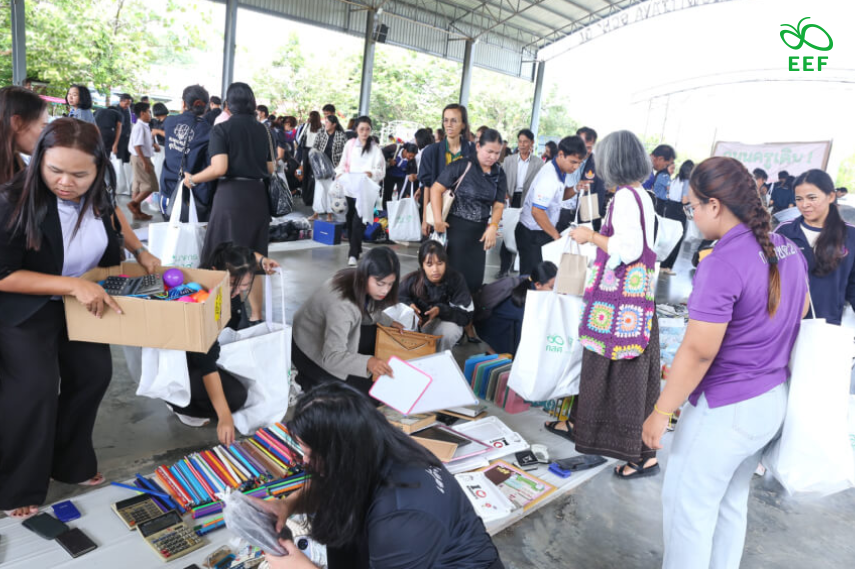
Addressing educational equity requires tangible resources alongside psycho-social support. Setting out on her motorcycle before dawn, Teacher Nudee traveled over 40 kilometers to join educators from more than 70 remote schools at Cheuphloeng Wittaya School in Prasat District. Organized under the Opportunity Bank and Thanon Kru Dern (Teachers’ Walk) initiatives by EEF (Thailand) and civil society partners, the event enabled teachers to select targeted supplies for their students. Not useless are these material supports; rather, they serve as vital anchors that restore dignity and belonging. “These items provide tangible encouragement as we all work to regain our footing,” Teacher Nudee adds.
Ecosystem Recovery: Connecting Home, School, and Community
Sustaining learning continuity requires an integrated triad: school, home, and community must align. Trauma-informed care restores cognitive readiness, targeted supplies prevent economic dropout, and active community tracking creates re-enrollment pathways for missing learners. “The reopening of school doors is not an endpoint,” Teacher Nudee stresses. “Our ongoing mission is to gradually help children believe once again that the classroom is a secure sanctuary where they are heard, supported, and ready to move forward.”
A Pathway Forward for Border Educational Equity
True recovery builds systemic capacity to heal, track, and protect vulnerable learners under the “All for Education” framework. “Educational recovery cannot simply mean catching up on missed lessons,” Teacher Nudee observes. “We must build stability together through school-home-community partnerships so that not only the children return to the classroom, but their hearts return with them.”
For EEF (Thailand), recovery along the Thai–Cambodian border means more than reopening the schools that conflict forced to close. It means connecting schools, families, and communities to restore children’s sense of safety and agency, ease the financial pressures threatening their education, and reconnect displaced learners with learning—so that the disruption that began amid sirens and evacuation does not become lasting educational exclusion after the conflict falls silent.
Source: