
Why Real-World Learning Matters at the Transition Beyond Lower Secondary School
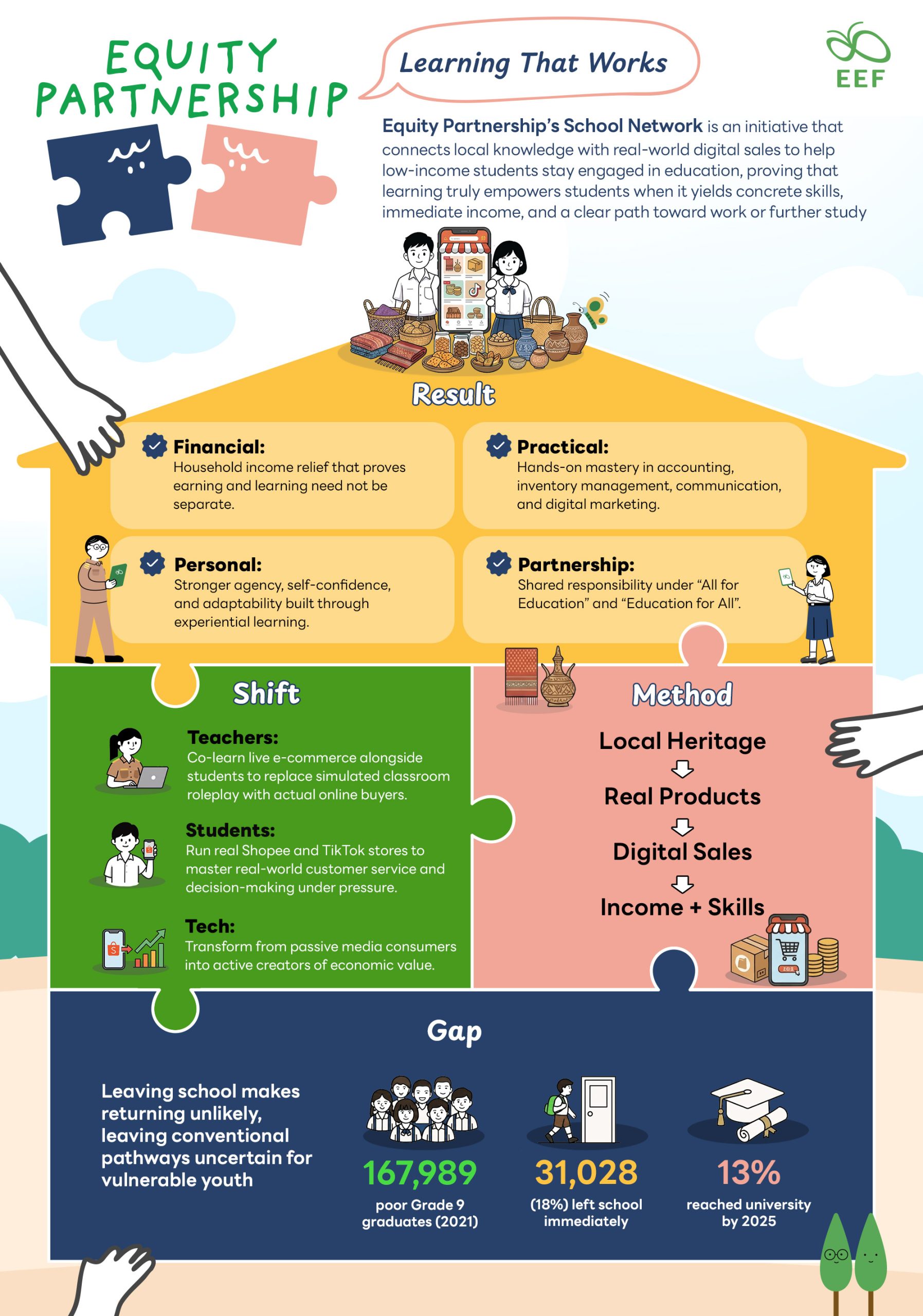
Equity Partnership’s School Network is an initiative that connects local knowledge with real-world digital sales to help low-income students stay engaged in education, proving that learning truly empowers students when it yields concrete skills, immediate income, and a clear path toward work or further study.
For many students, completing Grade 9 opens the way to further study; for others, that pathway becomes uncertain, especially for those from the poorest households. Among 167,989 such students who completed Grade 9 in the 2021 academic year, Equitable Education Fund (EEF) Thailand found no record of further education for 31,028, or 18%. By 2025, a mere 13%—or 21,921—had entered higher education through the TCAS admissions system. Rarely do these figures reveal the entire picture of a young person’s life, yet they starkly highlight a crucial question: how can learning remain relevant when conventional paths fade—especially when leaving school makes returning far less likely?
Equity Partnership: When Local Knowledge Becomes Learning
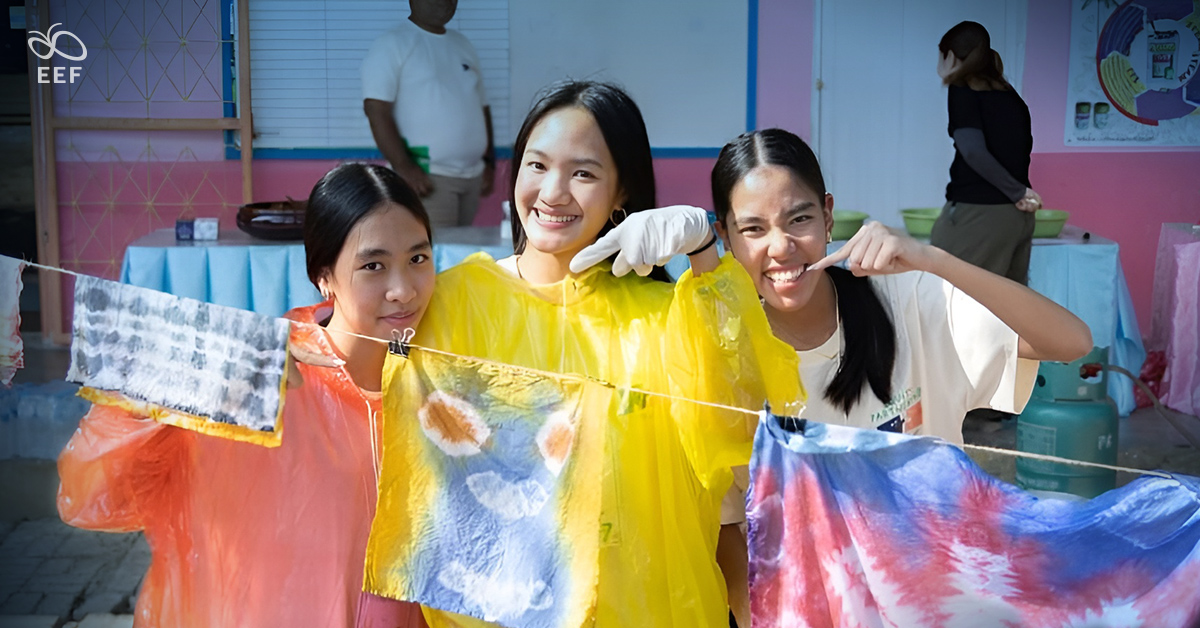
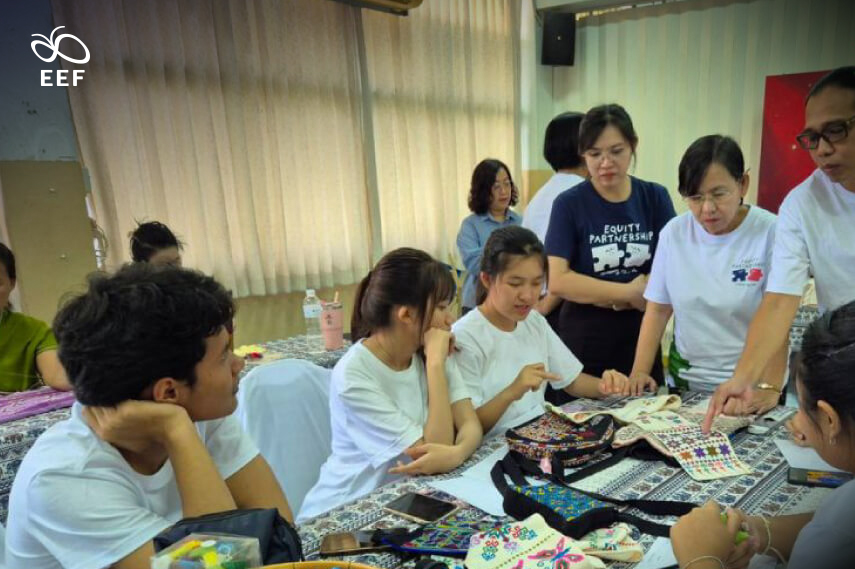
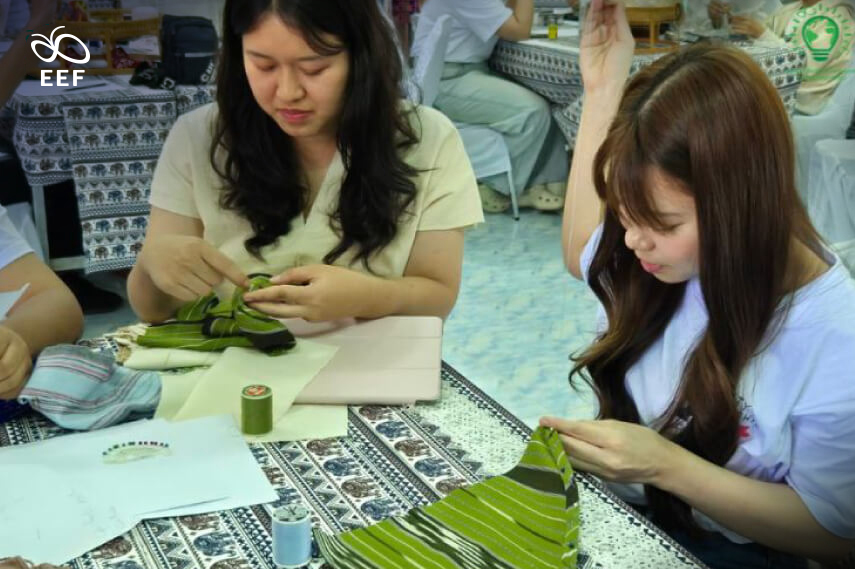
From 2019 to 2025, Equitable Education Research Institute (EEFI) built the Equity Partnership’s School Network (EP). This project paired remote opportunity-expansion schools with international institutions to design hands-on, student-centered curricula. Rather than keeping instruction inside classroom walls, participating schools invited students to turn regional heritage into commercial products. Students then built online storefronts to market these items and return sales revenue directly to their campuses. Not only was the merchandise a tangible output, but the collaborative design process actively connected academic lessons to community assets and practical career trajectories.
Teachers: When Teaching Requires Learning Again
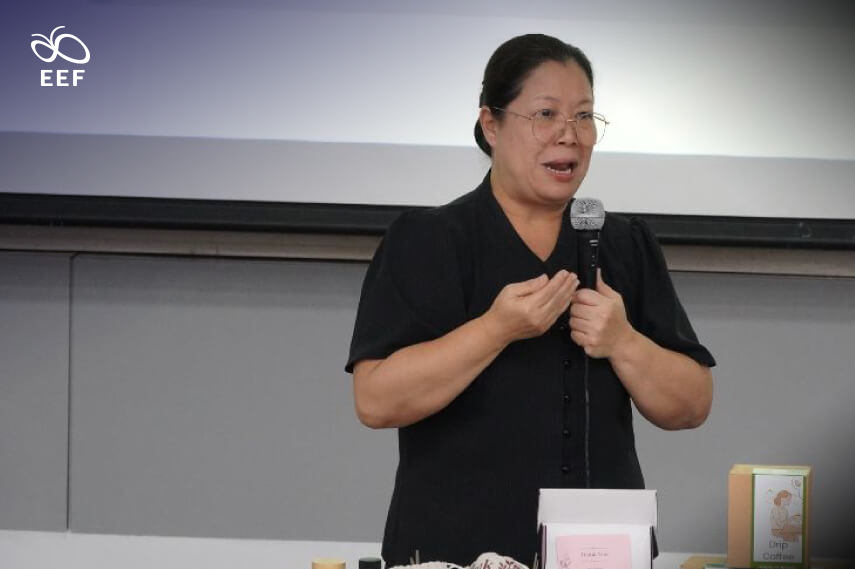
At Mae Moh Wittaya School, project teacher Thatsuang Techakaew—known as Teacher Yui—initially expected the program to end like typical assignments—with a completed activity and a finished product. Soon came the realization that she had to master new skills alongside her students—from photographing products and managing a storefront, to comparing competing products and responding to problems as they arose. Teaching, in turn, became an ongoing exercise in shared learning.
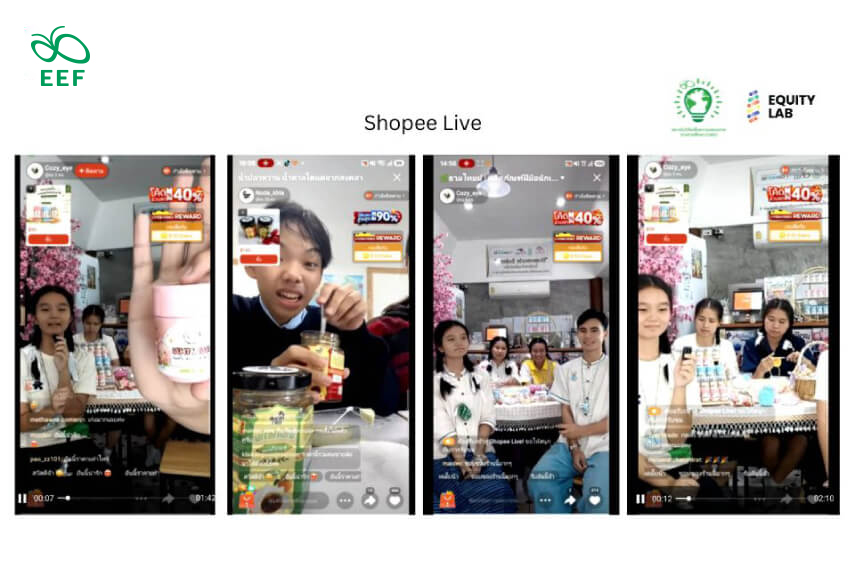
She integrated these live operations straight into her vocational curriculum. Replacing simulated sales to a limited school audience with actual online buyers forced young learners to handle real-world challenges on the spot. “The most valuable part of this project is not just the final product itself,” noted Teacher Yui, “but the learning and growth throughout the process.” The curriculum thus became an active testing ground where ideas were tried, revised, and proven in real time.
Students: When Earning Requires Learning Anew
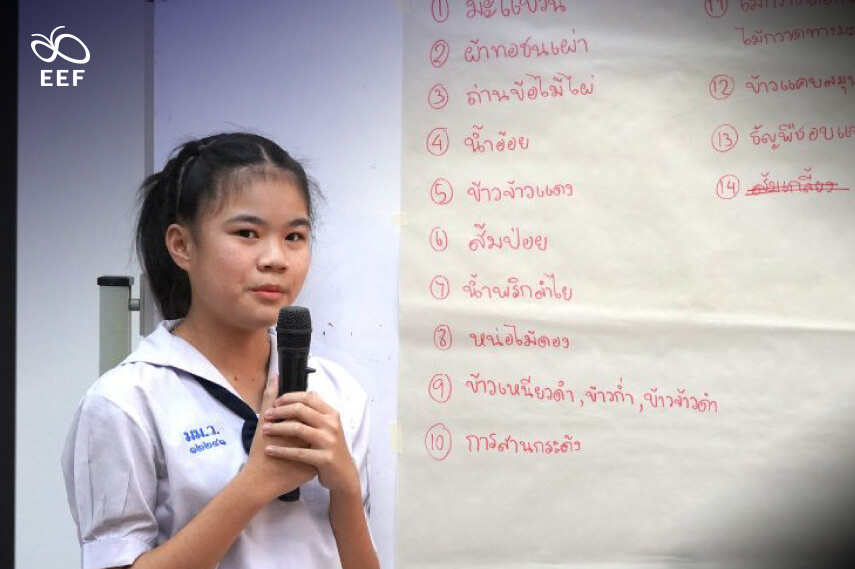
For Grade 11 classmates Oen and Phueng, operating a digital marketplace yielded insights no lecture could replicate. Through manufacturing products, managing stocks, keeping basic accounts, and completing real sales, they developed practical skills in customer communication, financial management, and stress management, all while seeing how classroom theory translates directly into work and income. Revenue from these student-run sales can ease immediate household financial pressures, showing that learning and earning need not be separate.
“I think my communication skills improved,” stated Oen, after regularly responding to prospective buyers across various sales booths. Added Phueng: “I gained the most from learning to sell products on Shopee,” emphasizing how she learned to navigate unexpected hurdles calmly. It is through practical experience that young people develop a genuine sense of agency over their skills, choices, and future livelihoods—benefits that extend beyond financial relief alone.
Experience: When Skills Develop Together
The network offers more than simple income-generating activities: it places rural students in authentic business scenarios involving product design, customer service, sales, and direct accountability. Through making and selling local products, learning connects naturally to daily life, community resources, and viable economic opportunities.
This experiential cycle systematically builds essential 21st-century capabilities—critical thinking, collaboration, creative problem-solving, communication, financial literacy, and digital literacy. Students reflect on unsuccessful sales pitches or shifting customer demand, then adjust their pricing, refine their presentation, and optimize their use of platforms. Technology ceases to be something they merely consume, transforming instead into a powerful engine for economic self-reliance.
Partnership: When Opportunity Is Shared
Equity Partnership’s School Network rests on two core principles: “All for Education” calls upon universities and corporate allies to expand learning avenues, while “Education for All” ensures every child develops capabilities beyond conventional textbooks. Partners such as Thammasat University and Sea (Shopee) provided practical tools and expertise that students instantly put to work. The ultimate measure of success extends far beyond total sales volume; paramount is whether students uncover their core strengths, build resilience through repetition, and secure a viable path forward—with teachers and partners learning how to support that step alongside them.
This model advances EEF’s (Thailand) mission by ensuring that the transition beyond lower secondary school does not become a closing of doors for young people facing economic disadvantage. By drawing on local wisdom to develop marketable products and conducting real digital-commerce transactions, participants gain practical skills, confidence, and evidence of what they can do. The value of this learning lies not in revenue alone, but in helping young people see viable routes forward: toward a self-reliant income, a further education, or a combination of both. In this way, practical learning keeps possibility in view when conventional educational pathways become uncertain—and helps young people build the agency to shape a more self-reliant future.