
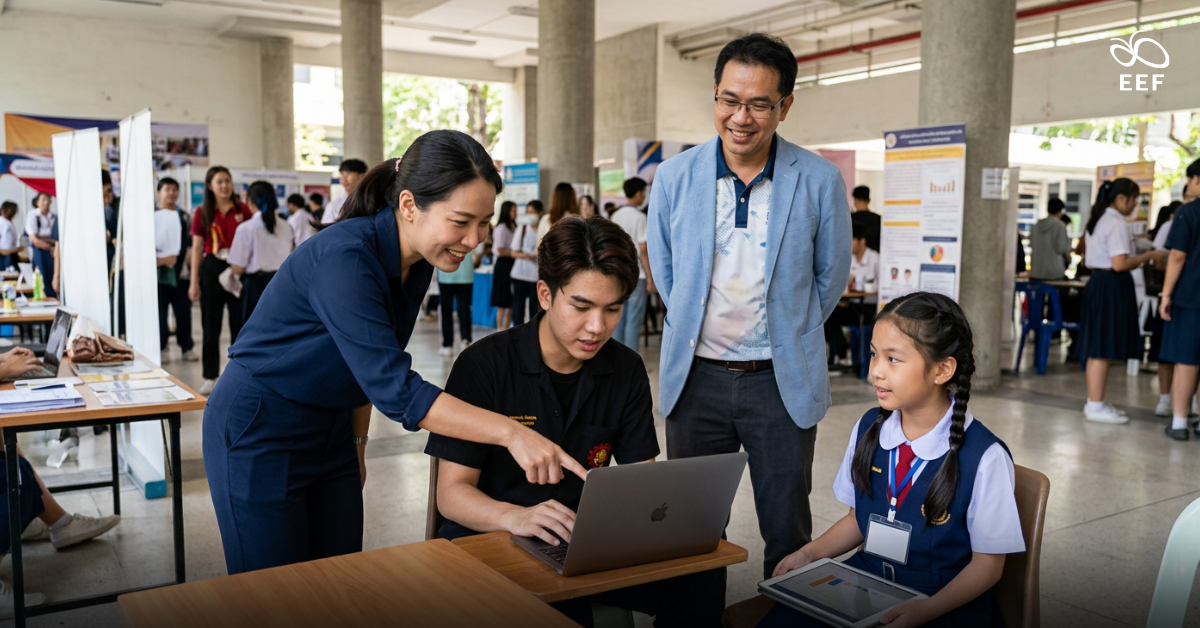
How Hope across Generations Can Be Restored through Data-Driven Equity, Flexible Credentials, and Structural Safety Nets
Intergenerational hope is restored only when these systems bridge urban-rural digital divides, protect human dignity against AI displacement, and guarantee every age group a clear path toward lifelong economic security.
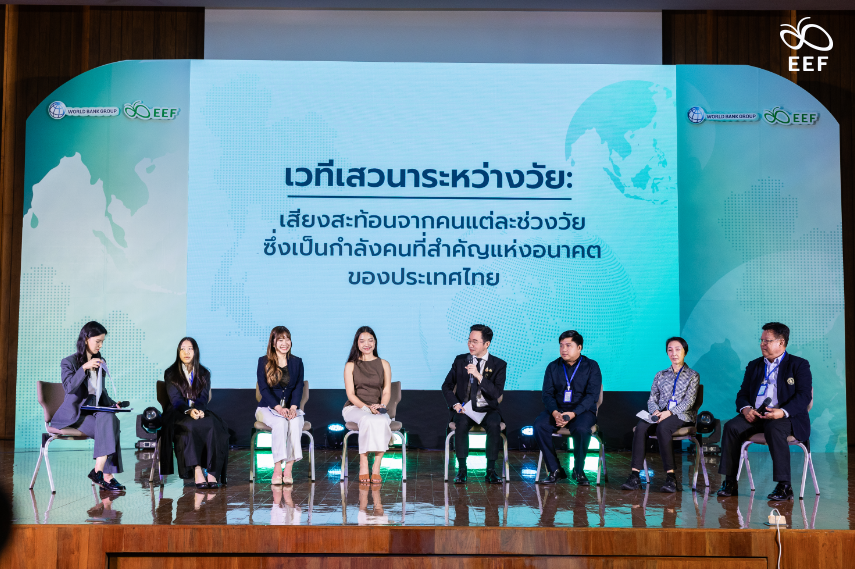
35 years after hosting global finance leaders in 1991, Bangkok once again prepares for the upcoming World Bank Group Annual Meetings—this historic milestone demands bold vision. To meet this moment, Equitable Education Fund (EEF) Thailand, Office of the Vocational Education Commission (OVEC), and World Bank signed a landmark five-year MOU at the High-Level Policy Forum 2026 to modernize vocational education, leverage data-driven research, and build an inclusive lifelong learning ecosystem capable of propelling Thailand toward high-income status by 2037.
Thailand faces a critical development inflection driven by demographic shifts, rapid AI adoption, and evolving market requirements. In response, EEF (Thailand) brought together representatives spanning five generations to examine systemic educational challenges, demonstrating that fundamental human dignity and economic security remain the ultimate measures of equity as key stakeholders share reflections to inform policy dialogue and targeted interventions.
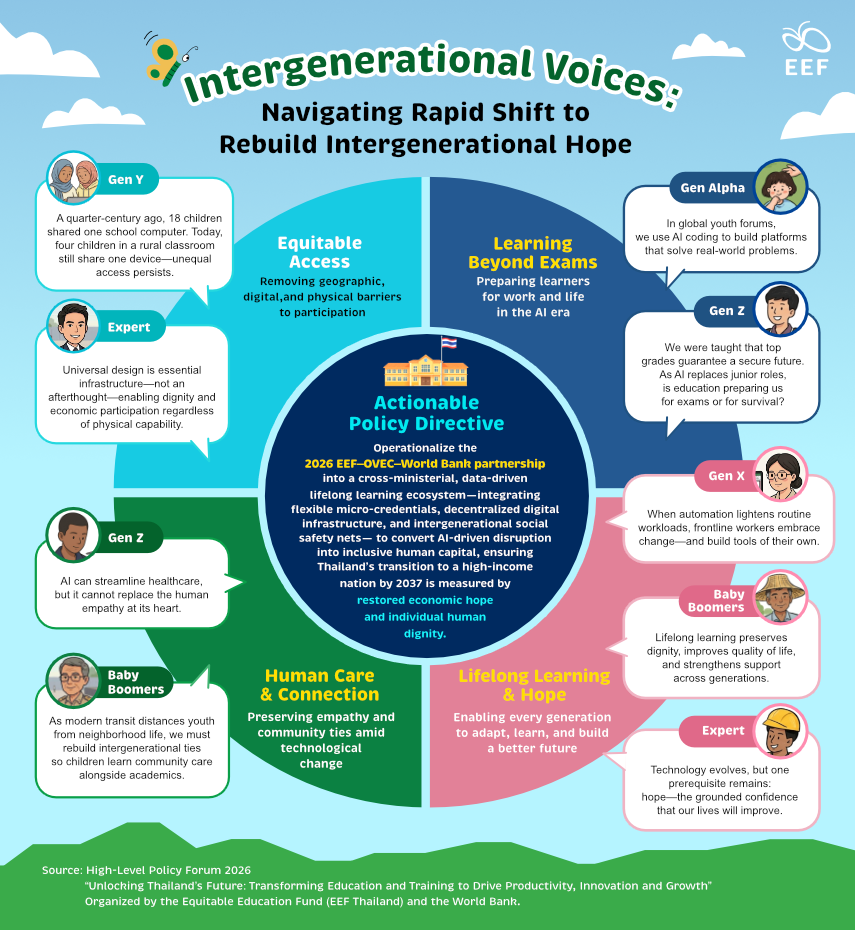
Intergenerational Voices: Navigating Rapid Technological and Societal Shifts
At the High-Level Policy Forum 2026, the youngest cohorts, represented by Gen Alpha and Gen Z, demanded learning with real-world application. Not only do these digital natives encounter AI early, but they also call for critical technology literacy and meaningful pathways into work—foundations needed to narrow the widening divide between tech-empowered youth and those excluded by unequal digital access, particularly beyond urban centers.
Experience across Gen Y, Gen X, and Baby Boomers shows that adaptability requires structural backing. Hardly ever do mid-career workers, especially in rural areas, thrive under rigid, obsolete training modules; instead, they succeed when flexible, locally accessible learning pathways pair practical automation tools with analytical problem-solving rooted in daily operational realities. Such support does more than sustain employment: it protects dignity through transition, strengthens confidence across generations, and keeps technological progress connected to care, community, and a credible sense of hope.

Intergenerational Mandate: Human Dignity Beyond Technological Disruption
Entry-level positions are contracting rapidly, with AI integration shrinking traditional analyst roles, forcing young learners to question whether standard academic metrics guarantee real-world economic survival. However, human-centered professions like healthcare demonstrate that technology cannot replace relational empathy, moral reasoning, or personal connection. Integrating failure-tolerant training into formal curricula ensures technical efficiency never overshadows core human values, particularly as demographic change reduces demand for children’s services and expands long-term care needs.
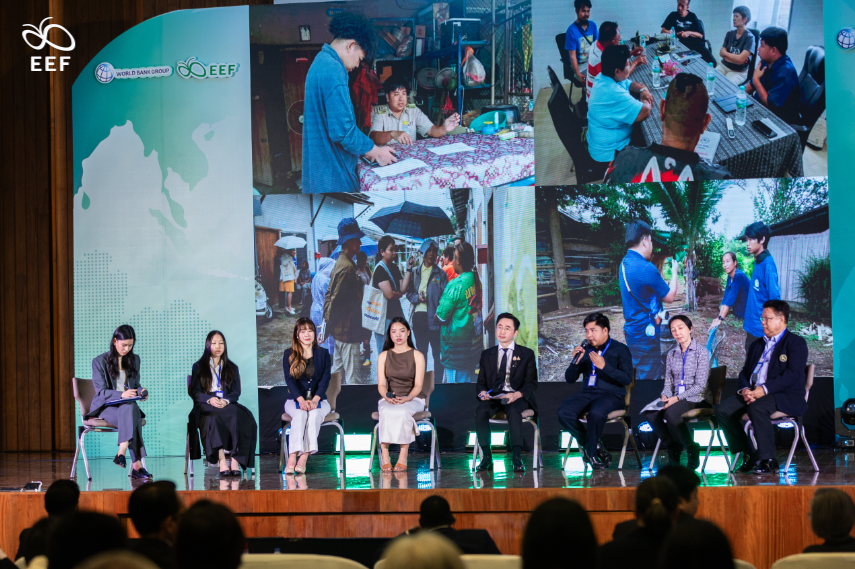
Systemic Disparities and Workforce Upskilling: Bridging the Regional Divide
Decades of underinvestment leave rural schools struggling with outdated hardware and low computer-to-student resource gaps. Addressing this persistent disparity requires public policy that treats digital access and universal design as essential civic utilities, allowing every student to build foundational literacy regardless of background or physical ability.
Workplace adoption relies on clear value; seldom do frontline employees resist new digital systems when tools demonstrably reduce routine workloads and remove operational anxiety. Combining practical upskilling with root-cause problem-solving equips workers to navigate shifting industrial demands while securing personal financial mobility and long-term resilience.

Lifelong Learning: Connecting Experience with Future Policy Frameworks
Nonetheless, relational ties protect communities: preserving intergenerational mentorship counters social isolation while grounding rapid technological progress in mutual care. Policy must therefore recognize non-formal achievements through unified qualification frameworks, including the Thailand Professional Qualification Institute (TPQI), alongside portable credit banks that enable experienced individuals to re-enter formal education at any career stage.
As careers increasingly extend across roles, sectors, and life stages, occupational labels must also become flexible. Static job titles no longer reflect contemporary working lives; adaptive learning ecosystems aligned with global equivalency standards must therefore combine personalized instruction with credit-recognition platforms, allowing citizens to upgrade their skills throughout their working lives.
Policy Synthesis: Structural Alignment for Equitable Human Capital
Ultimately, national strategies require cross-ministerial alignment. Linking real-time data tracking for out-of-school children and youth directly to social welfare, healthcare, and employment support systems guarantees that no learner falls through the cracks.
Targeted investments create clear economic pathways. Not without coordinated public policy, universal access, and portable credentials can a nation turn its education system into an engine for sustainable growth. Through its Thailand Zero Dropout Plus (TZD+) initiative, EEF (Thailand) uses local data and community partners to find children and young people who have left school, then helps them return through learning, skills training, or work pathways. It shows how the 2026 MOU can turn modern vocational education into a lifelong system: people can gain skills, earn recognised credentials, and return to learning when their lives or work change.
Source:
High-Level Policy Forum 2026
“Unlocking Thailand’s Future: Transforming Education and Training to Drive Productivity, Innovation and Growth”
Organized by the Equitable Education Fund (EEF Thailand) and the World Bank.