
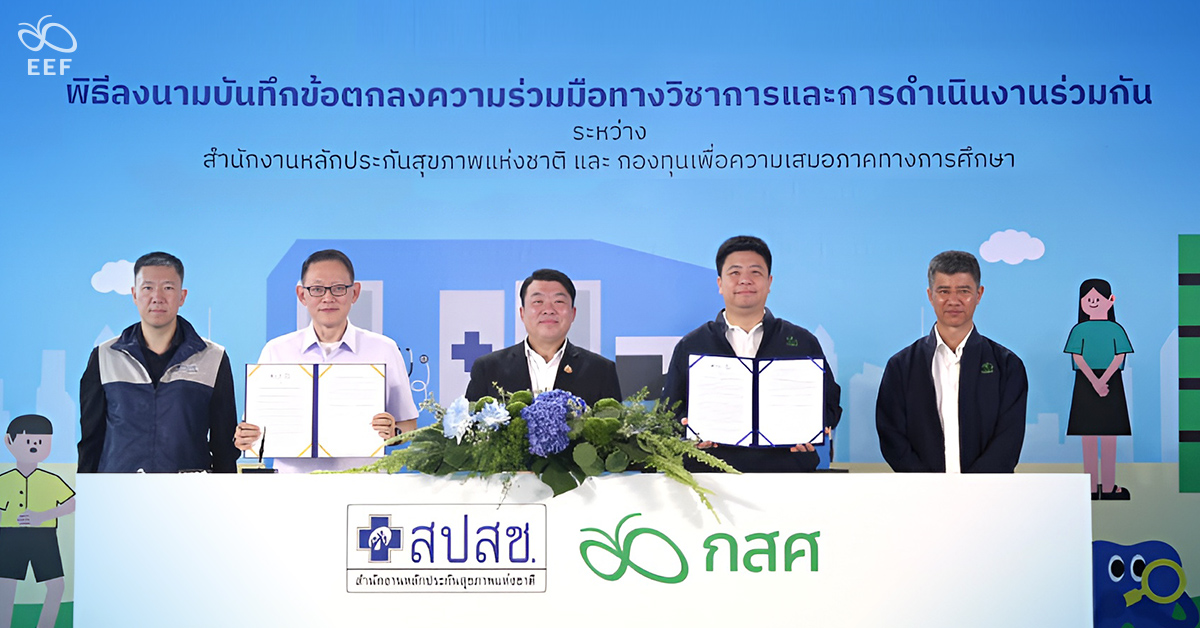
Why Educational Equity Requires Proactive Healthcare Delivery
Healthcare access is dropout prevention, realized only when a child’s physical and mental health are actively secured so they can learn.
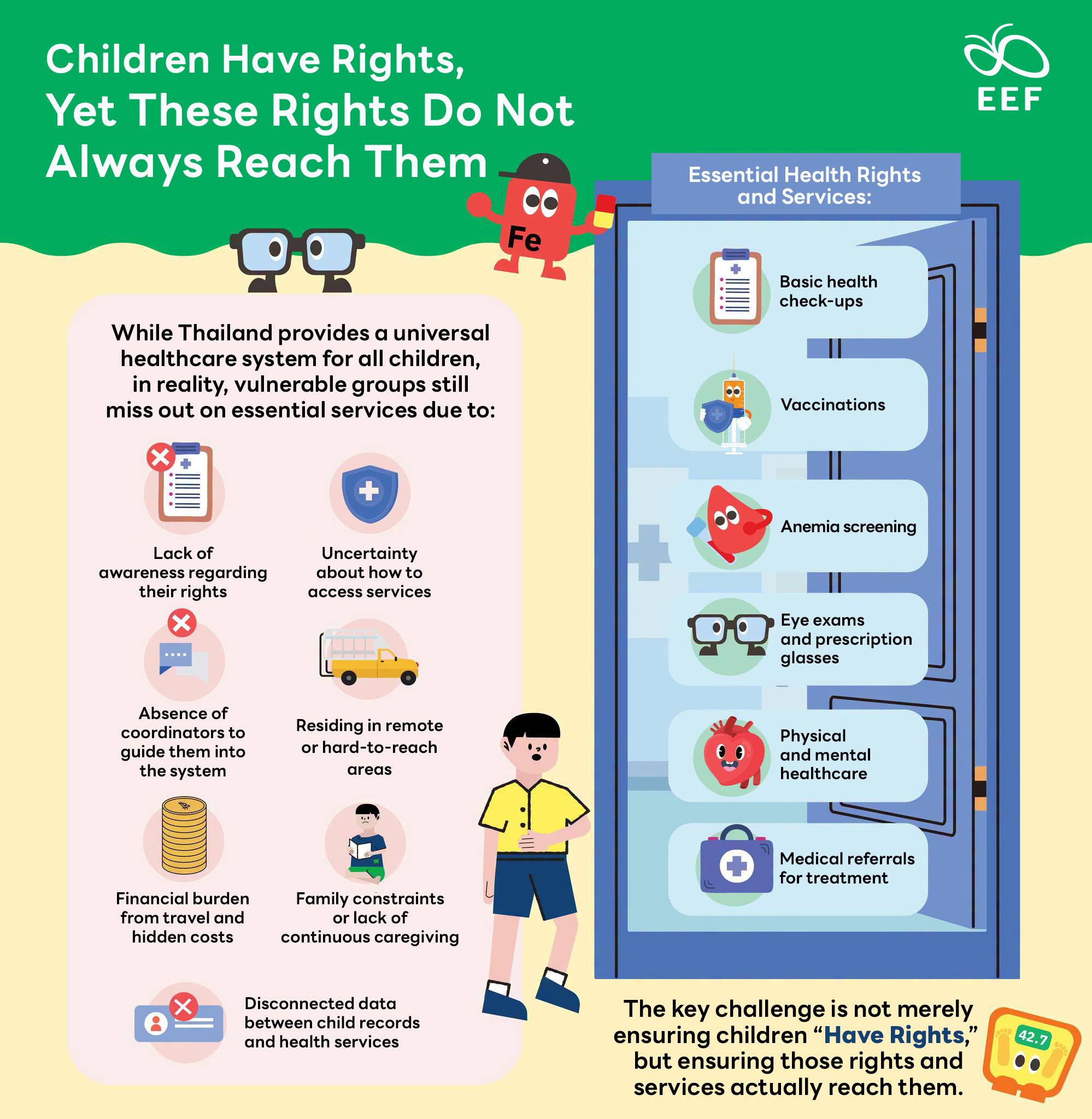
In Thailand, universal health coverage is guaranteed on paper; yet unmet medical needs persist among vulnerable learners—a structural gap not in entitlement, but in reach. For the Equitable Education Fund (EEF) Thailand, the diagnosis is clear: educational exclusion begins long before a child leaves school; it starts with untreated health constraints that quietly accumulate until academic disengagement becomes irreversible, directly undermining SDG4 by withholding the basic physical conditions required for equitable learning.
Invisible Barriers: When Health Suppresses Learning Before It Begins
Physical barriers to learning are often invisible: a child who cannot see the blackboard is locked out; another with iron deficiency anemia lacks the energy to focus; the other in dental pain withdraws from constant discomfort. These low-cost and preventable conditions cause an “internal dropout”—leaving students physically present, but functionally excluded. When we fail to treat these basic physical needs, we permanently drain our country’s potential.
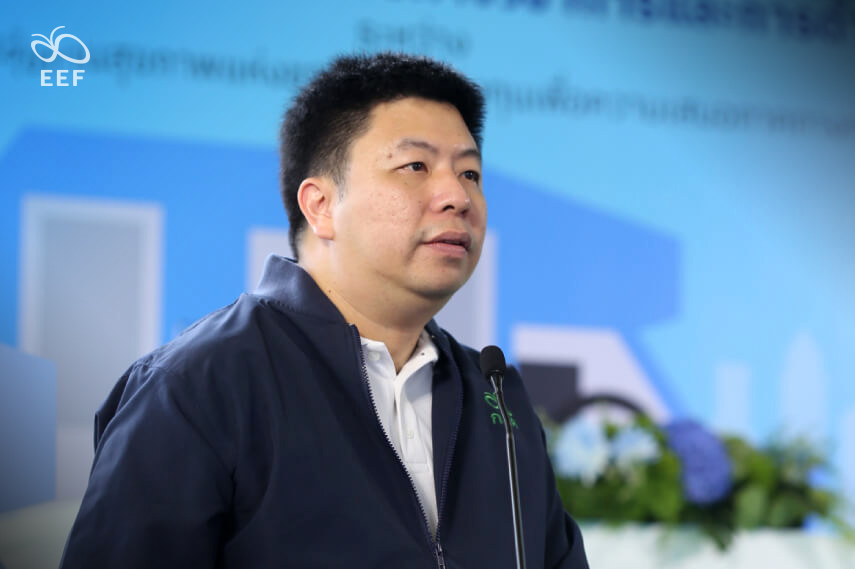
Data highlights the scale of this quiet exclusion. Among 1.39 million students from the poorest households, preventative care is highly uneven, with nearly half of all recorded services concentrated in basic childhood immunizations. Meanwhile, among the 600,000 out-of-school children and youth (OOSCY), healthcare access is even lower and narrower, with critical interventions—such as vision correction—reaching less than 1% of those in need. “Bringing a child back to learning does not start in the classroom; it starts by ensuring they have the physical health and well-being to be ready to learn in the first place,” emphasized Dr. Kraiyos Patrawart, Managing Director of EEF (Thailand).
From Passive Systems to Active Reach: When Data Becomes the Delivery Mechanism
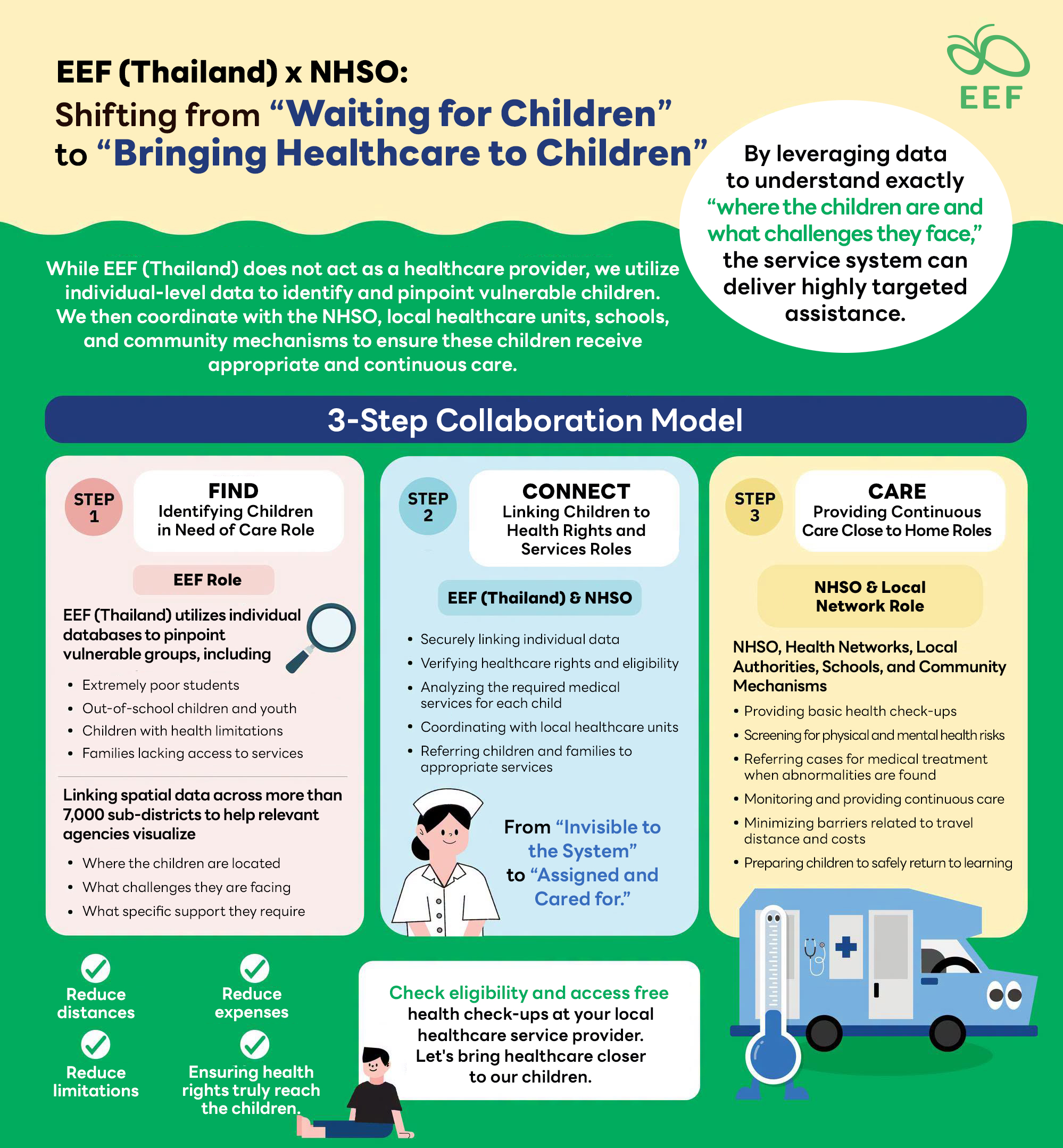
Traditional healthcare models fail where vulnerability is highest; rarely do families in fragile, remote, or unstable environments have the time, money, or information to seek out services. To bridge this gap, EEF (Thailand) and the National Health Security Office (NHSO) have built a coordinated 3-step data-driven pipeline to bring healthcare directly to the child.
Closing the Access Gap: When Rights Do Not Translate Into Outcomes
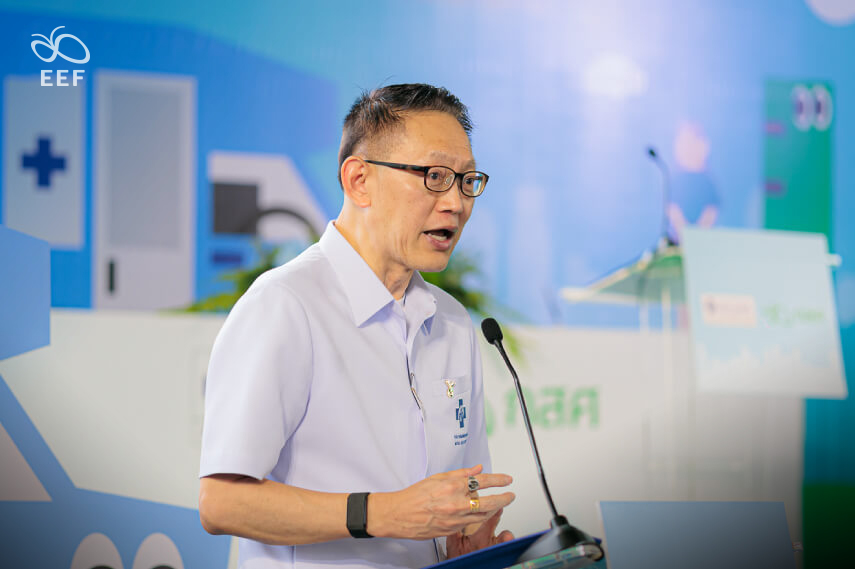
Rights alone do not guarantee outcomes. The gap between theoretical “coverage” and physical “access” is where educational inequality concentrates, and only active, targeted outreach can close it. A recent six‑month pilot of this integrated system demonstrates what becomes possible when rights are turned into reach: more than 42,000 students were screened, with over 14,000 identified with visual impairments and provided corrective glasses through coordinated service channels. “When we identify and address health issues early, we stop them from becoming barriers that steal a child’s confidence, clearing the path for them to reach their full potential,” noted Dr. Jadej Thammatacharee, Secretary-General of NHSO.
Thailand Zero Dropout Plus: When Systems Converge to Prevent Exclusion
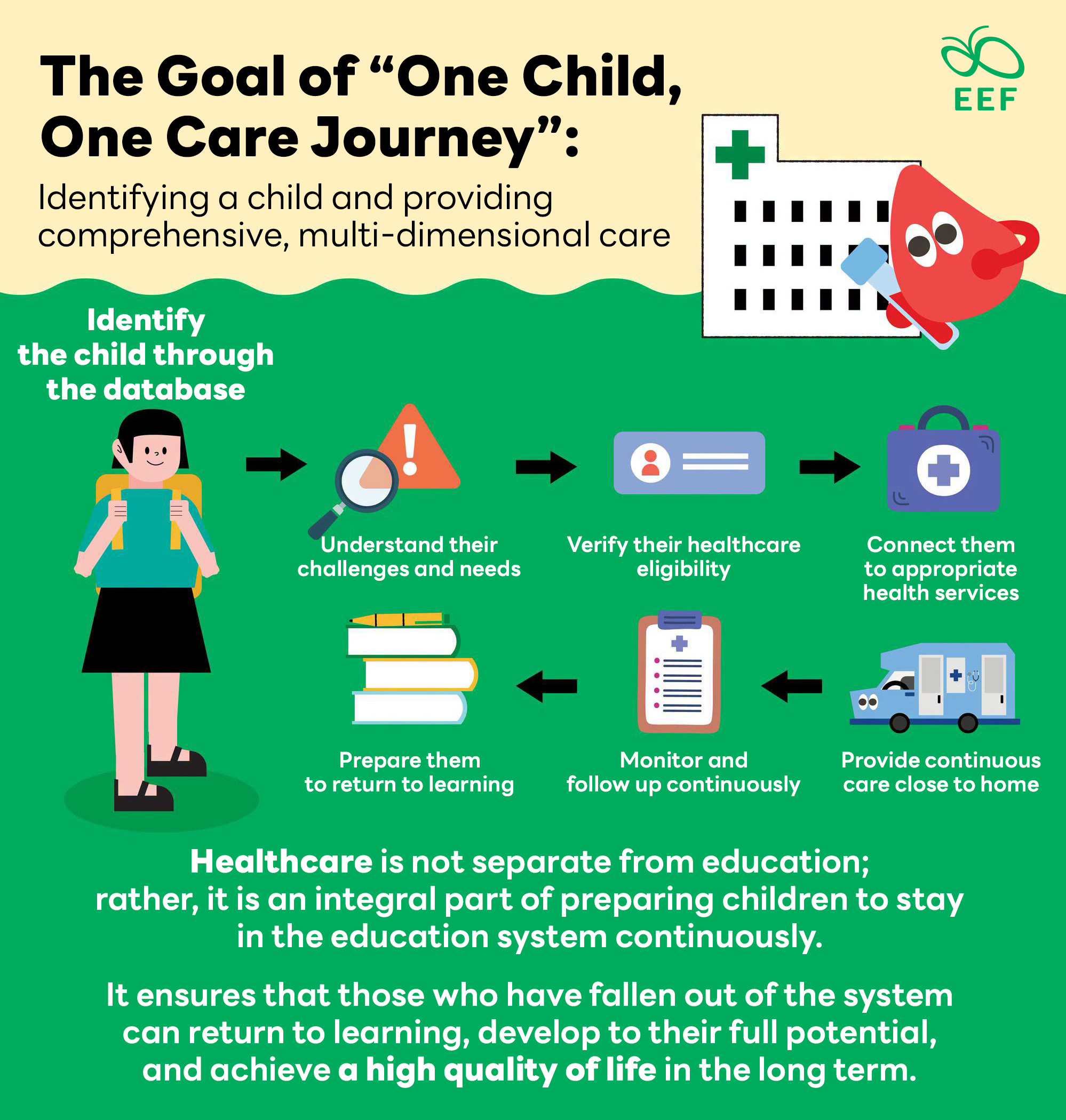
No single agency can solve dropout as it is a multi-system breakdown that requires a synchronized response. The Thailand Zero Dropout Plus initiative uses integrated database systems to align schools, public health networks, and local governments. Instead of working in silos, provincial governors, local doctors, and educators now share a unified view of every vulnerable child. This transforms fragmented social programs into a single, coordinated safety net under the banner of All For Education.
From Readiness to Realization: When Health Enables Learning to Continue

Real learning requires a ready mind. By shifting from passive administration to active outreach, Thailand is redefining how public services protect its most vulnerable populations. Incorporating data and early warning systems allows authorities to flag health risks before they lead to academic withdrawal. Education does not begin at the classroom door; it begins when a child arrives physically ready to learn.
“Every child already has a right to healthcare; our task now is to ensure these services actually reach them. We must shift from a system that waits for children to ask for help, to one that uses data to actively find them and deliver care directly to their communities,” concluded Dr. Siripong Angkasakulkiat, Deputy Minister of Transport and Chairman of the Sub-committee on Flexible and Integrated Learning Systems. Only when health ceases to be a barrier can education finally do its job—not as a selective system, but as an enabling one.
Source: