
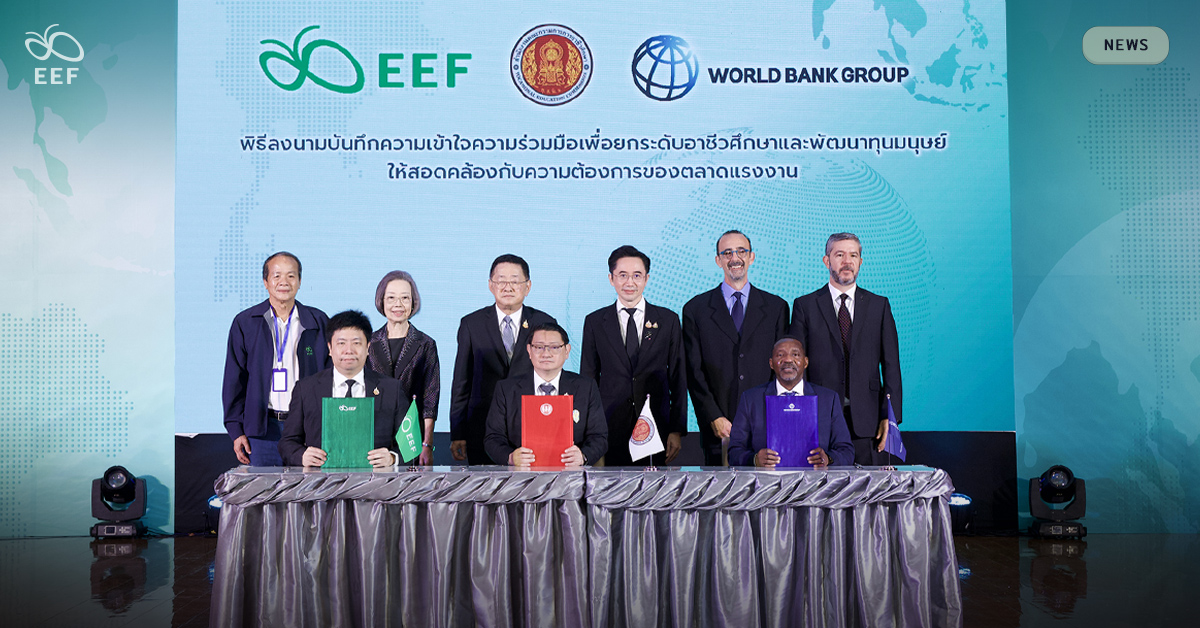
Bangkok, Thailand — Equitable Education Fund (EEF) Thailand and World Bank co-organized the High-Level Policy Forum 2026 under the theme “Unlocking Thailand’s Future: Transforming Education and Training to Drive Productivity, Innovation and Growth,” hosted by Chulalongkorn University. The forum marked a milestone in Thailand’s human capital development agenda, setting a course to connect education and training more closely with opportunity and economic growth.
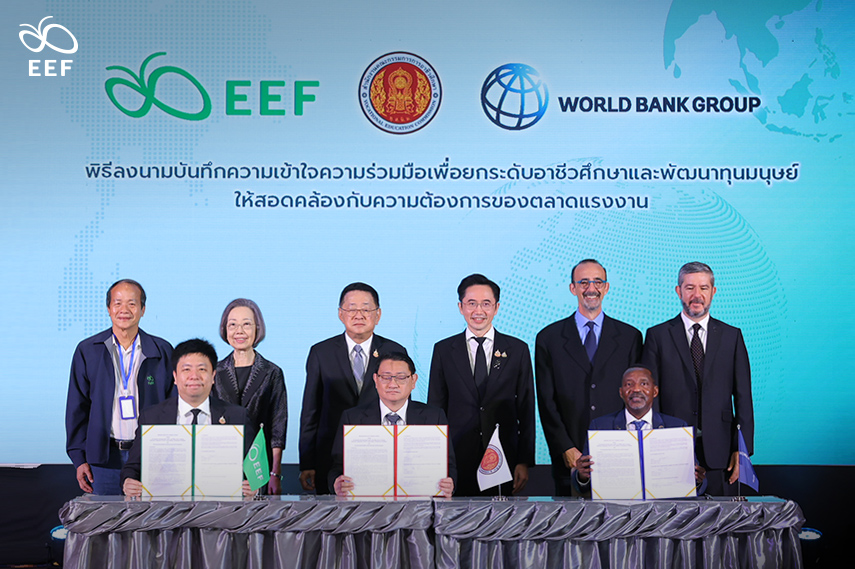
Held ahead of the upcoming World Bank–IMF Annual Meetings, the forum brought together Deputy Prime Minister and Higher Education, Science, Research and Innovation (MHESI) Minister Prof. Dr. Yodchanan Wongsawat; World Bank Division Director for Thailand and Myanmar Dr. Stephen Ndegwa; Minister of Education Prasert Jantararuangtong; and EEF (Thailand) Managing Director Dr. Kraiyos Patrawart, alongside representatives from education, labor, business, and partner organizations. Their perspectives on policy, educational equity, and workforce needs converged in the formal signing of a landmark 5-Year Memorandum of Understanding (MOU) between EEF (Thailand), Office of the Vocational Education Commission (OVEC), and World Bank that aims to address skills gaps, strengthen technical and vocational education and training (TVET), and build an inclusive, lifelong learning ecosystem capable of supporting Thailand’s ambition to reach high-income status by 2037.
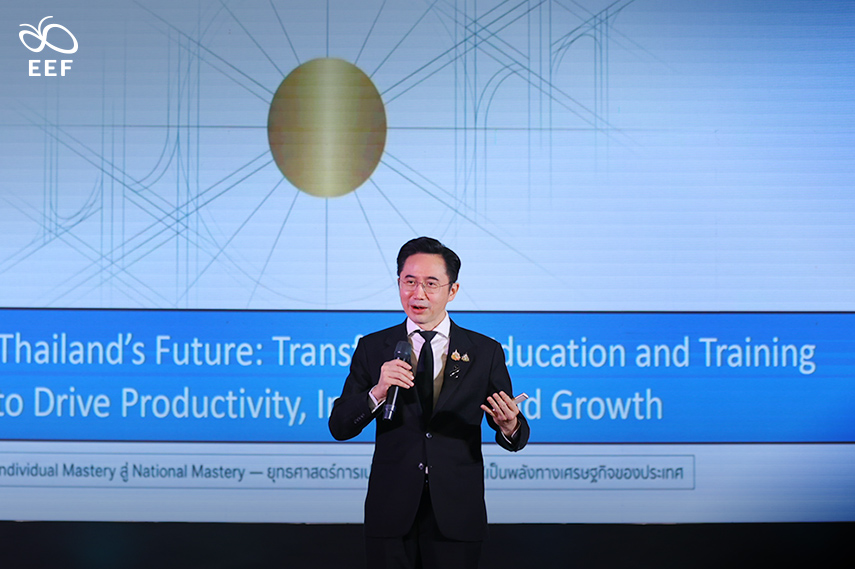
In his keynote address, Prof. Dr. Yodchanan Wongsawat presented a comprehensive strategy for linking education, scientific infrastructure, and local community innovation through the “Thailand Square” model. Education, he emphasized, is not only an innovation engine but also a vehicle for social mobility and a pillar of national prosperity.
“When Thailand sits next to other leading nations, we must shift from individual mastery to collective national mastery,” asserted the Deputy Prime Minister, highlighting the collective impact of human capital development. By connecting grassroots innovation with advanced scientific infrastructure, including Siam Photon and Siam Silica, he explained, Thailand can create sustainable pathways to prosperity while unlocking the full potential of every learner.
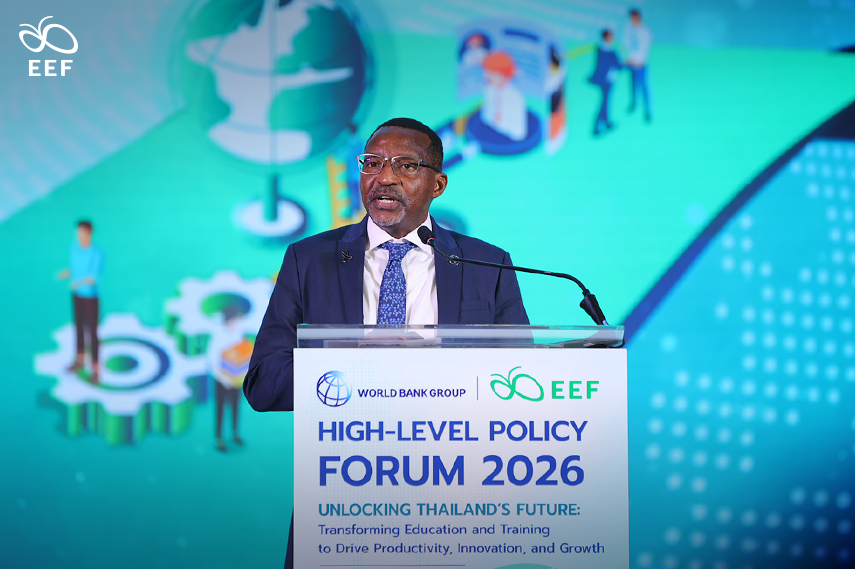
Welcoming delegates and development partners, Dr. Stephen Ndegwa underscored the urgency of transforming human capital amid demographic shifts, climate change, and rapid technological disruption. Modernizing skills frameworks, he noted, requires sustained collaboration across public agencies, private enterprises, academic institutions, and citizens to ensure that growth remains inclusive.
Investment in human capital, he stressed, is therefore inseparable from the country’s future. “Investing in people is one of the most powerful investments a country can make in its future.” As technology and global economic demands continue to shift, the World Bank Division Director for Thailand and Myanmar called for a strong multigenerational partnership to develop talent and build a resilient, high-income economy.
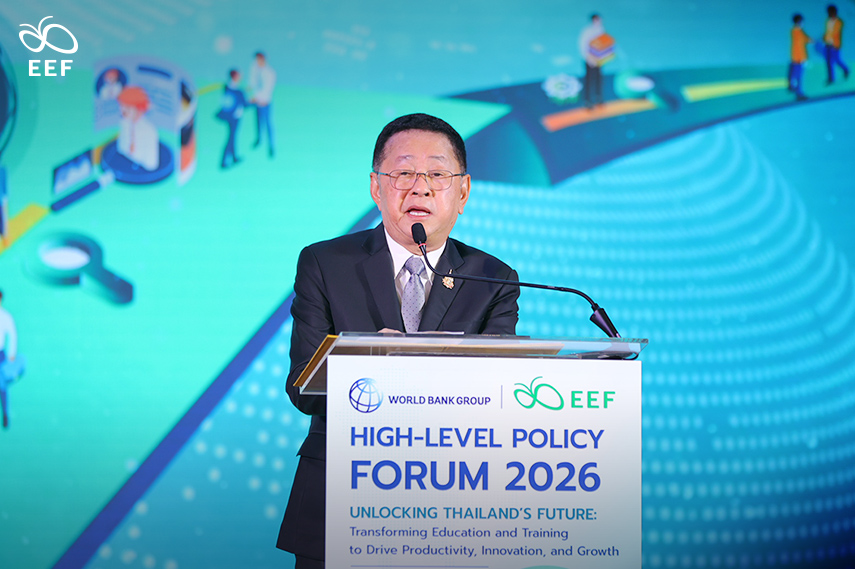
Delivering the policy directive, Mr. Prasert Jantararuangtong emphasized that vocational education is central to Thailand’s economic competitiveness and social mobility. The strategy, he outlined, is to equip students with foundational capabilities—from literacy and digital fluency to problem-solving—while formalizing commitments under the MOU to strengthen learner skills, support teachers, and ensure equitable access to education regardless of income.
“Vocational education is not a second choice; it is a main pathway for Thailand’s future,” remarked the Minister of Education, highlighting the transformative vision behind the policy. Quality vocational training, he explained, gives young people practical skills and reliable earning opportunities while supplying the country with a competitive workforce. What matters now is ensuring that policy translates into practice, so that opportunity is no longer limited to some but extended to all.
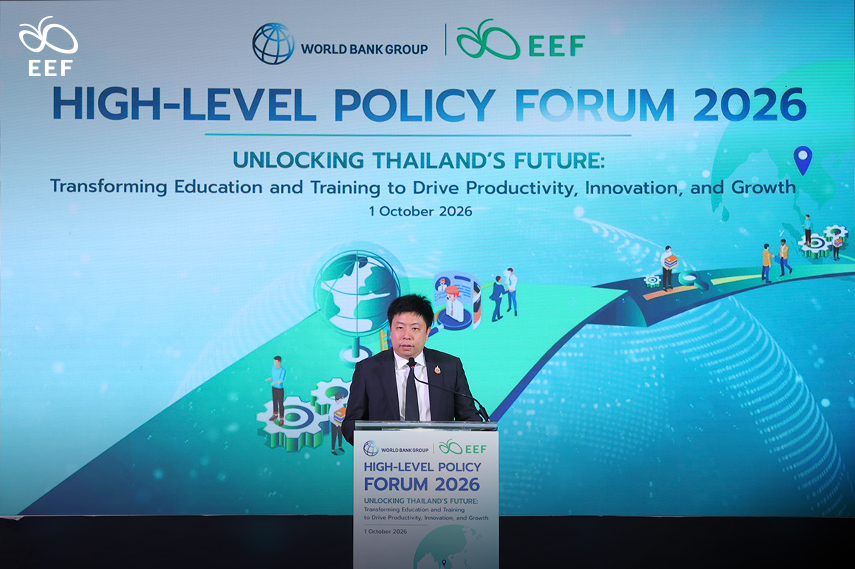
Turning to the research foundation underpinning the initiative, Dr. Kraiyos Patrawart highlighted the importance of data and policy research in addressing structural inequality and the middle-income trap. Long-standing collaborations with global partners, he explained, have produced evidence-based tools—including the Adult Skills Assessment and modernized TVET curricula—that strengthen social-emotional learning and workforce readiness in high-growth industries.
Equitable investment in human capital, the EEF (Thailand) Managing Director observed, is central to achieving long-term systemic change. “Only by investing equitably in the human capital of our children and youth can breaking intergenerational poverty and the middle-income trap be achieved.” That commitment is taking shape in vocational colleges through targeted training and evidence-based research.
A social and emotional learning initiative has developed 225 master trainers and lead teachers across 25 institutions, and an SEL teaching-strategies course has been incorporated into OVEC’s teacher-development e-training. Through Doing Business in TVET (DOBIT), the partners will examine gaps between employers’ skills needs and what vocational institutions can currently provide, working with colleges and businesses in sectors including advanced manufacturing, digital services, and tourism. The findings will inform approaches that can be tested and, where effective, scaled—reinforcing vocational education’s role in expanding economic opportunity.
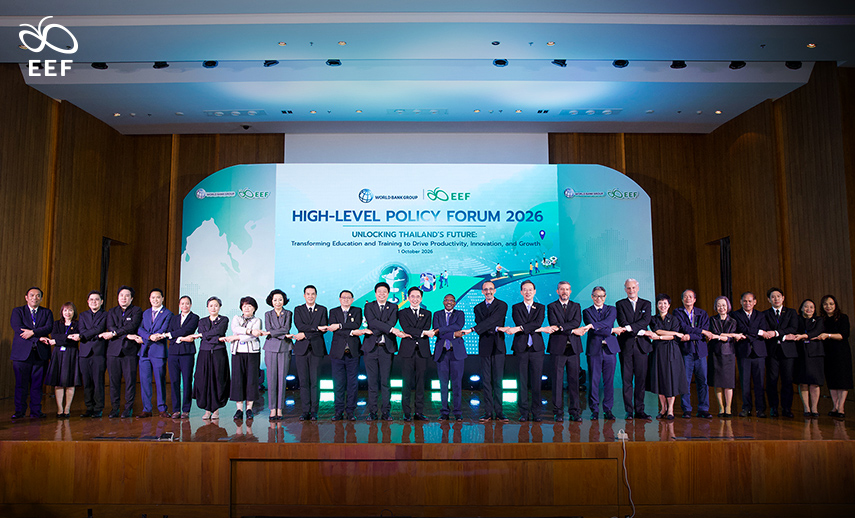
The MOU sets out a five-year collaboration to strengthen vocational education and training and make learning more responsive to changing workforce needs. Forum discussions also highlighted sandbox models, stronger partnerships between TVET colleges and industry, career guidance, digital and AI skills, and individual learning accounts. Together, these efforts will give learners more opportunities to develop relevant skills and gain practical experience.
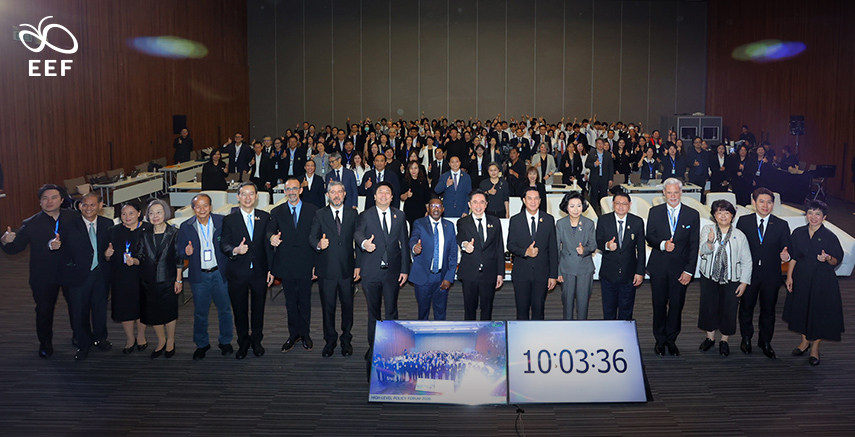
The EEF-OVEC-World Bank partnership also aims to make these opportunities more accessible across different age groups and backgrounds. As technology and the world of work continue to change, learners and workers will need more flexible ways to build new skills throughout their lives. By bringing together government, education providers, industry, and international partners, the MOU provides a framework for turning these priorities into practical programs that can help more people prepare for further study, employment, and future changes in the workforce.