
How EEF (Thailand) Builds Support around Disadvantaged Learners
The ODOS Network Forum is a one-day, nationwide event that brings together ODOS students from low-income backgrounds, government agencies, and international school partners to strengthen the scholars’ network and transition support into Science, Technology, Engineering, and Mathematics (STEM) higher education in Thailand and abroad.
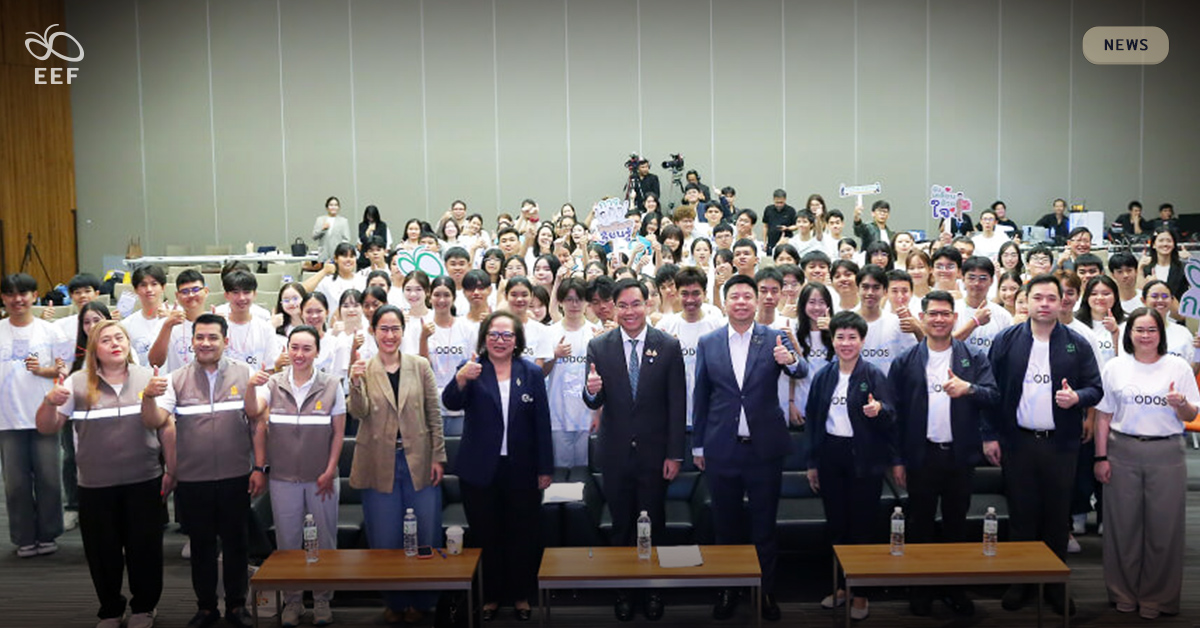
On 10 May 2026, more than 2,445 ODOS students from across Thailand joined the ODOS Network Forum at Chulalongkorn University and online to prepare for higher education in STEM fields in Thailand and abroad. The event had three main goals: to encourage eligible students to continue to university, to build a scholars’ network among ODOS students, and to give students a clearer picture of STEM careers that support Thailand’s development.
From Access to Continuity: Supporting Students Through Key Transitions
Many ODOS students come from low-income households and are the first in their families to pursue higher education. They perform well in school, but face significant challenges in entering university and studying abroad. To support this transition, the Outstanding Development Opportunity Scholarship (ODOS) program provides a continuous pathway from upper secondary or vocational level into higher education in STEM.
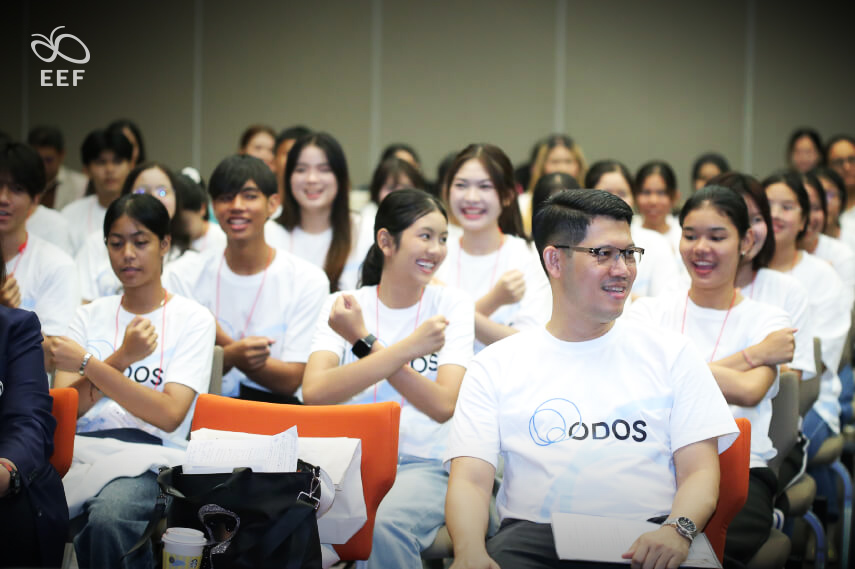
For many who were once at risk of becoming out-of-school children and youth (OOSCY), this continuity is what keeps their learning on track. The gathering of more than 2,445 scholarship students marks the beginning of a stronger ODOS network, where seniors share inspiration and practical advice with juniors so that they can prepare for applying to university and grow into a driving force for Thai society.
From Local Classrooms to Global Learning: Building Readiness for Study and Life Abroad
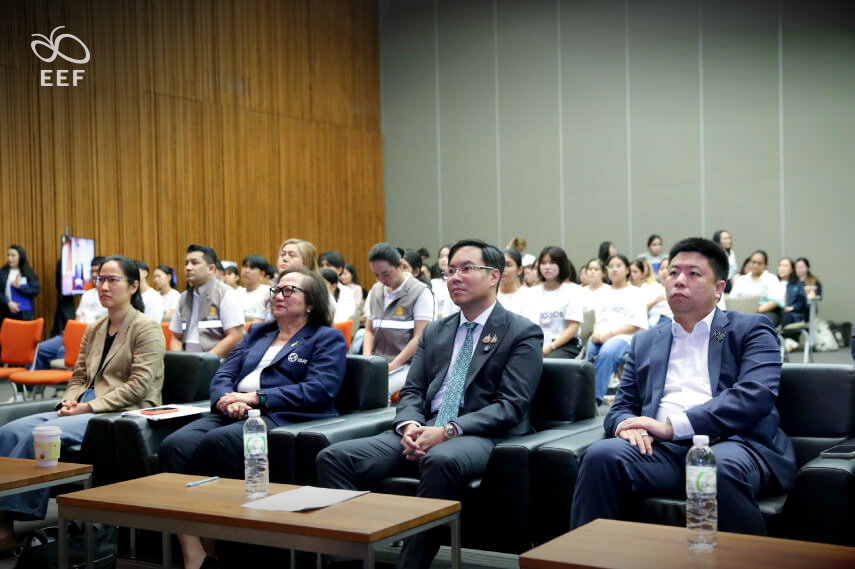
Deputy Prime Minister and Minister of Higher Education, Science, Research and Innovation (MHESI) Prof. Dr. Yotchanan Wongsawat spoke to the students about studying overseas as a way to learn both academic content and broader life skills. He stressed that diversity should not be seen as obstacles but as opportunities to learn, because today’s world needs people who understand science, technology, and human diversity.
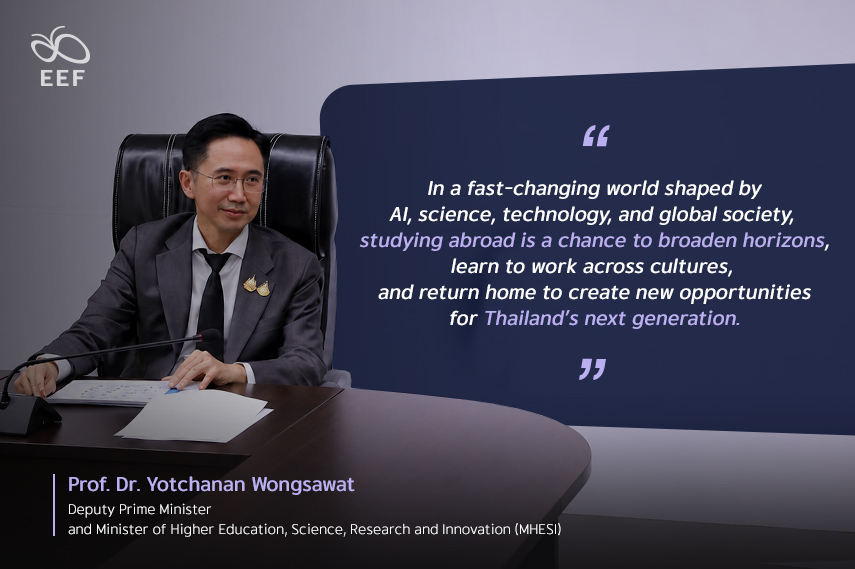
By highlighting language skills, openness to diverse cultures, and the ability to work with people from different backgrounds, he reminded students that studying abroad is not only about university classrooms but also about learning from the wider world—and that Thailand needs talented young people to bring this knowledge and experience back to create opportunities for the next generation. This way, overseas study becomes part of a wider skills development effort that prepares students for future careers.
From Opportunity to Stability: Strengthening Conditions for Learning and Progress
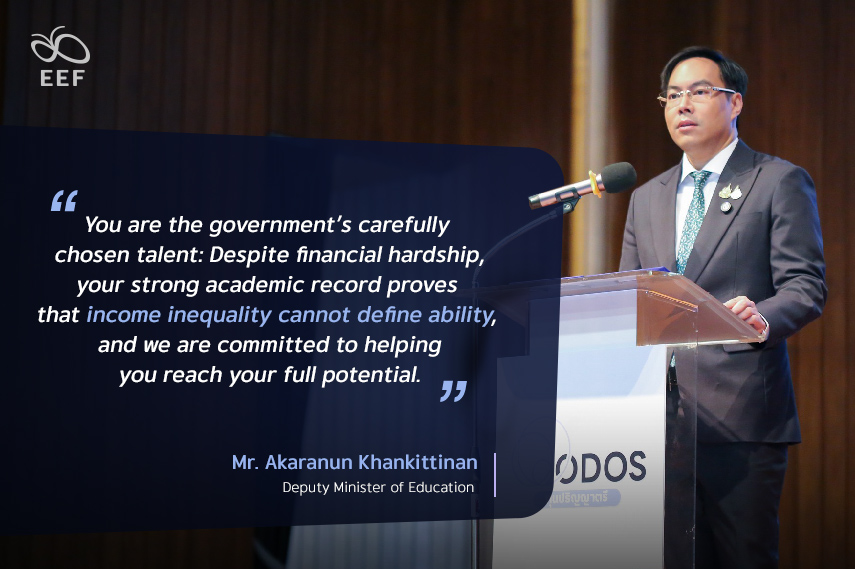
Complementing his remarks, Deputy Minister of Education Mr. Akaranun Khankittinan explained that the ODOS program is a core government policy to reduce educational inequality and open up high-level study opportunities for Thai children across the country, especially in STEM fields. Now covering all 77 provinces, it uses integrated data from the Ministry of Education and the Equitable Education Fund (EEF Thailand) to identify talented students from the poorest households.
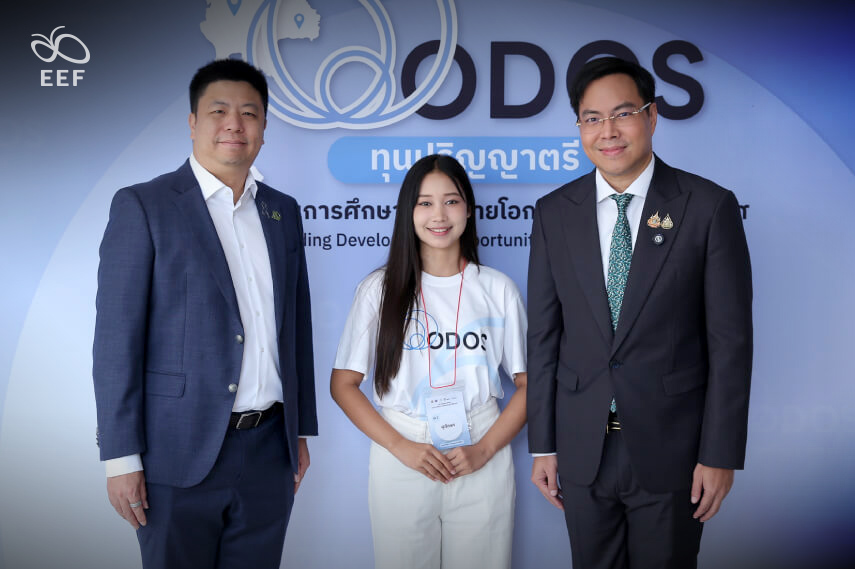
Across cohorts 1–3, more than half of the recipients come from low-income families, and over 60 percent have GPAs between 3.76 and 4.00 at upper secondary or vocational level, confirming that strong academic ability exists in every region and income group. By combining long-term scholarships with preparation activities like this forum, the system extends the Education Security System developed by the EEF (Thailand) to guide students through vulnerable transition points and help ensure that high-performing students can continue their education instead of dropping out.
From Isolated Efforts to Concerted Action: Working Together Across Institutions
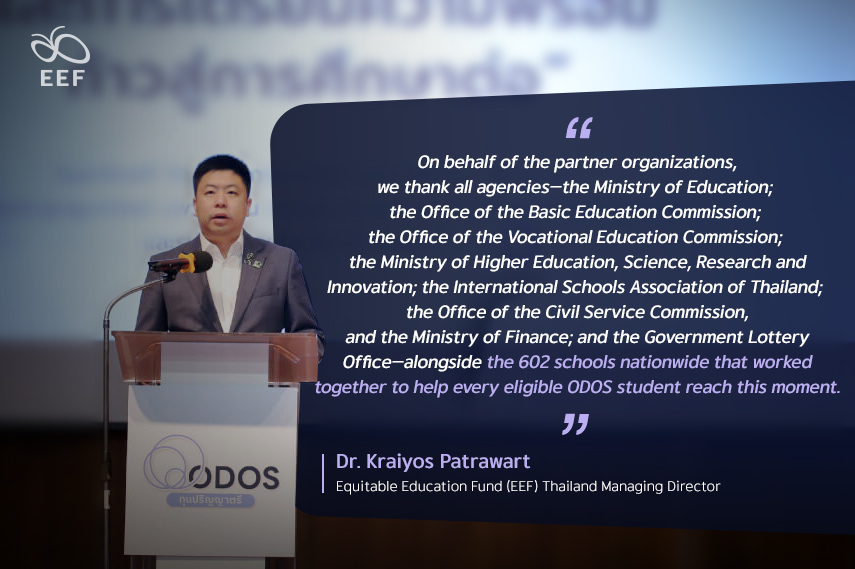
Concluding the forum, Dr. Kraiyos Patrawart, Managing Director, EEF (Thailand), noted that the event was designed to build strong relationships between ODOS seniors and juniors, creating space to share experiences on preparing for university and studying abroad. He emphasized that EEF and its partner organizations are implementing government policies to reduce educational inequality and develop STEM human capital in order to strengthen Thailand’s long-term competitiveness in key industries.
Moreover, the EEF has also partnered with seven international schools to enrich ODOS students in a more international learning environment . These schools contribute through activities, camps, and exposure that help students feel more confident in global settings.
- Bangkok International Preparatory and Secondary School (Bangkok Prep)
- Bangkok Patana School
- International School Bangkok (ISB)
- NIST International School
- Ramkhamhaeng Advent International School (RAIS)
- Rugby School Thailand
- St. Andrews International School Bangkok
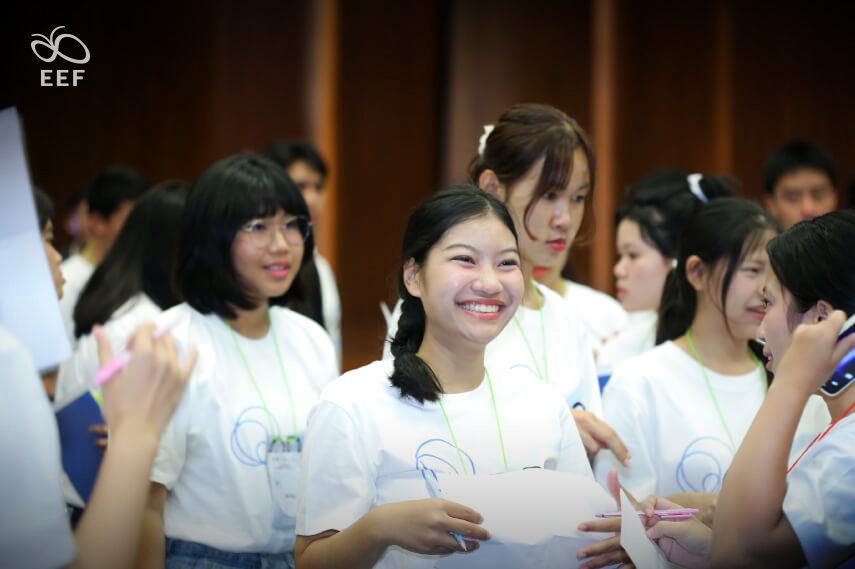
During the forum, ODOS seniors also shared their experiences with exam preparation—including IELTS and government exams—university applications, and living abroad. This practical advice helped younger students see concrete steps they can take, rather than viewing overseas study as something distant or out of reach. Taken together, these efforts support SDG4 by expanding access to quality education and progression routes for disadvantaged learners.
From Individual Talent to National Transformation: Linking Talent, Opportunity, and Development
ODOS students are described as “Lost Einsteins”, capable students who cannot reach their full potential because of poverty and lack of support. If given the right opportunities, their rare talent can strongly benefit Thailand, addressing the country’s long-term need for skilled workers in key STEM-related industries.
By combining scholarships, mentoring, skills training, and public and private partnerships (PPP), the ODOS Network Forum shows a practical way to protect students’ educational paths grounded in equitable financing policies. It supports learners from disadvantaged backgrounds to move step by step into higher education, STEM careers, and future leadership roles, while contributing to national goals on quality education, human capital, and resilience in a fast-changing VUCA world—and looking beyond 2030 to a more inclusive, innovation-driven future.