
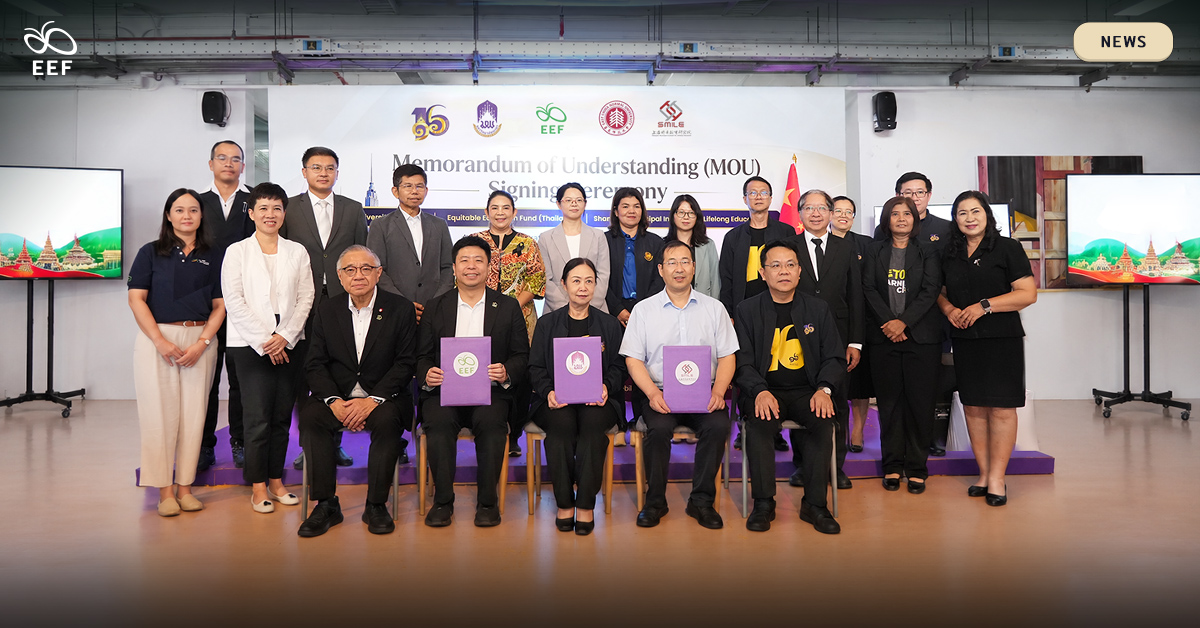
On July 17, 2026, the Equitable Education Fund (EEF) Thailand signed a Memorandum of Understanding (MOU) with the University of Phayao and the Shanghai Municipal Institute for Lifelong Education (SMILE) in China at the University of Phayao to establish a trilateral collaboration connecting local, national, and international efforts. The three-year strategic partnership (2026–2029) positions “Learning Cities” as the primary mechanism to build area-based educational ecosystems, reduce structural inequality, and provide children, youth, and the working-age population with sustainable access to learning and employment opportunities.
From an Inequality Crisis to a Transformation in Education
Data from the EEF (Thailand) reflects urgent crises that require immediate solutions: the average years of schooling for Thai people stagnating at just 9 years, 20% of children and youth dropping out of school after completing lower secondary school (Grade 9), and over 64% of the workforce lacking foundational skills. If this cycle continues, inequality will become deeply entrenched across generations.
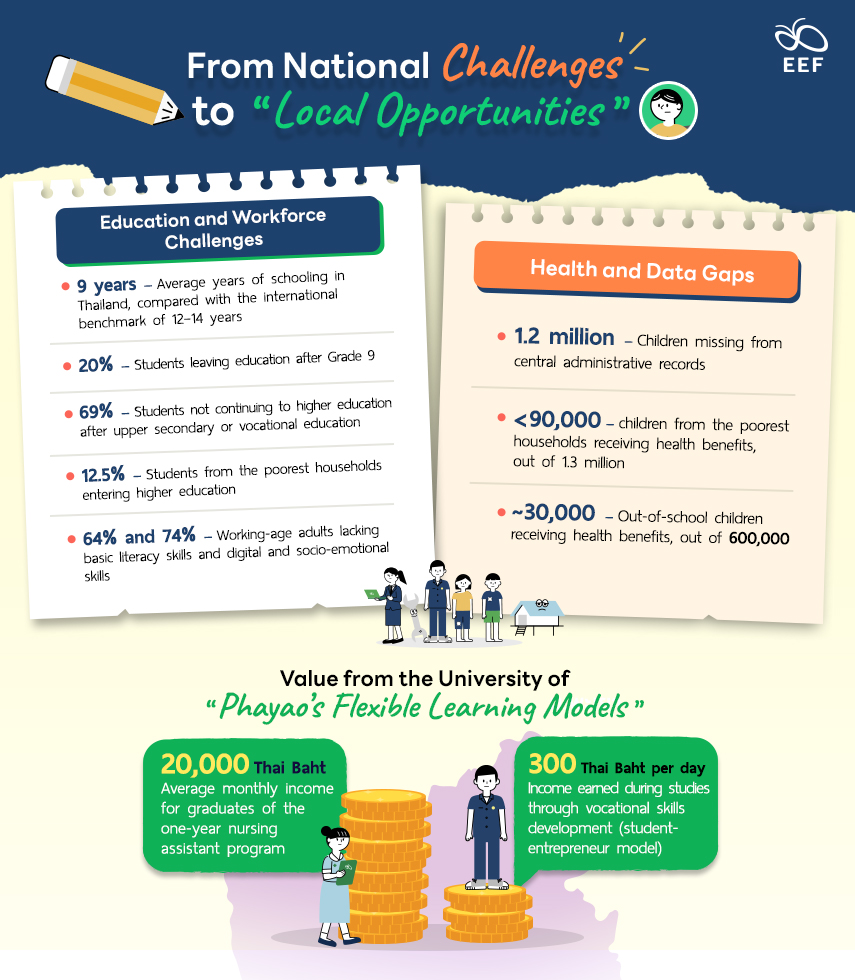
To address this challenge, EEF (Thailand) and all partners are prioritizing the use of “integrated databases” to identify target groups, ensuring that support and assistance can be delivered accurately and in a timely manner.
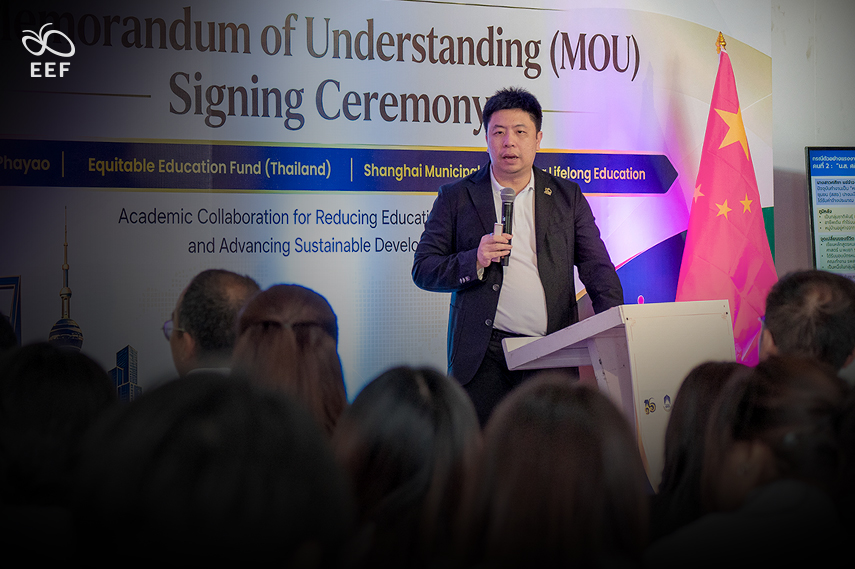
“Enhancing equity must begin with connecting databases to clearly identify target groups, allowing local authorities to match children with appropriate educational and career opportunities. A learning city is not just about bringing children back into classrooms; it is about creating an ecosystem that truly answers the life needs of people in the community.”
— Dr. Kraiyos Patrawart, Managing Director of EEF (Thailand)
A 3-Year Roadmap: From Joint Development to a New Reference Standard
Under the three-year implementation plan, the partnership aims to translate policy into practice by developing learning innovations across 7 Thai cities and Shanghai. The collaboration also includes developing Learning City People Indicators and establishing the Shanghai–Thailand Consortium as a permanent mechanism for long-term operations, with SMILE serving as the central hub linking research to actual practice.
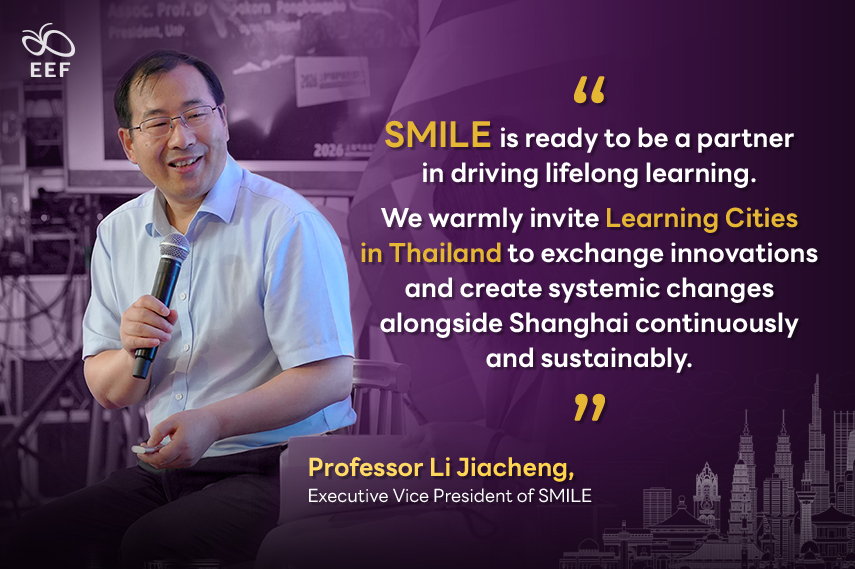
“SMILE is ready to be a partner in driving lifelong learning. We warmly invite Learning Cities in Thailand to exchange innovations and create systemic changes alongside Shanghai continuously and sustainably.”
— Professor Li Jiacheng, Executive Vice President of SMILE
Integrating Local Governance Through the University of Phayao
International collaboration mechanisms will be put into action at the community level through local academic institutions like the University of Phayao. The university will take the lead in adapting these policies to fit local contexts, creating real innovations that foster educational equity.
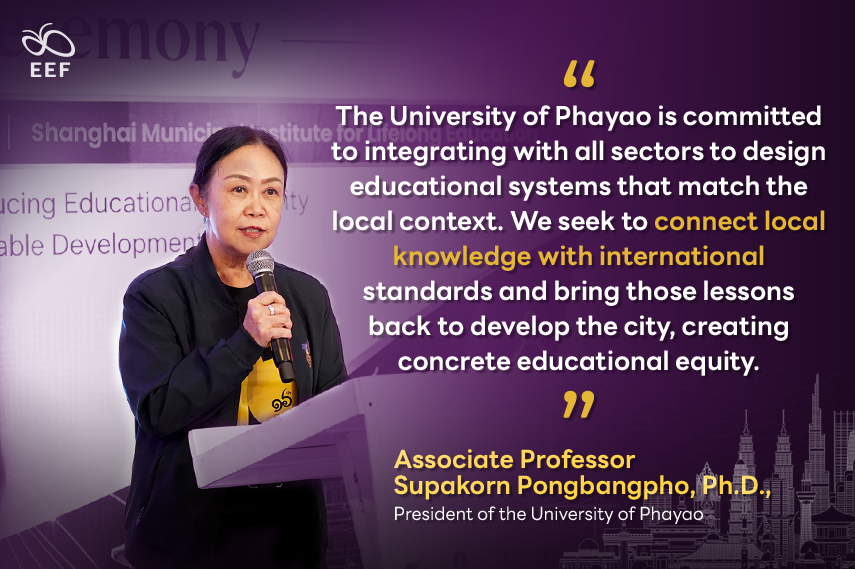
“The University of Phayao is committed to integrating with all sectors to design educational systems that match the local context. We seek to connect local knowledge with international standards and bring those lessons back to develop the city, creating concrete educational equity.”
— Associate Professor Supakorn Pongbangpho, Ph.D., President of the University of Phayao
Sustainable Change Driven from Within for Quality of Life
Learning Cities serve as a “bridge to opportunity,” connecting the population to education, health, and employment. Building a resilient system from the grassroots up is the core of this transformation.
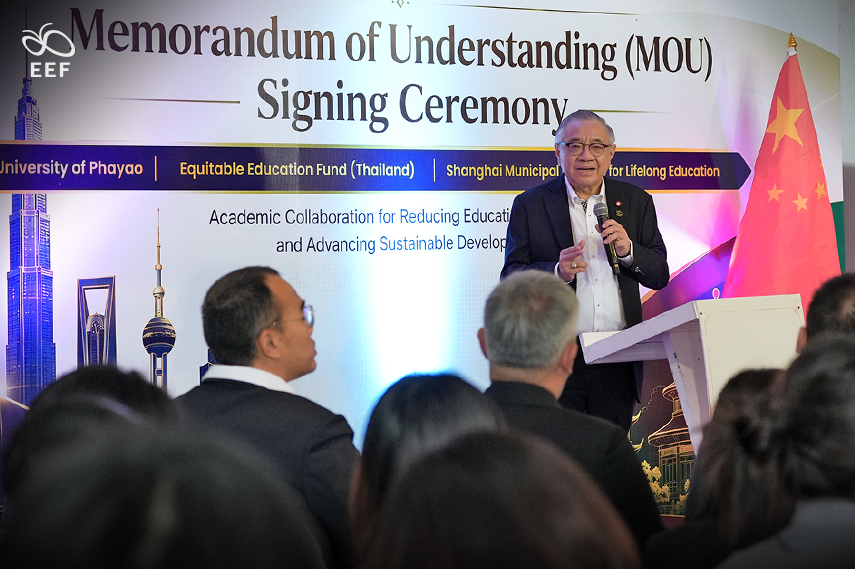
“The ultimate success of this initiative is not merely becoming a member of a global network, but elevating human potential and ensuring that local people genuinely achieve a better quality of life.”
— Professor Woothisarn Tanchai, Chairman of the Governing Board of EEF (Thailand)
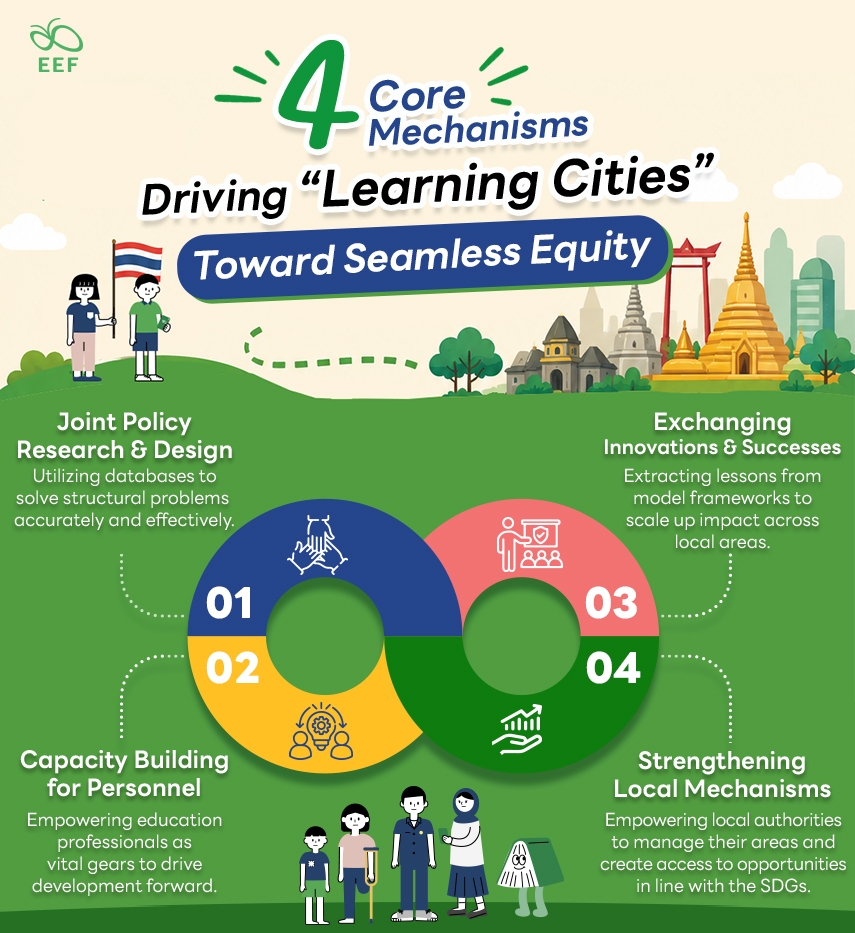
This collaboration marks a significant step in connecting local, national, and international levels through 4 core mechanisms: 1) utilizing data to identify target groups, 2) integrating academic work with local governance, 3) using community spaces to connect technology and health, and 4) linking educational pathways with career opportunities. Together, these strategies aim for a single goal: creating a new educational ecosystem that is flexible, universally accessible, and sustainably generates educational opportunities.
Reference: The Memorandum of Understanding (MOU) signing ceremony between the Equitable Education Fund (EEF) Thailand, the Shanghai Municipal Institute for Lifelong Education (SMILE), and the University of Phayao on July 17, 2026, at the University of Phayao.