
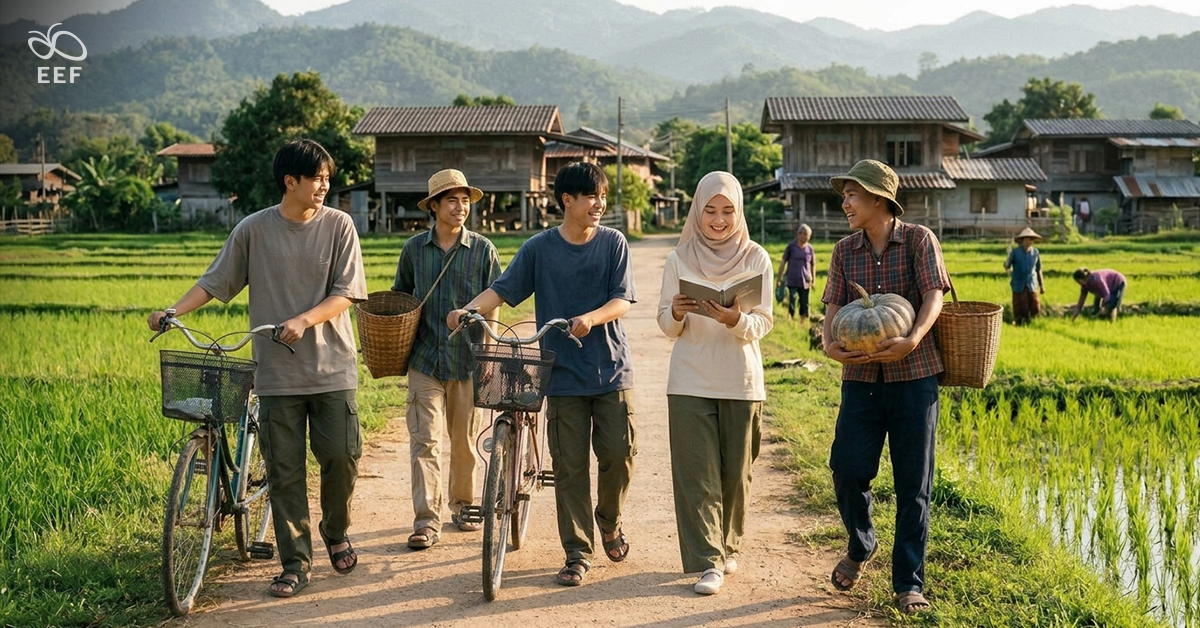
Why Learner-Centered Education Matters When Conventional Schooling Falls Short
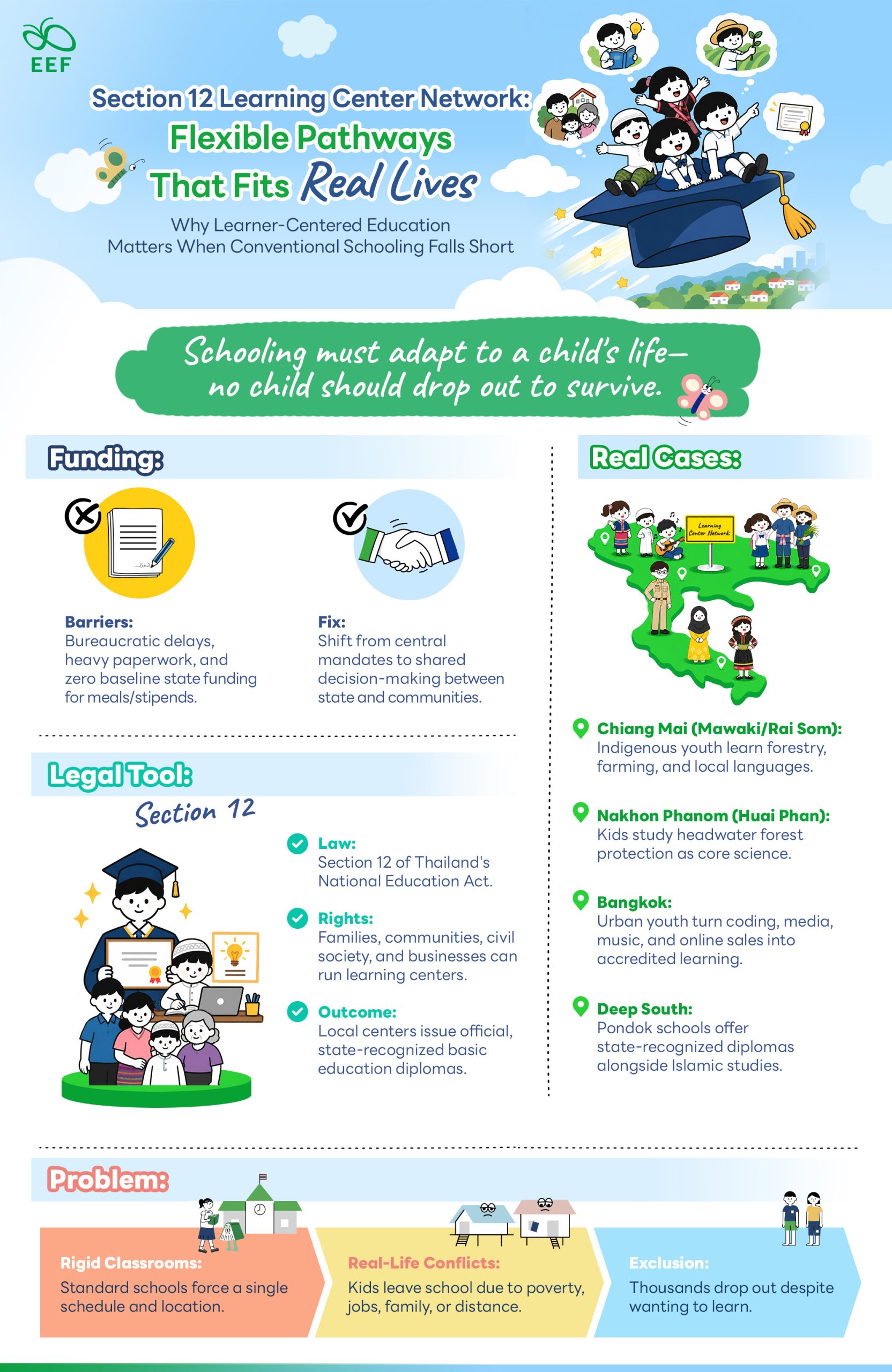
Section 12 of the National Education Act gives families and communities the legal right to run their own learning centers, proving that only when schooling adapts to real-life needs—from farming and local trades to urban skills—can every child get a recognized education without dropping out.
For many children, entering a standard classroom is straightforward; for others, that environment fails to accommodate the full complexity of human life. Never do children step across a school threshold leaving their lived realities behind; they bring their baggage inside with them—from the dreams they carry to the barriers they face. According to Equitable Education Fund (EEF) Thailand data, thousands of children slip out of the formal system not because they lack ambition, but because the system insists on a single, inflexible container. This raises a fundamental question: how can education remain accessible and accredited when standard schooling is no longer a viable option?
Section 12: When Law Unlocks the Rights of Learners
Section 12 of the National Education Act explicitly establishes that education is not the sole domain of the state or traditional schools; families, communities, professional bodies, private enterprises, and civil society organizations are legally empowered to set up learning centers, design tailored curricula, and award state-recognized qualifications. From the remote mountain communities of Chiang Mai to the coastal villages of Narathiwat, grassroots organizations have leveraged this legal mechanism to turn forests, rivers, workshops, and cultural practices into living classrooms.
Education ceases to be a pre-packaged commodity;
it becomes an intentional design for life.
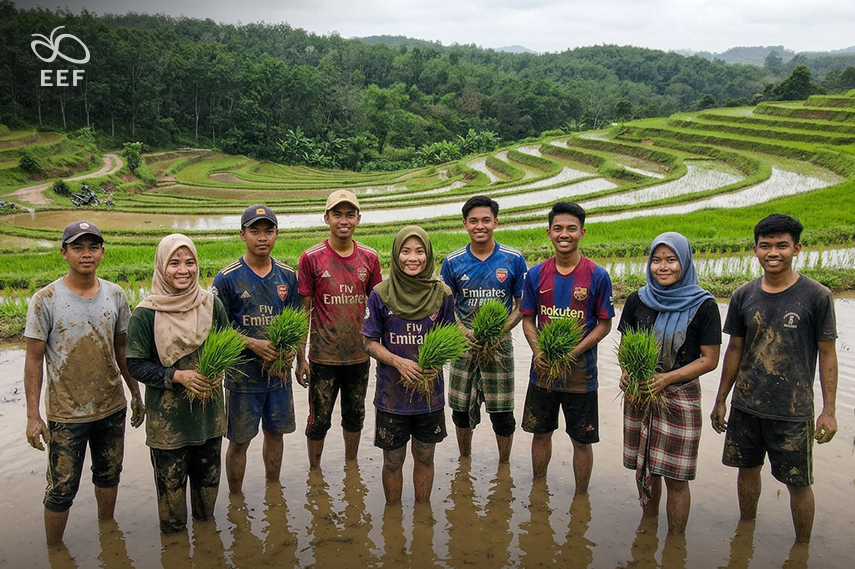
Redefining Opportunity: Lessons from Huai Phan Village
In Nakhon Phanom, Witit Termpholboon of the Child and Youth Development Foundation (CYF) works directly with out-of-school youth, including those in juvenile detention. When community members sought permission to establish a Section 12 learning center in Huai Phan village, central authorities hesitated, asking if children studying in their village would lose out on opportunities like becoming doctors, engineers, teachers, or soldiers.
The village chief responded with a different vision: “My ten children here will be the ones who care for the headwater forest for everyone living downstream.” Not until local voices spoke up did the state grasp the community’s true needs. The village needed protectors; their ecosystem required local stewards. Or in the village chief’s words: “to eat fish, one must build a fish sanctuary; to gather forest goods, one must plant a forest; and to organize education, one must understand the community.”
Once redesigned around real life,
education is no longer an engine for rural exit;
it becomes the primary engine for community survival and environmental stewardship.
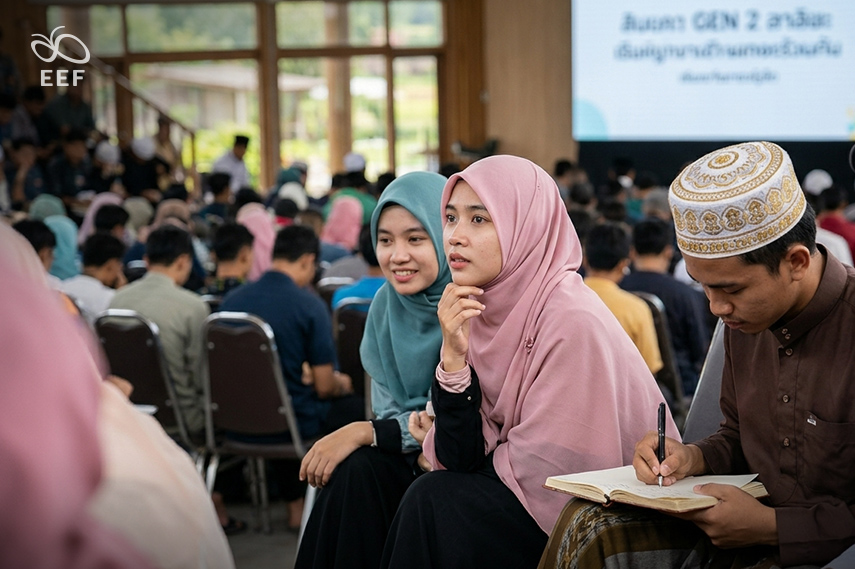
“Disadvantaged in Whose World?”: Flipping the Asset Model
At learning centers such as Mawaki, Srisuwan Sane-phong, and Rai Som Wittaya in Chiang Mai, indigenous and border youth do not study cultural heritage as an annual event; they live it daily. Consider a student like Ah Pao. Seated at a standard desk taking a standardized test, he might be labeled academically behind. Yet step into the mountain forest, and he leads the way: navigating swollen creeks, selecting durable bamboo, reading seasonal shifts, and translating between languages. In that terrain, it is the visitor who falls behind.
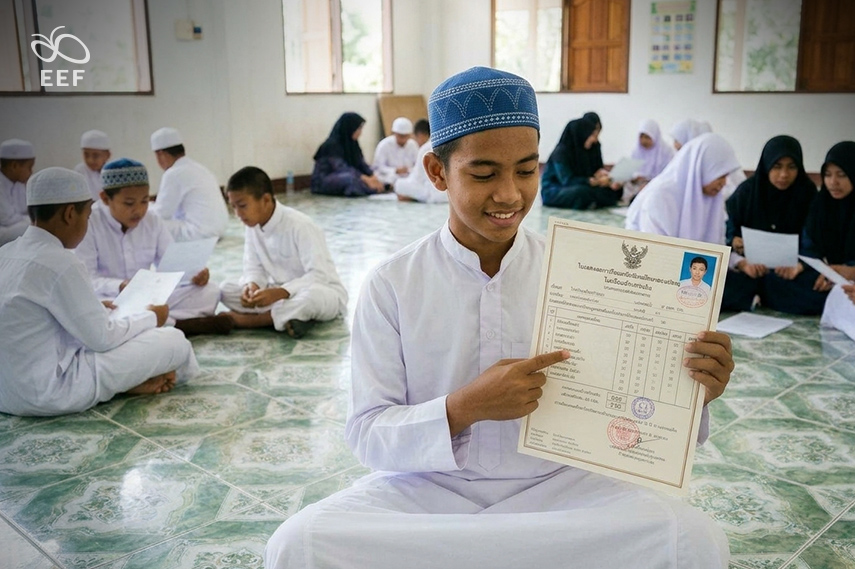
Section 12 challenges the narrative of the “disadvantaged child” by asking a foundational question: disadvantaged in whose world? When we stop measuring learners by a single academic scale, a bamboo stalk becomes a subject, a river a textbook, and an elder a master teacher. Similarly, in the Southern border provinces, Section 12 allows traditional Pondok Islamic schools to award recognized basic education diplomas alongside religious and community instruction.
When community becomes the classroom,
youth no longer have to choose
between their heritage and their accreditation,
nor sacrifice their faith to gain a future—
reclaiming, at last, the full dignity of their potential.
A Universal Right: From Vulnerable Groups to Every Learner
While Section 12 is critical for out-of-school youth, its implications extend to all learners across society. Consider two urban students in Bangkok. One may excel in exams yet feel disconnected from a sense of purpose, while the other may already spend hours coding, producing films, running an online storefront, or composing music. In conventional frameworks, these real-world capabilities are relegated to extracurricular activities, while abstract textbook problems are classified as real learning.
This dignity cannot remain a fallback welfare measure
reserved only for vulnerable youth;
it is the fundamental right of every child
—in any zip code—
to receive support for a learning path built around their life.
Overcoming Implementation Barriers: Moving Toward Shared Power
Despite being enshrined in law for over two decades, operationalizing Section 12 remains challenging. Learning centers rarely pass through bureaucratic channels without facing friction: paperwork piles up, approvals stall for months, and administrators routinely grapple with a total absence of baseline state funding for meals and teacher stipends. The law guarantees the right, but that right must still navigate complex human bureaucracy. Only when central mandates yield to local agency can shared governance truly take root; only then can state officials, local organizers, civil society, families, and learners co-design educational pathways together.
This model aligns directly with EEF’s (Thailand) core commitment under the Thailand Zero Dropout Plus (TZD+) vision: ensuring no child is excluded by a rigid system. It answers the question at the heart of educational exclusion: when a conventional school cannot accommodate a child’s life, education itself—not the child—must change shape.
By decentralizing power,
Section 12 transforms education from a rigid system of compliance
into a flexible, life-affirming right.
Ultimately, no child should ever have to shrink themselves to fit a school building—
education must expand to fit the full breadth of human life.
Source: https://readthecloud.com/…/section-12-national-education/