
Why Thailand’s PISA Findings Call for Earlier Investment, Stronger Foundations, Teacher-Guided AI, and Real-Time Assessment
Thailand’s structural educational divides can truly be closed only when public investment moves past rising average scores to deliver continuous, evidence-backed support across a complete developmental arc—from early home visits and primary skill mastery to teacher-guided AI and real-time classroom evidence.
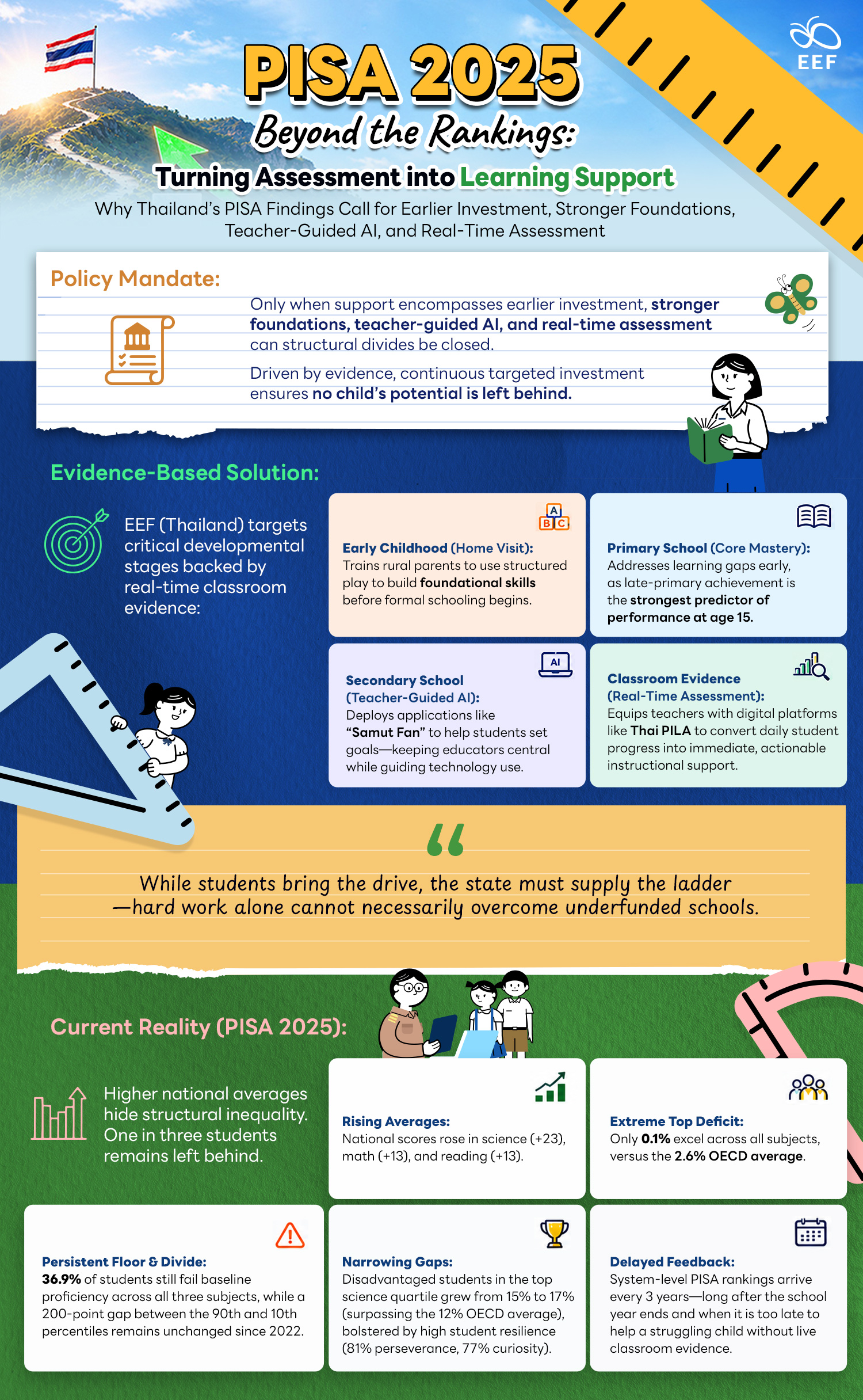
Thailand’s PISA 2025 results show clear progress alongside deep divides—socioeconomic gaps in science narrowed and the number of resilient learners rose, yet only 0.1% of students excel across all three subjects, compared with the Organisation for Economic Co-operation and Development (OECD) average of 2.6%. Because national averages rarely reflect classroom realities, these contrasts dictate how public resources must be directed. Three distinct studies by Equitable Education Fund (EEF) Thailand—covering early childhood, primary foundation, and teacher-guided AI—alongside digital formative platforms like Platform for Innovative Learning Assessment in Thailand (Thai PILA), connect these identified learning gaps directly to actionable, real-time interventions.
Not without rigorous empirical proof
should any financial investment in children be made;
only continuous, evidence-backed support across every stage of learning
can translate national findings into individual progress.

Beyond Recovery: When Higher Scores Leave Structural Gaps Unresolved
National scores rose significantly: science reached 432, mathematics 407, and reading 392—up 23, 13, and 13 points respectively. Still, they remain below the corresponding OECD averages (482 in science, 463 in mathematics, and 461 in reading), with 36.9% of students falling below baseline proficiency across all three disciplines. Only 41% of Thai students reached at least Level 2 in mathematics and reading, and 59% in science, compared to OECD benchmarks of 65%, 69%, and 74%. This persistent floor leaves more than one in three children unprepared to progress.
Over a decade, the achievement gap between the most and least socioeconomically advantaged students narrowed by a statistically negligible two points. Furthermore, a constant 200-point gap between the 90th and 10th percentiles has remained unchanged since 2022, confirming that recent score recoveries have not narrowed Thailand’s internal learning divide. For EEF Thailand, this enduring gap demands that public funding flow directly to disadvantaged populations. Only when targeted assistance reaches the bottom can overall national growth be considered true progress.

Recognizing Potential: When Household Income Conceals Learning Capacity
In addition to constraining opportunity, poverty conceals talent. In Thailand, 17% of socioeconomically disadvantaged students reached the top science performance quartile—surpassing the OECD average of 12% and proving that family income does not fix a child’s future potential. This intrinsic capacity is reinforced by high learner engagement: 81% of Thai students report persevering through challenging tasks, and 77% display active curiosity about new topics.
Unlocking this untapped potential at scale requires targeted support across successive developmental stages. The three EEF studies, read alongside PISA 2025 results, clarify where to intervene, what to monitor, and how public investment can yield maximum long-term impact across the learning journey. Never should policy focus solely on celebrating exceptional outliers; true progress means dismantling barriers so every child can thrive.
Early Foundations: Caregivers as the First Teachers
Intervention must start early to yield lasting returns. Rural home visits trained families to integrate structured play and active learning into daily routines. As a result, children showed immediate developmental gains, parents spent more time teaching, and households acquired significantly more books and educational materials.
The earlier these interventions begin,
the greater their impact,
with the largest gains occurring among the poorest families.
These results highlight the value of strengthening home learning environments before formal schooling starts. Providing support early prevents learning gaps from becoming entrenched, eliminating the need for costly system-level remediation later.
Primary Learning: Early Signals for Long-Term Trajectories
Against a backdrop of socioeconomic disadvantage, primary achievement strongly predicts secondary success. Tracking studies at age 15 showed that late-primary proficiency is the single strongest indicator of later academic health, with solid primary foundations directly reducing the impact of household income on future outcomes.
The stronger the foundations built early in primary school,
the less socioeconomic disadvantage shapes later learning opportunities.
Building these foundations requires identifying and addressing learning needs while children are still in primary school. Timely support reduces the risk that early gaps will compound into secondary-level difficulties.
Purposeful AI: Guidance Over Automation
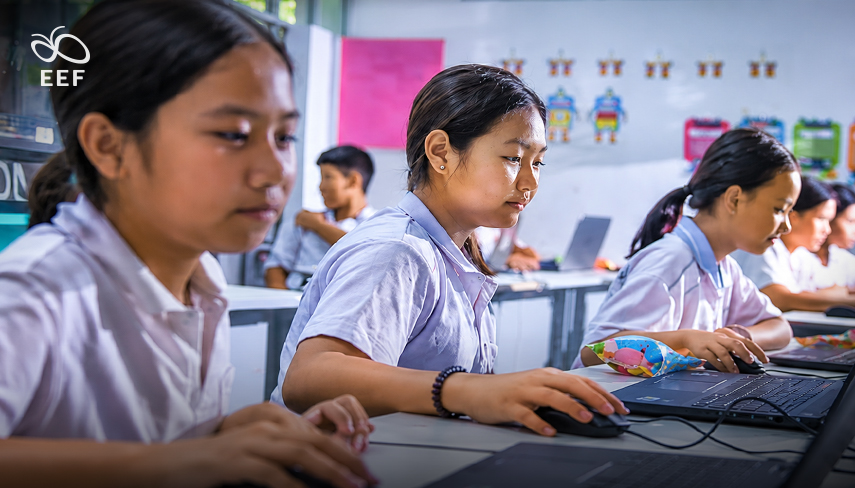
As students transition to secondary education, technology requires clear pedagogical direction. Digital tools like the “Samut Fan” application use AI to help secondary students plan schedules, set academic goals, and reflect on personal progress across 158 schools and 11,000 pupils—preserving the teacher’s central guiding role while fostering student agency.
The more technology enters the classroom,
the more essential educators become in directing its use
—rather than being replaced by it.
However, perceived usefulness is not yet proof of improved attainment, nor can hardware shortages be ignored when nearly four in ten principals report shortages of basic instructional tools. Future deployments must prioritize device accessibility so digital equity remains an active operational commitment rather than an afterthought.
From Assessment to Action: Real-Time Evidence in the Classroom
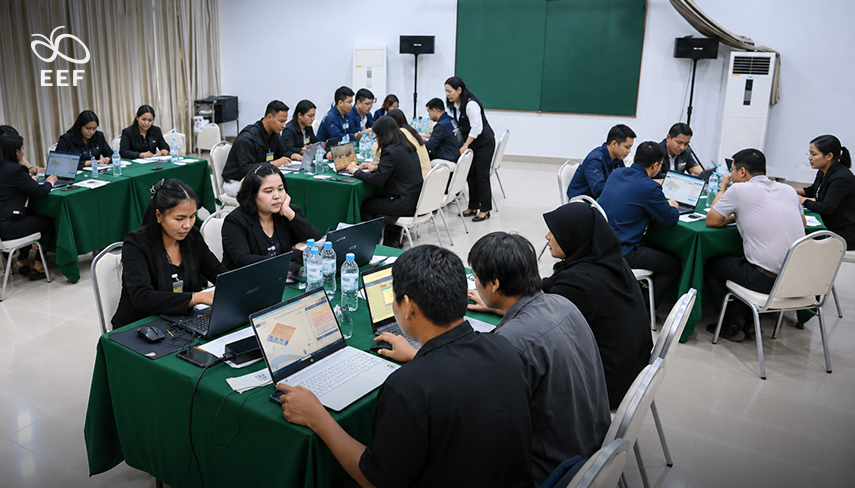
For evidence to reach classrooms in time, data must inform instruction through formative assessment while learning is actively taking place—by the end of the year, the time to act has passed. While PISA provides a delayed, 3-year system snapshot, real-time formative assessment gathers daily classroom evidence to adapt upcoming lessons, directly supporting Thailand’s broader Values, Attitudes, Skills, and Knowledge (VASK) competency agenda.
Developed jointly by Equitable Education Research Institute (EEFI) under EEF (Thailand) and OECD, digital platforms like Thai PILA put this into practice by connecting learning activities directly to a live assessment dashboard. Rather than waiting for term-end exam results to reveal a struggle, teachers use this immediate visibility to convert daily classroom evidence into timely instructional support, intervening the moment a child first encounters a hurdle.

Evidence into Policy: Aligning Investment with Need
Continuity drives effective policy, forming a coherent developmental arc throughout a child’s education: early home visits establish foundational capacity, primary support secures core skills, teacher-guided digital tools foster secondary independence, and real-time assessment connects daily lessons to targeted assistance. Evaluated alongside PISA metrics, this sequence demonstrates that resources must be allocated according to learner needs rather than surface-level average score gains.
Every baht invested demands proven empirical results—this remains the core operating principle of EEF (Thailand). Reliable data must shape interventions, dictate budget allocations, and guarantee that support reaches Thailand’s most vulnerable children. Assessment becomes consequential only when identifying a difficulty changes the immediate support a child receives; without that timely response, greater visibility merely produces a more precise record of who is being left behind.
Only when support encompasses earlier investment, stronger foundation,
teacher-guided AI, and real-time assessment
can structural divides be closed;
driven by evidence,
continuous targeted investment ensures no child’s potential is left behind.
Source: