
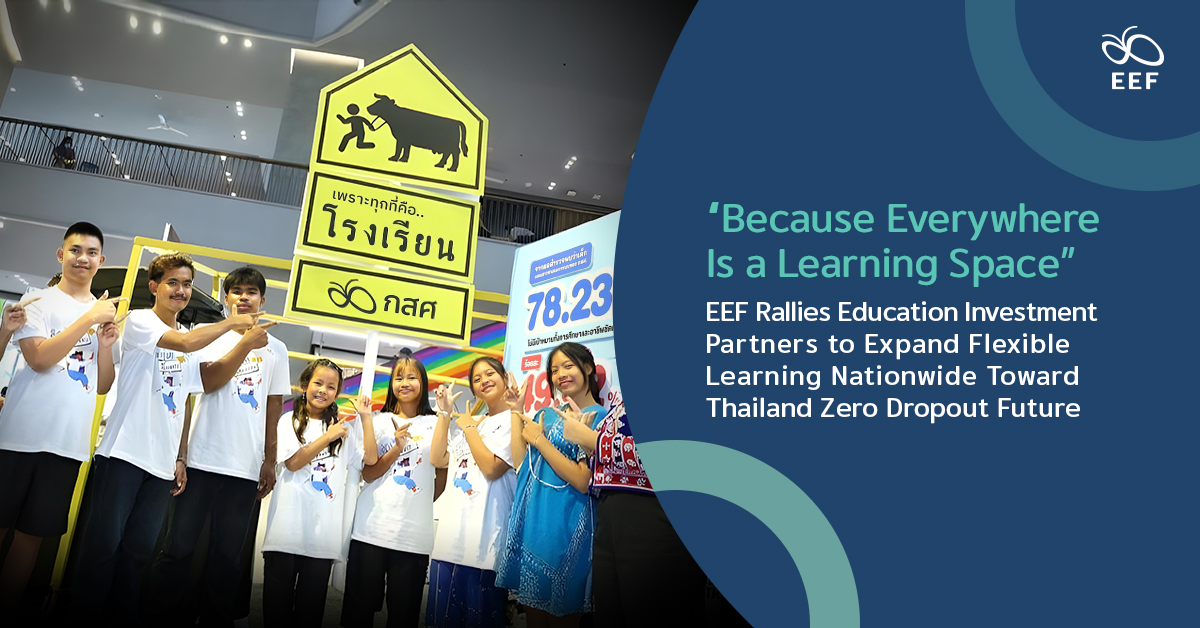
In 2025, the Equitable Education Fund (EEF) Thailand, in partnership with the Ministry of Education (MOE), a nationwide network of social institution-run learning centers, and education investment partners across the country, unveiled a bold new campaign titled “Because Everywhere Is a Learning Space.” The press conference marked the start of a bold movement to redefine what it means to go to school: not just within walls, but everywhere—learning can happen anytime, anywhere. The campaign calls for collaboration across public, private, civil society, and local sectors to co-create a “New Schooling” model. Designed to welcome children and youth excluded from traditional classrooms, this model adapts to individual lives instead of forcing lives to fit the model.
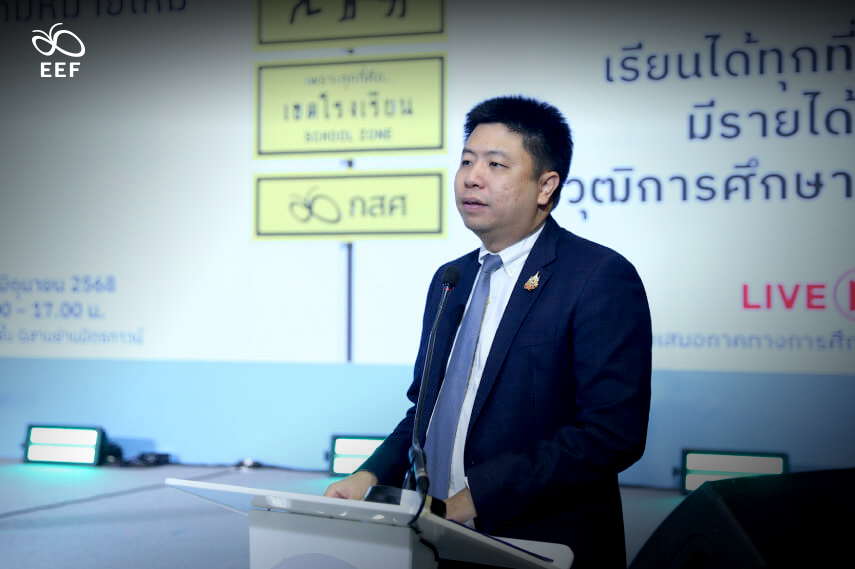
In his opening remarks, Dr. Kraiyos Patrawart, Managing Director of the EEF, revealed a striking figure: 880,463 children and youth aged 3 to 24 are currently out of the formal educational system. This number, though down from 1.02 million in 2024, still reflects a deep structural issue. An EEF survey of 29,452 individuals paints an even starker picture: 78.23% lack clear education or career goals, and almost half—49.42%—prefer to learn practical skills over academic content. This data underscores the urgent need for new approaches to education that better reflect the diverse needs and aspirations of these young people.
In response, the “Because Everywhere Is a Learning Space” campaign champions flexible learning models that break free from rigid classroom confines. Not only is learning through real-life experiences, workspaces, or community settings possible; it is actively encouraged, with everyone invited to step into the role of a teacher. “We are not returning children to the old system,” the Managing Director affirmed. “We are building a new one altogether—flexible, relevant, and rooted in their lives.” Flexible education, he further explained, serves as a safety net, especially for marginalized youth: impoverished children, teenage parents, justice-involved youth, and those with health challenges. Rather than passive recipients of knowledge, children are empowered to actively take charge of their learning.
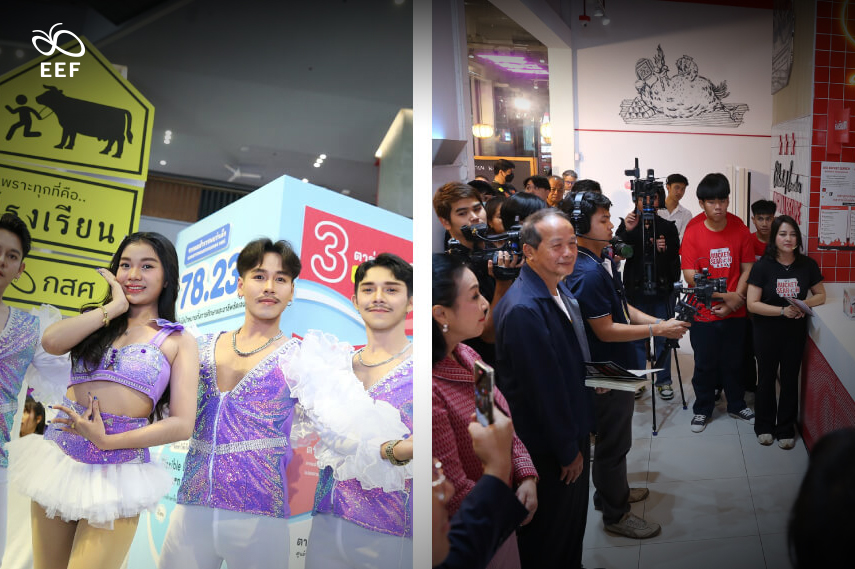
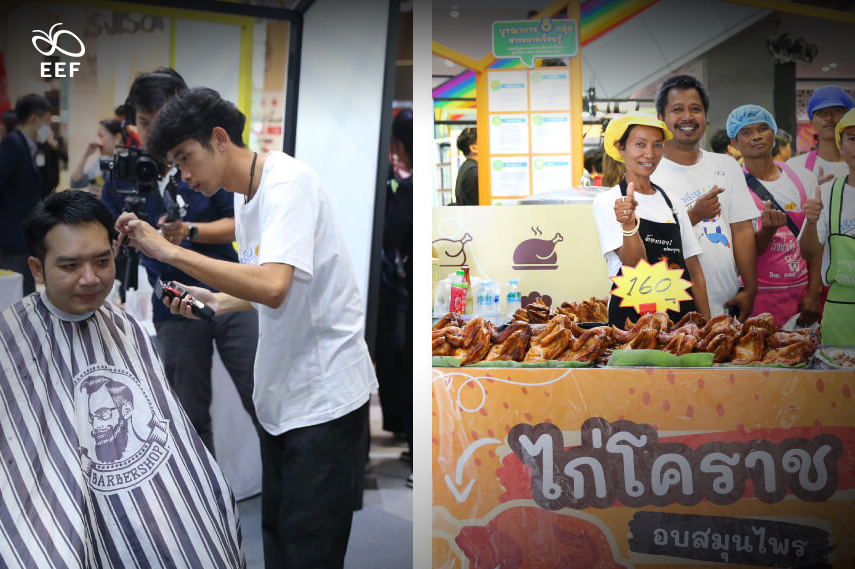
Throughout the event, participants explored diverse models of these reimagined classrooms, each a product of multisector partnerships. Every model reinforced a central belief: anyone can be a teacher, and everywhere can be a school. In Ubon Ratchathani, Infinite Intelligence Foundation’s “Mor Lam Studies” preserves heritage through youth participation. In Surin, Pluto Farm’s “ChickLab” teaches entrepreneurship through poultry farming. Local pride thrives at “Nong Sanit Barber School,” while CJ MORE’s “Entrepreneur School” fosters innovative thinking. Digital learning finds its place too. Sea Thailand’s “Shopee University” opens e-commerce doors for young sellers. Meanwhile, KFC’s “Out-of-the-Box School” offers restorative learning to justice-involved youth. In Ratchaburi, the “1-School-3-System” blends academics with livelihood training. The “Mobile Media Lab” provides safe spaces in conflict zones. And in the wilderness of 1.3 million rai, the “Tung Yai Classroom” brings education to isolated communities.
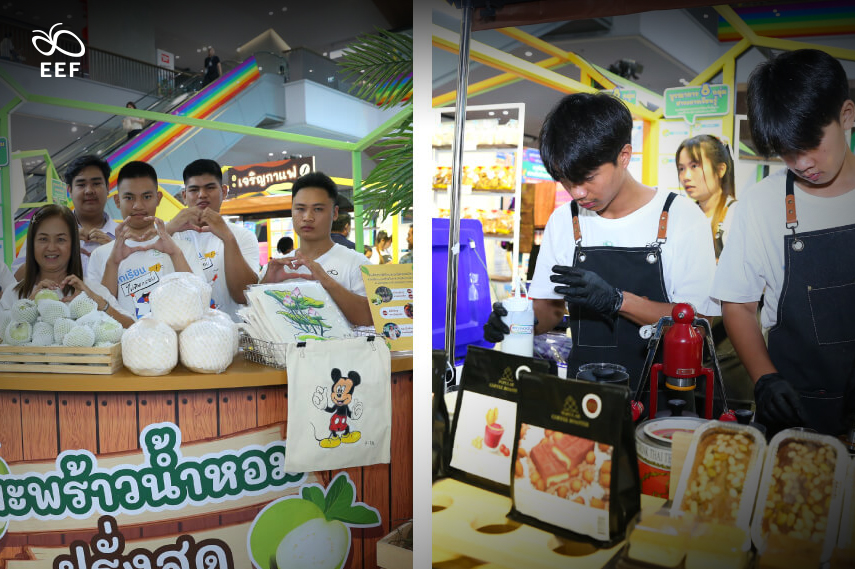
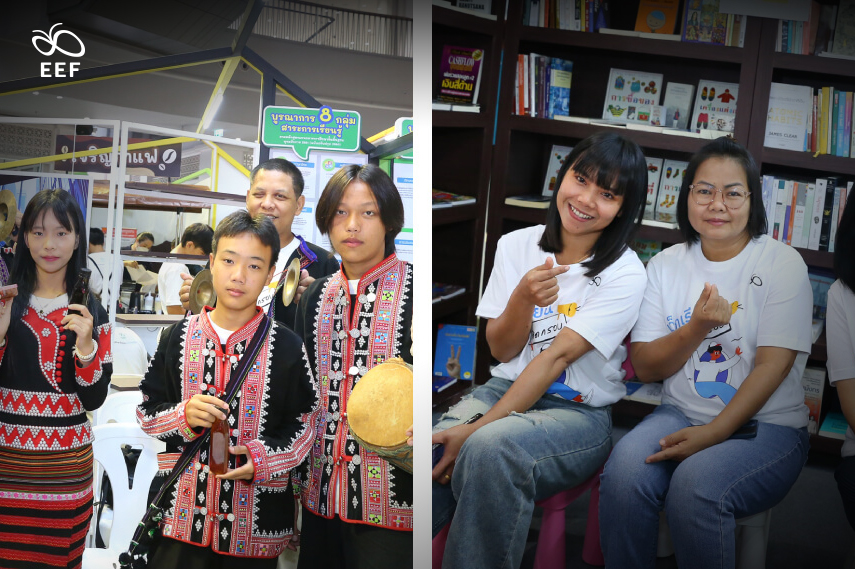
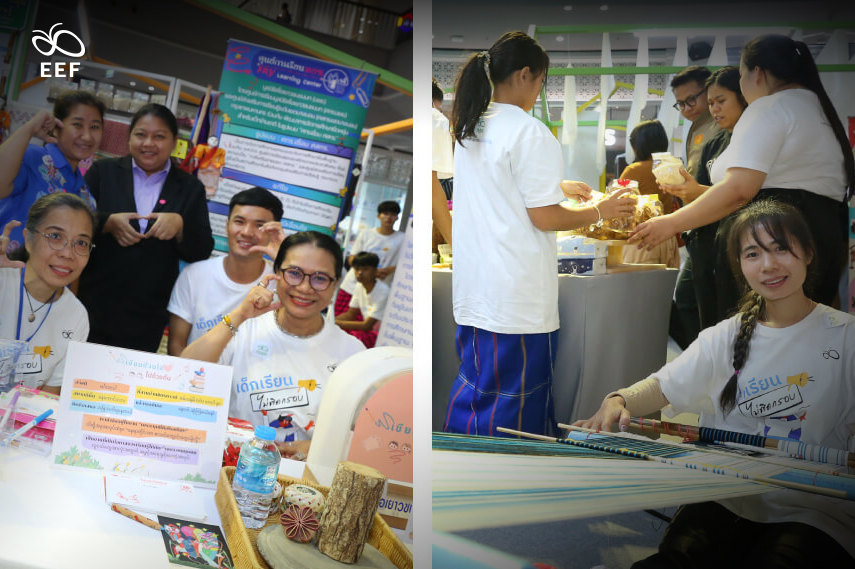
Behind each model is a shared insight: many children leave school not from lack of will, but necessity. “Education must meet the immediate needs of families and individuals,” said Dr. Kraiyos Patrawart. Some leave to work; others become caretakers; many question the value of what they are being taught. When education fails to connect with lived reality or future aspirations, its relevance fades. Thus, flexible learning models are not just alternatives; they are essential. They respect young people’s dreams; they adapt to circumstances; and they reaffirm that learning does not necessarily have to look the same for everyone.
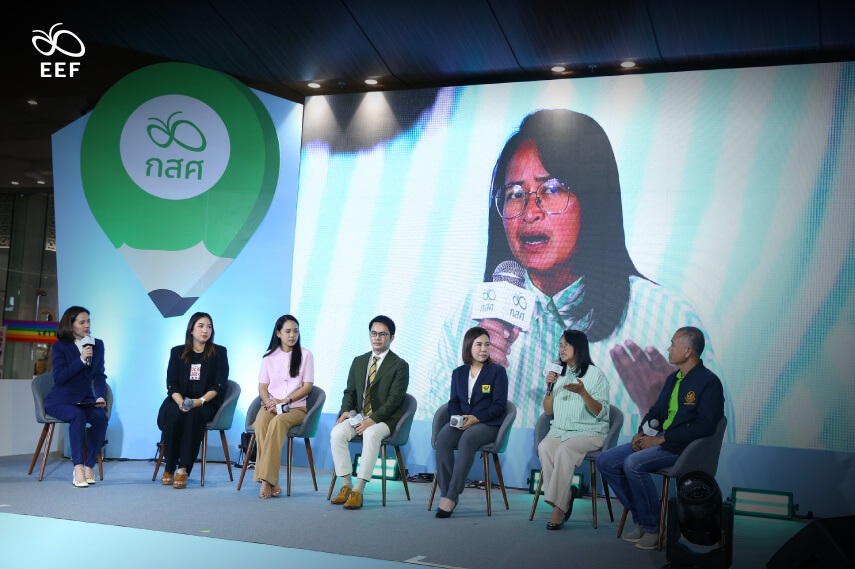
At the “Because Everywhere Is a Learning Space” campaign’s heart lies an urgent appeal for collective action. Broad partnerships are critical to expanding access, especially for the most vulnerable. These young people are not liabilities; they are untapped potential. To support them, the EEF has launched three learning safety nets with Ministry backing: 1) flexible “1-School-3-System” model; 2) non-formal and informal education via the Department of Learning Encouragement (DLA); and 3) learning centers run by social institutions, where educators can be community members, foundations, or occupational groups. Supporting these efforts are tools like community-based dropout tracking, “Mobile School,” and “Credit Bank,” which recognizes learning in all its forms.
Still, challenges persist. Despite Thailand’s 15-year free education policy, social learning centers remain excluded from per-head subsidies and basic services—no meals, milk, or healthcare. “A school may have no building,” concluded the Managing Director, “but it must have quality, and it must be equally supported. Children are not the problem; they are the promise, and their futures must not be dictated by their postcode.” The potential payoff is enormous; solving dropout issues could boost Thailand’s GDP by 1.7%, driven by increased earnings from these once-overlooked youths. But beyond economics lies something more profound, a chance to create an equitable educational system that uplifts all.
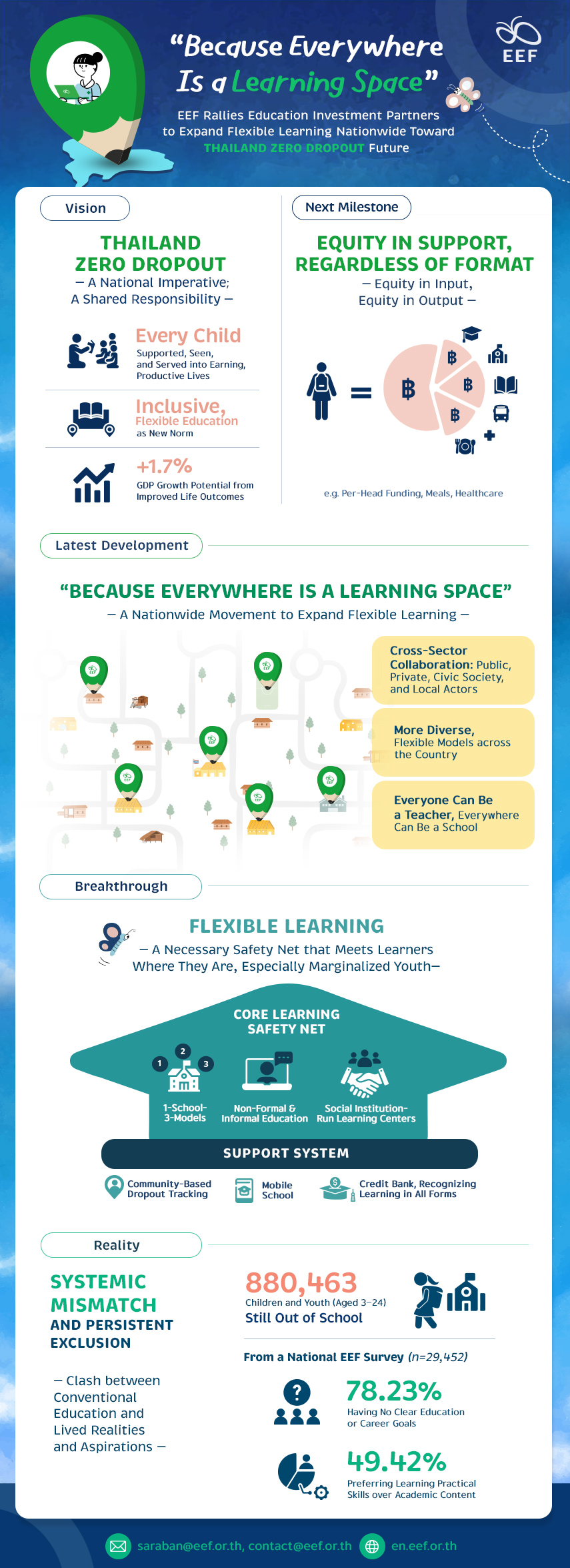
The change now underway in Thailand marks more than just progress; it marks a paradigm shift. It reimagines who gets to learn, where that learning unfolds, and how education can truly respond to the realities of young lives. These are not scattered projects; they are sparks of a larger, systemic transformation. By drawing strength from collaboration—across public, private, civil society, and local sectors—they begin to form a national learning ecosystem ready to meet nearly 900,000 children right where they are. Their absence is not a distant statistic but an immediate, urgent challenge that jeopardizes the country’s economic potential and deepens social inequality. What has been built so far is proof of concept; now it must be scaled, with intention, speed, and solidarity.
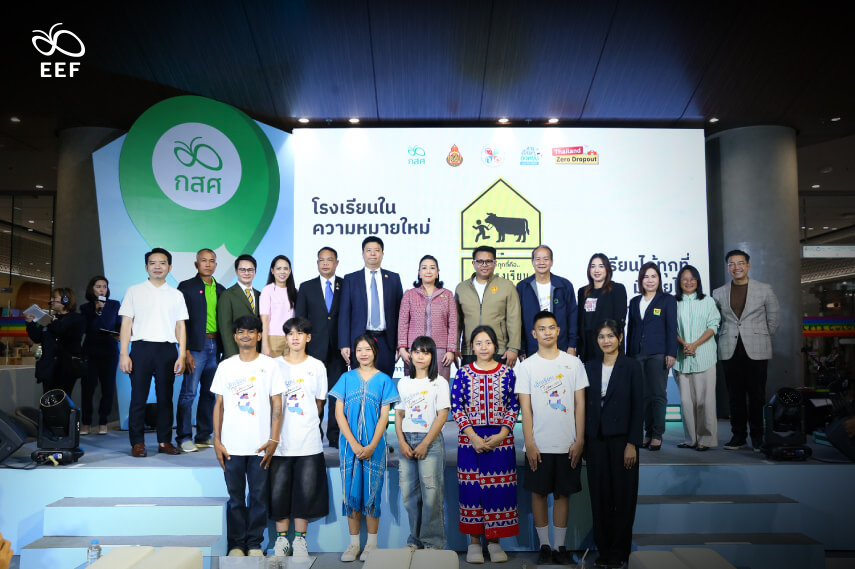
That is as much the promise as it is the imperative behind “Because Everywhere Is a Learning Space.” Education can no longer be bound by walls or limited by titles; it must be as open, adaptable, and alive as the children it seeks to reach. To that end, everyone has a part to play: whether in creating space for flexible learning, lending skills and time, or contributing funds, each act moves the needle. Donations to the EEF, eligible for double tax deductions, are not just charity; they are investments in futures that might otherwise be lost. The “Thailand Zero Dropout” vision is bold, but it is within reach, if we claim it together.
All For Education is all about people; only when all is in for education is Education For All. Join the movement to reduce educational inequality. Support the EEF by donating to fund research, partnerships, and assistance for children, youth, and adults in need of educational support. Click the link to contribute today and help create a society where education is open and equal for all. Together, we can make a lasting impact.


