Currently, Thailand is facing two critical demographic challenges: 1) the shift towards an aging society and 2) the lack of quality human capital in both the workforce and youth groups. By 2024, the proportion of the population aged 60 and above is expected to rise to 20% of the total population. The increasing number of elderly citizens comes with additional issues such as social isolation, lack of access to lifelong education, and digital illiteracy among older people, as well as the lack of skills to care for the elderly within the younger population. In the working-age population, over 16.1 million individuals have only lower secondary education or less, and only 14% are considered skilled labor. Furthermore, the number of NEET (Not in Education, Employment, or Training) youth continues to rise, with 1.4 million (about 15% of all youth) in 2024. This situation results in economic losses of approximately 330 billion baht per year for the country.
These issues highlight the necessity for investment in the development of the quality of life for Thai citizens at all stages of life. Nogezaka Glocal, a non-profit organization based in Yokohama, Japan, has introduced the concept of “intergenerational learning” as part of local development projects, providing opportunities for both elderly people and youth to access education and job skills while fostering stronger intergenerational relationships. This initiative aims to address the challenges posed by an aging society and ensure sustainable, harmonious coexistence between different generations.
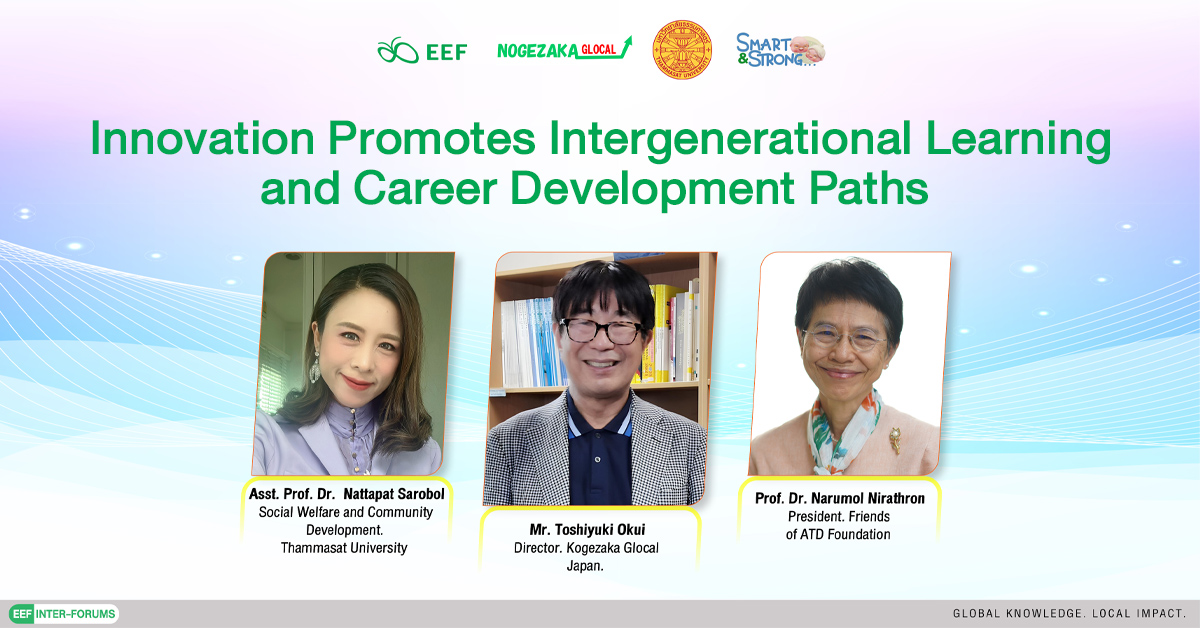
Under this framework, Nogezaka Glocal has also partnered with various international organizations to connect local knowledge and experiences to broader regions. In Thailand, the organization has collaborated with Thammasat University to implement the “SMART AND STRONG PROJECT”, a pilot programmed that supports the elderly in 39 local communities across the country.
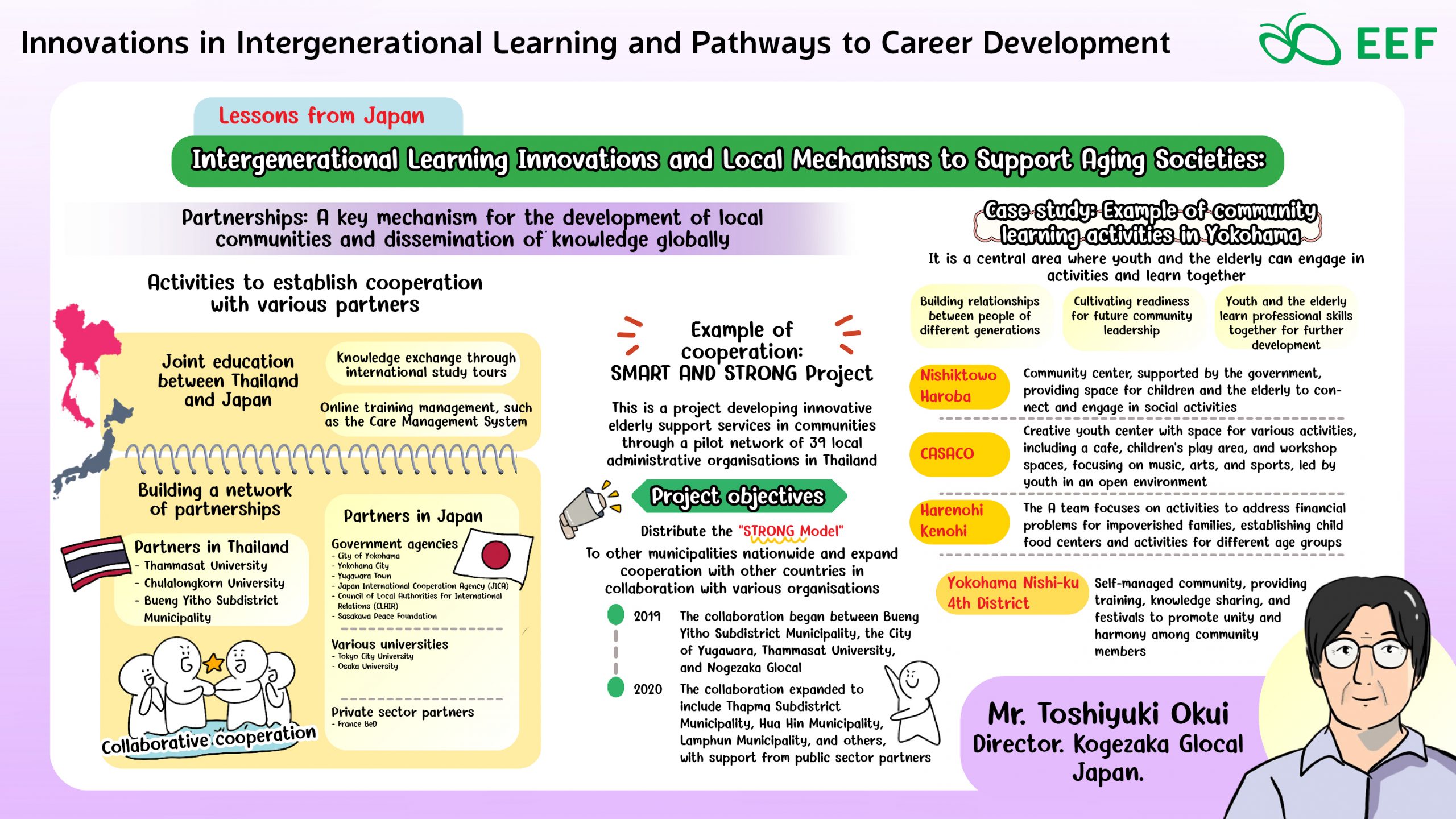
Presentation: Intergenerational Learning Innovations and Local Mechanisms to Support Aging Societies: Lessons from Japan
By Toshiyuki Okui, Founder of Nogezaka Glocal, Yokohama, Japan
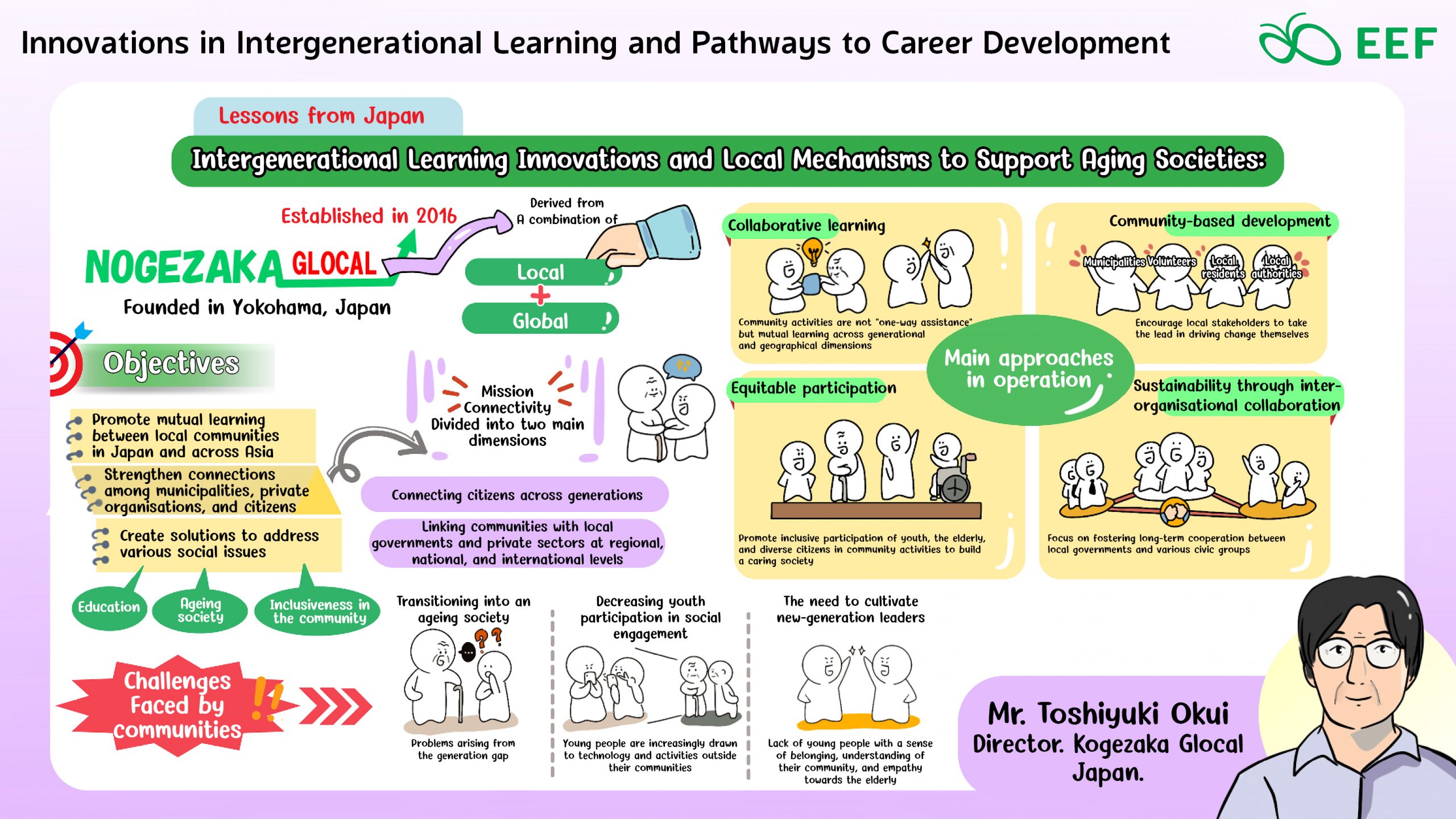
The key challenges facing local communities in Yokohama today are:
- Aging society: A growing number of elderly citizens are facing social isolation, as families lack successors and there is a generation gap between youth and seniors.
- Declining youth participation: Youth participation in community activities is decreasing due to the rise of technology-driven lifestyles, leading to less connection with local communities.
- Need for nurturing new leaders: The youth must be developed as future leaders in their communities, but there is a shortage of youth committed to community involvement and a lack of awareness regarding elderly care.
Nogezaka Glocal’s Mission: Connecting Generations and Communities
To address these challenges, Nogezaka Glocal operates under the mission of “connecting” — which is the core of the organisation’s “Glocal” concept. This involves:
- Connecting citizens of different ages (youth, adults, and seniors),
- Linking local communities with both regional and international organisations, whether public or private, through collaboration.
The main strategies employed by Nogezaka Glocal are as follows:
- Intergenerational learning: Community activities are not one-way “assistance” but foster mutual learning between youth and the elderly. Young people and seniors do not merely receive help but engage in joint activities across age and geographical boundaries.
- Community-based development: Encouraging local actors, whether municipal governments, volunteers, or community members, to lead the change themselves.
- Equal participation: Promoting inclusive participation of youth, elderly, and diverse community members in community activities to build a supportive environment.
- Sustainability through connections between organisations: Emphasising long-term cooperation between local governments and various community groups.
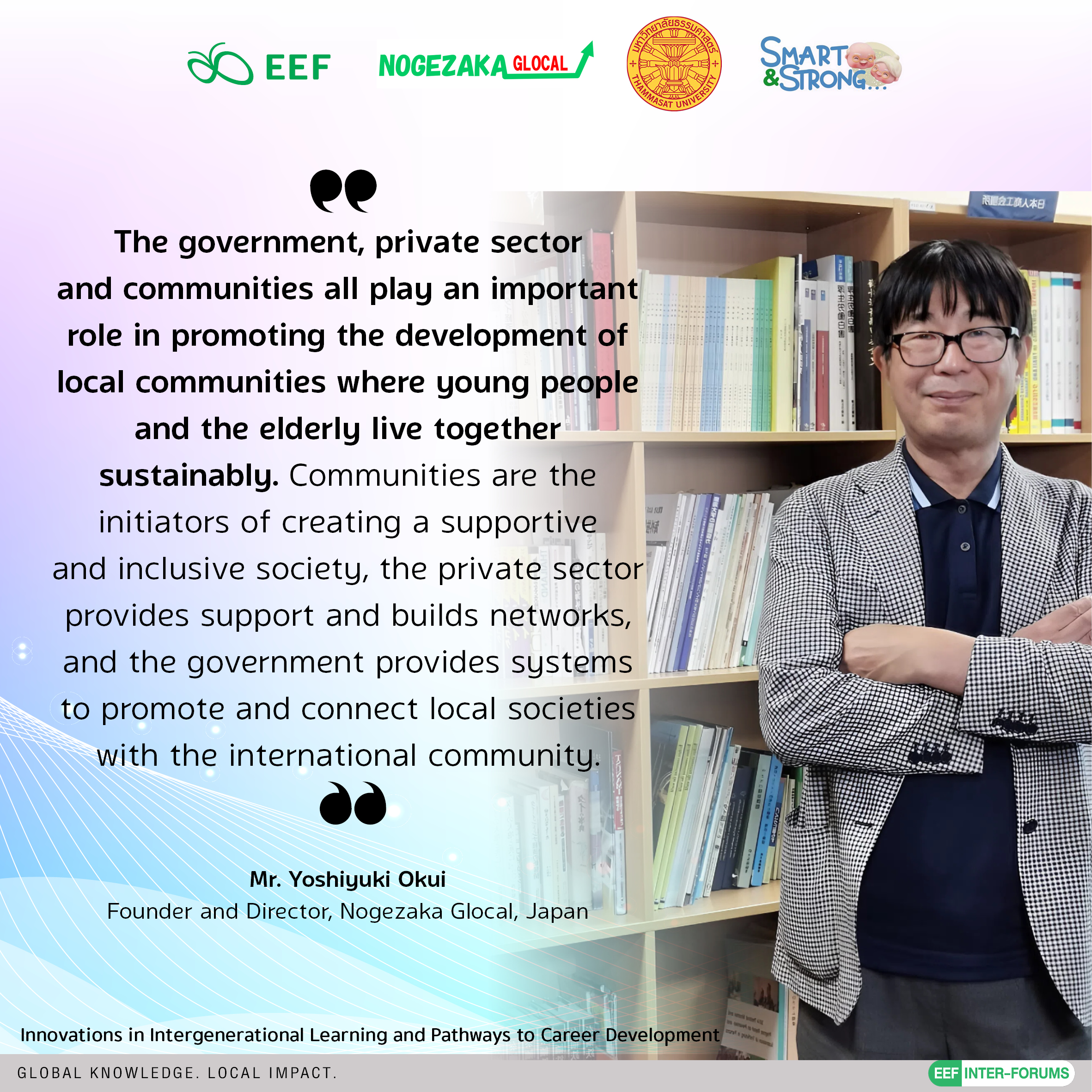
This approach aims to create a sustainable and equal society for the elderly by ensuring strong development structures, with local communities at the core, collaborating with government agencies at various levels and international organisations. Additionally, it seeks to nurture future leaders and create long-term, meaningful impact.
Case Studies: Community Learning Centres in Yokohama
In Yokohama, a crucial factor driving the success of Nogezaka Glocal’s work is the establishment of “Community Learning Centres”. These centres serve as open, shared spaces where youth and elderly individuals can participate in activities and learn together. These centres not only foster intergenerational relationships but also nurture youth to become future community leaders. They also enable both young people and seniors to learn job skills that can later be applied to income-generating activities.
Some key examples of Community Learning Centres in Yokohama are:
- Nishitomo Hiroba: Initiated by the Yokohama local government, this project is managed by a trusted non-profit organisation in the area. The centre offers a variety of activities, such as cultural exchanges, where both seniors and youth engage in social activities. The centre has achieved success due to its flexibility and funding from public resources.
- CASACO: A project run by the Connection of the Children (CoC) non-profit organisation, which targets youth and young people. The centre offers space for workshops, a café, and recreational activities, including music, sports, and art, with youth leadership at the forefront.
- Harenohi Kenohi: A volunteer-led project focusing on tackling financial issues for low-income families. The activities include establishing food centres for children, where volunteers and students come together to provide meals and support.
- Yokohama Nishi-ku 4th District: A project led by the community itself, focusing on educational activities for all ages. This project includes natural disaster training, festivals, and concerts, promoting inclusivity through community care.
Presentation: Smart and Strong Project – Connecting Youth with the Elderly in the Context of Local Communities in Thailand
By Assistant Professor Dr. Nattapat Sarobol,
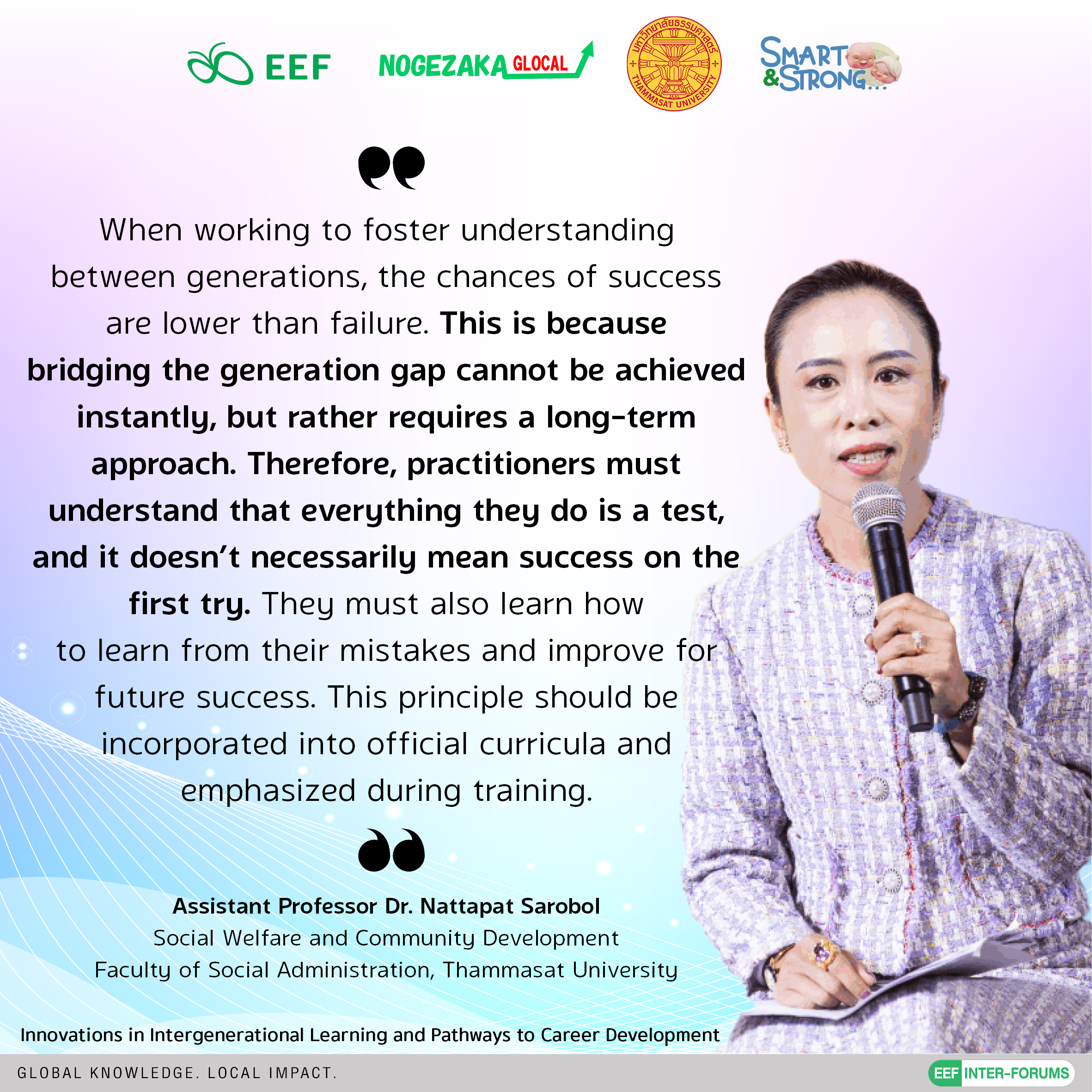
Lecturer, Department of Social Policy, Social Work, and Community Development, Faculty of Social Administration, Thammasat University
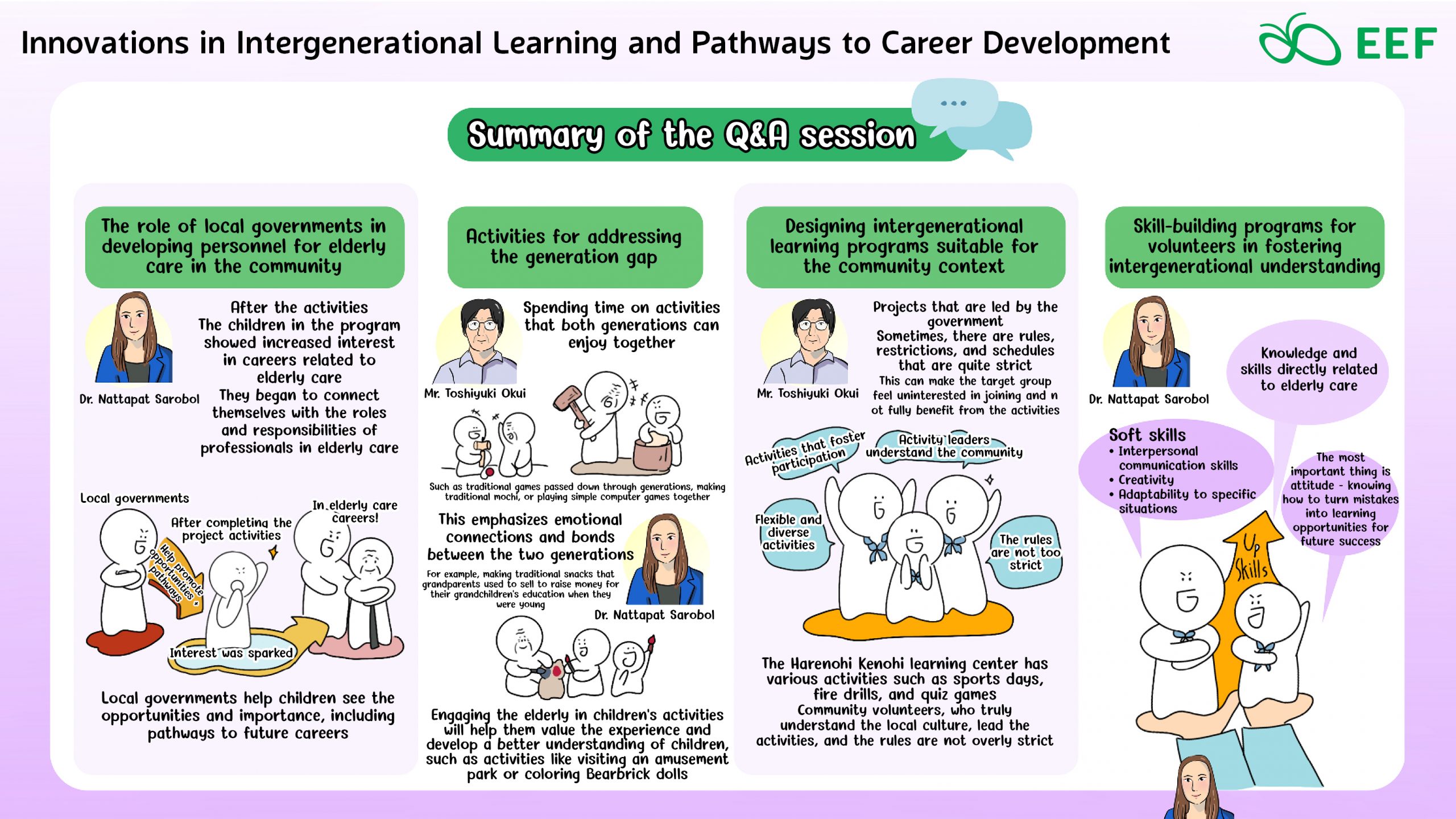
In Thailand, efforts are being made to bridge the gap between youth and the elderly through various local projects, with a focus on intergenerational learning and career development, particularly for youth. The strategies and results of some key programmes are as follows:
“Moving Across Generations” Programme by Khao Phra Ngam Subdistrict Municipality, Lopburi
This innovative programme focuses on fostering understanding across generations. It allows children and youth to experience the realities of aging through age-simulation devices and various social activities, helping to build closer relationships and mutual understanding. The core components of the programme include:
- Age-simulation devices in the “Moving Across Generations Classroom”
- Martial arts classes taught by retired soldiers
- Intergenerational music ensembles
- Youth volunteer visits to elderly homes
The programme is delivered by teachers, volunteers, parents, and a multidisciplinary team. It covers two main areas:
- Elderly care — including theoretical knowledge (e.g., elderly care science) and practical skills (e.g., massage therapy and providing emotional support).
- Developing awareness through demonstrations using age-simulation equipment (e.g., blindfolds, weight straps, senior-specific clothing) to simulate the physical experience of aging.
The community response has been positive. Youth volunteers reported a noticeable increase in empathy for the elderly. They understood that chronic complaints or obstacles faced by the elderly, such as hearing loss, stemmed from physical conditions, leading them to become more patient and understanding when caring for seniors. At the same time, elderly people in the community felt valued and not neglected, appreciating the local government’s efforts in caring for the elderly, the disabled, and patients, which strengthened their sense of belonging within society. Additionally, youth in the programme have used the knowledge gained to create YouTube content on elderly care and Alzheimer’s disease awareness.
“Dementia Supporter” Programme by Hua Hin Municipality, Prachuap Khiri Khan
This programme aims to create a volunteer network to support dementia patients, open to participants of all ages. The main idea is to train people from all age groups to become “Dementia Supporters”, equipping them with the knowledge and basic skills needed to assist and support dementia patients within the community.
These volunteers play an essential role in monitoring, assisting, and reporting cases where patients go missing or display behaviour that is difficult to understand. The programme also promotes positive attitudes towards the elderly, especially those with cognitive impairments, and instils the spirit of volunteering to help government officials in the mission of elderly care.
Currently, this programme concept has been extended to Bung Yitho Subdistrict Municipality, which is focusing on training middle-school youth as the future leaders of the community.
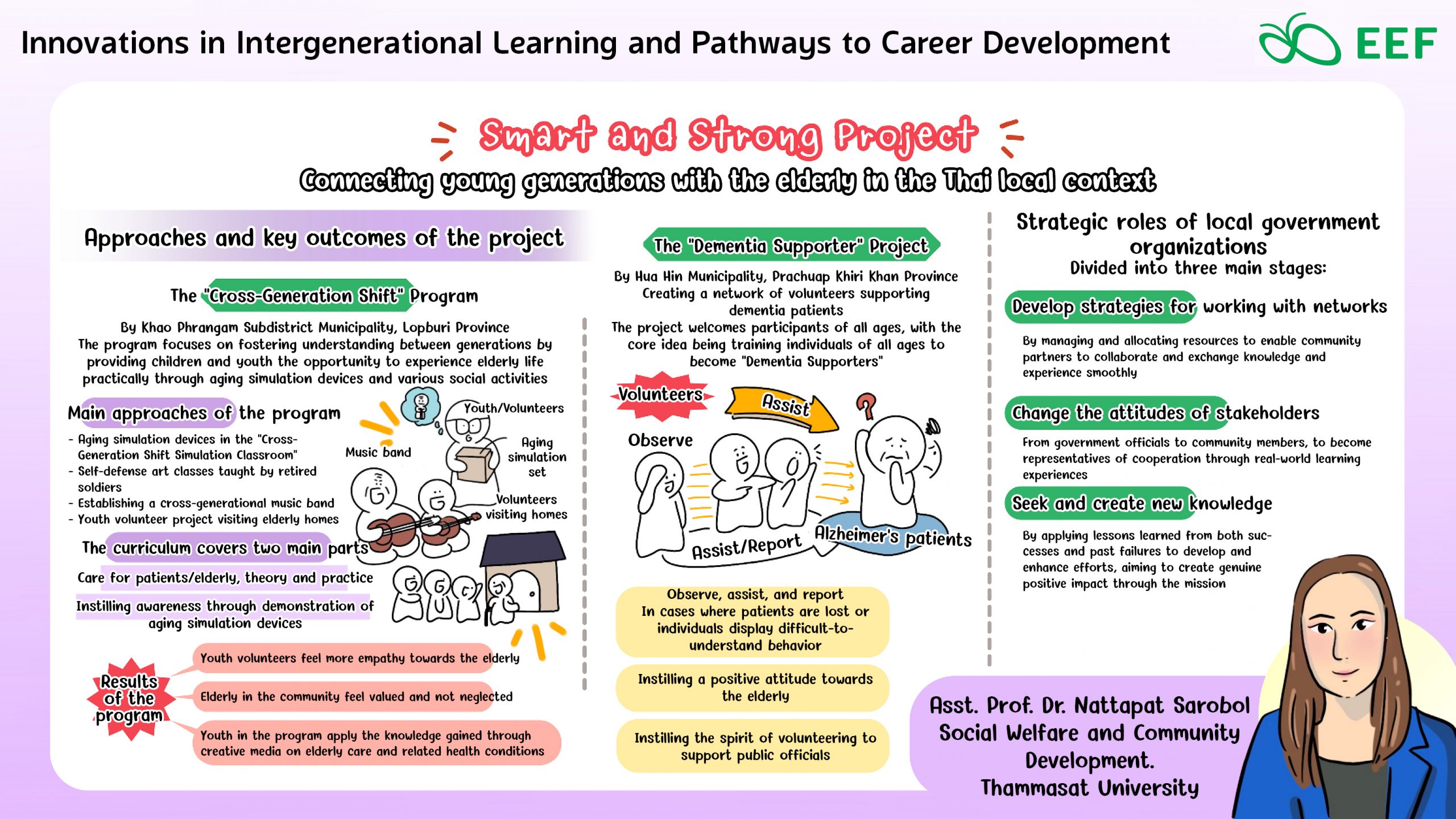
Strategic Role of Local Governments in Social Sustainability
Local governments play a significant role in sustaining and expanding these social innovations. The approach local governments should take is broken down into three main phases:
- Building network strategies by providing and allocating resources (including knowledge, time, and manpower) to ensure that community partners can work together seamlessly and share knowledge and experiences easily.
- Shifting attitudes among stakeholders, from government officials to community members, so that they become representatives of cooperation. This can be achieved by learning from real-world experiences, which will help build a positive attitude, strengthen community bonds, and open up new career opportunities in elderly care.
- Seeking and creating new knowledge by taking lessons from both successes and failures in the past and using that knowledge to drive positive impacts in the future.