
How EEF (Thailand) is building education systems that keep children learning
The Education Security System is an EEF (Thailand) framework that connects student data, supports flexible learning, and directs resources where they are most needed—helping schools and learners stay on track even when budgets or policies change.
Thailand is facing major changes, from a declining birthrate to rapid advances in technology. These shifts can widen existing gaps if every child does not have an equal opportunity to learn and develop. Against this backdrop, the Equitable Education Fund (EEF) Thailand hosted the Equity Forum 2026 in Bangkok. Themed “8 for Infinity: 8 Game-Changing Innovations for a Sustainable Future of Thai Human Capital,” the event established a key message: education must be treated as a long-term investment in people, not simply an annual budget expense.
Building a stronger education system means ensuring that policies continue beyond political cycles, resources reach the children and schools that need them most, and every learner can be identified and supported before they are left behind.
Build an Education Security System
- Keep policy moving forward
Use data, evidence, international standards, and clear policy frameworks to help education reforms continue across changes in government. - Fund based on need
Move beyond the same support for every student by directing more resources to remote communities, students with special needs, disadvantaged learners, and early childhood education. - Build shared commitment for change
Bring different sectors and communities together to improve outdated education systems, strengthen schools, and build long-term support for reform. - Know every learner
Connect data across agencies to identify students at risk, understand their needs, and provide support before they drop out.
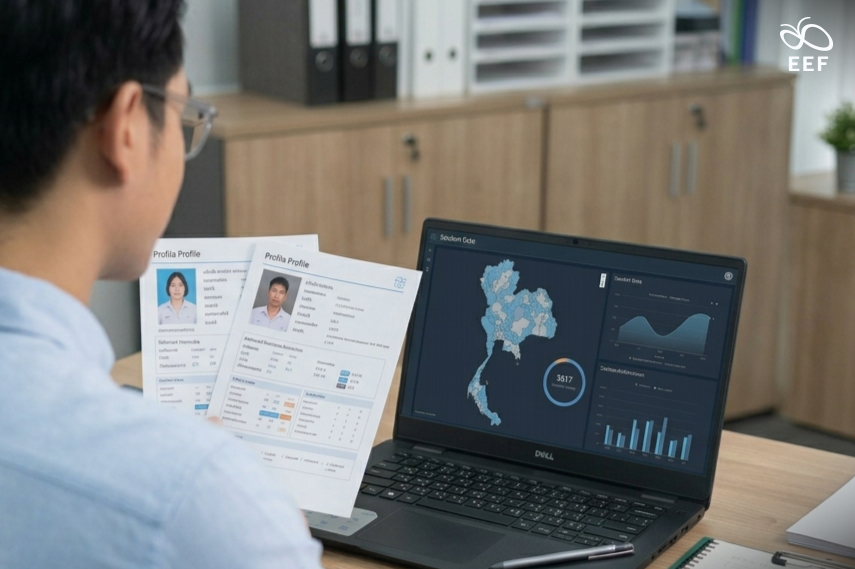
Executing this tracking vision, EEF (Thailand) developed the Information System for Equitable Education (iSEE), connecting databases across 20 ministries to help identify more than 4 million vulnerable children. In 2025, iSEE enabled 400,000 teachers to deliver targeted Conditional Cash Transfers (CCT) to 1.39 million impoverished students whose families earn an average of 1,236 Thai Baht monthly. This support contributed to a 97% student retention rate, while also connecting learners to vocational training and higher education opportunities.
Data, however, is only the beginning. EEF (Thailand) combines information with action on the ground. Through the Homegrown Teacher program, local young people are supported to become teachers in their own communities, helping address teacher shortages in rural areas. Also, the Flexible Learning approaches include “1 School, 3 Models” in 927 districts and Mobile Schools in 71 provinces. Through this opportunity, young people can connect learning from work and other experiences with formal education and qualifications.
EEF (Thailand) also uses research and evidence to identify where change is needed most. Research shows that learning gaps can widen as rural students progress through school, while at the same time, 15% of students from the poorest households outperform national academic averages. This demonstrates that poverty does not determine a child’s potential when the right support and opportunities are available.
To strengthen teaching and school quality, the Teacher and School Quality Movement (TSQM) is supporting improvements across 1,364 schools in 48 provinces. Meanwhile, 3,661 institutions are using the Q-Info digital platform to help schools and local leaders use data to plan and improve learning.
From Local Innovation to National Action
Through public-private partnerships, the Thailand Zero Dropout (TZD) initiative demonstrates how collaboration can expand education opportunities. The work grew from a 100 million Thai Baht private investment social bond in Ratchaburi into a nationwide “Learn to Earn” approach.
In the first semester of 2026, the initiative supported the return of 330,000 out-of-school children and youth to learning. Through the broader All for Education partnership, 27 million Thai Baht and 1,148 computers were mobilized for 146 remote schools, while education support reached 15,208 students affected by floods in Songkhla.
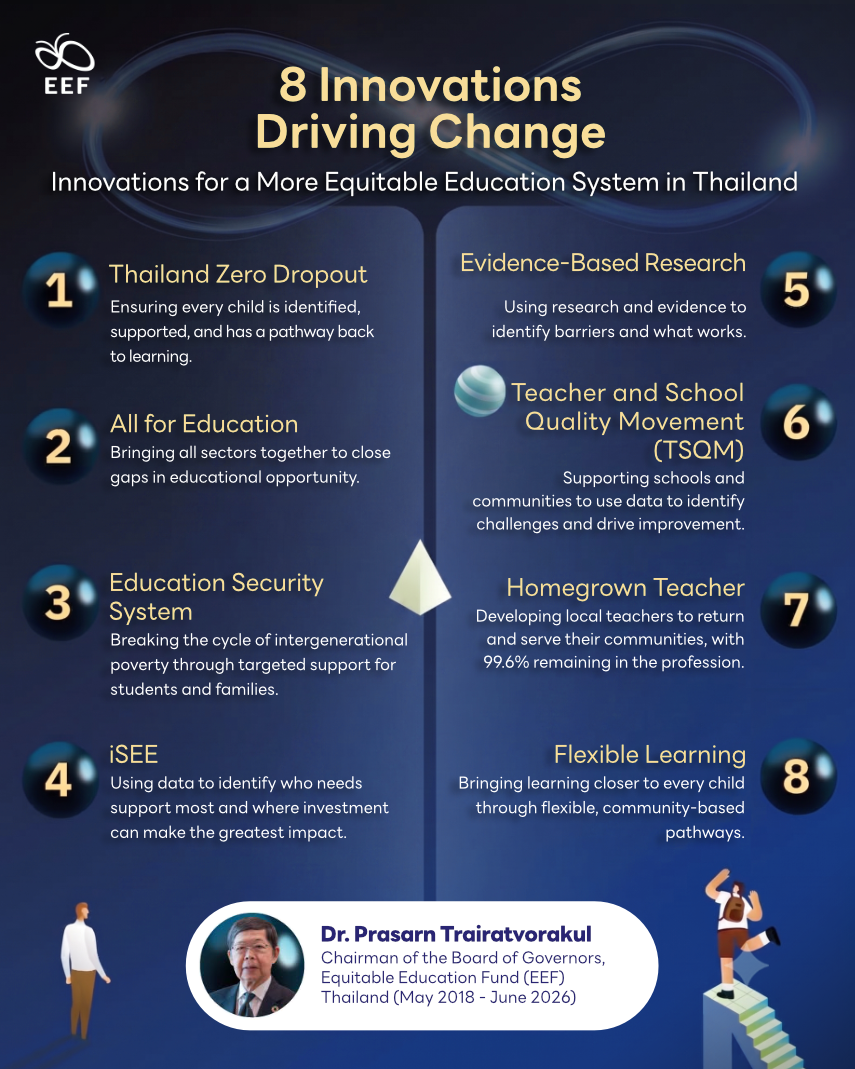
Together, these efforts are building a stronger education safety net, one that connects data, funding, flexible learning, teachers, communities, and partnerships to ensure that children can stay in learning and continue developing their potential.
As Thailand prepares for its 2028 ASEAN Chairmanship, the experience gained through these initiatives can also contribute to wider regional cooperation, including the ambition to advance ASEAN Zero Dropout 2030.
Source: