
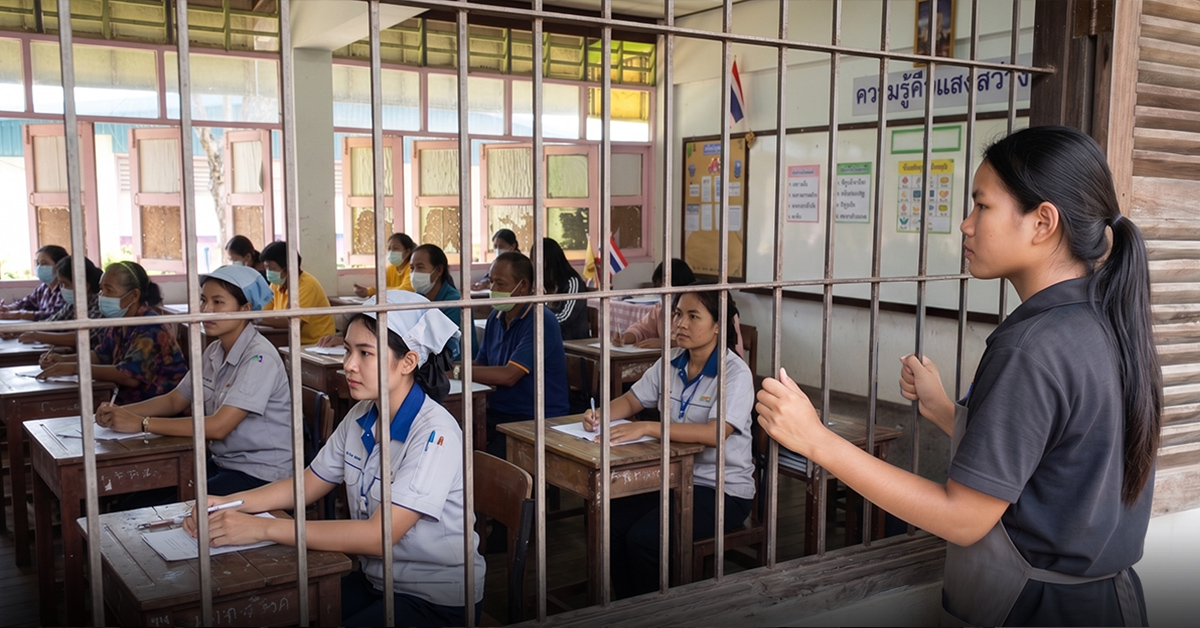
How Global Evidence and Thai Experience Dovetail into Bringing Every Learner Back to School
Flexible adult learning serves as an educational safety net designed to seamlessly reintegrate adults into the learning ecosystem. It eliminates structural barriers to re-entry by aligning data tracking, skill diagnostics, learning pathways, and credential recognition.
Across OECD countries, a profound literacy divide persists: only 26% of adults with the lowest literacy levels participate in learning, compared to 70% of high-literacy adults. Even with identical formal educational attainment, individuals with weaker adaptive problem-solving skills return to education at significantly lower rates: 42% versus 74% among tertiary-educated adults. For Thailand, this structural disparity hits out-of-school children and youth hardest. Without systemic intervention, these early tracking gaps compound into structural exclusion, permanently locking vulnerable adults out of both stable employment and formal/non-formal learning pathways over their life course.
How Early Gaps Become Lifelong Disadvantage: Compounding Cost of Early Gaps
Early academic struggles create long-term structural disadvantages, heavily driven by daily skill environment. Data from the OECD highlights this divide in ongoing adult education participation rates:
- High-Use Group (Daily Skill Application): 68% participation for adults who have completed tertiary education versus 42% for those who have completed less than upper-secondary.
- Low-Use Group (Minimal Skill Application): 44% participation for adults who have completed tertiary education versus 14% for those who have completed less than upper-secondary.
Because these critical problem-solving competencies are primarily reinforced through informal and non-formal workplace learning rather than traditional classrooms, access is highly unequal. Concurrently, adult numeracy levels are declining across the 25–34, 35–44, and 55–65 age brackets, accelerating economic displacement for low-skilled and informal workers who lack flexible, community-embedded learning pathways.
What Flexible Learning Really Means: Redefining Lifelong Learning through an OECD Lens
To counter declining foundational skills, policy frameworks must transition from isolated project-based interventions to an integrated, systemic structure. Operationalizing this model requires explicit design choices that align structural learner needs with an integrated operational strategy:
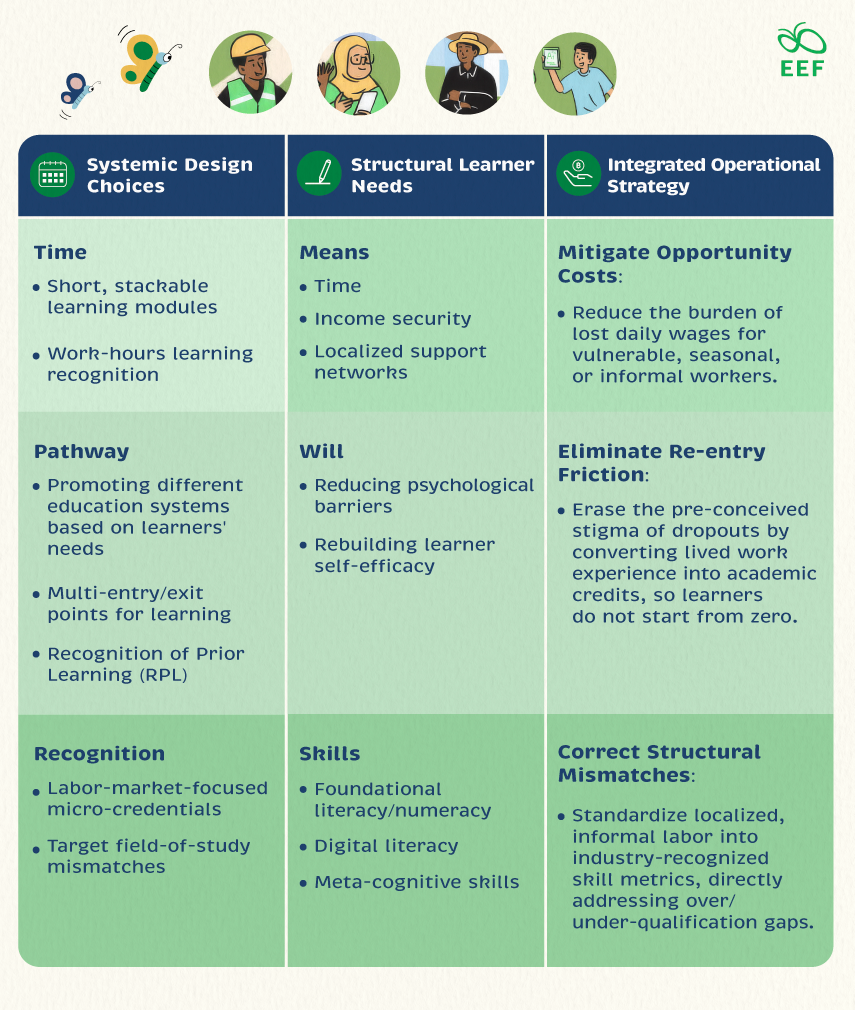
For Thailand, this integrated framework actively prevents structural exclusion by transforming daily environments into educational pathways. In this configuration, flexible learning functions as a critical second-chance mechanism to repair early exclusion, protect vulnerable human capital, and improve employability in an increasingly complex VUCA world.
What Would “Leaving No One Behind” Look Like: From Evidence to Requirement
To build an inclusive adult education framework, policymakers face three strategic requirements by equitable financing policies:
- Link secondary school warning indicators (chronic absence, low grades) directly to adult learning recruitment networks via data and early warning systems.
- Convert community and workplace spaces where adults already use foundational skills into formal educational gateways by building robust public and private partnerships (PPP).
- Target funding for AI-readiness and technical transition toward vulnerable, low-skilled populations rather than exclusively high-skilled workers to accelerate systemic skills development.
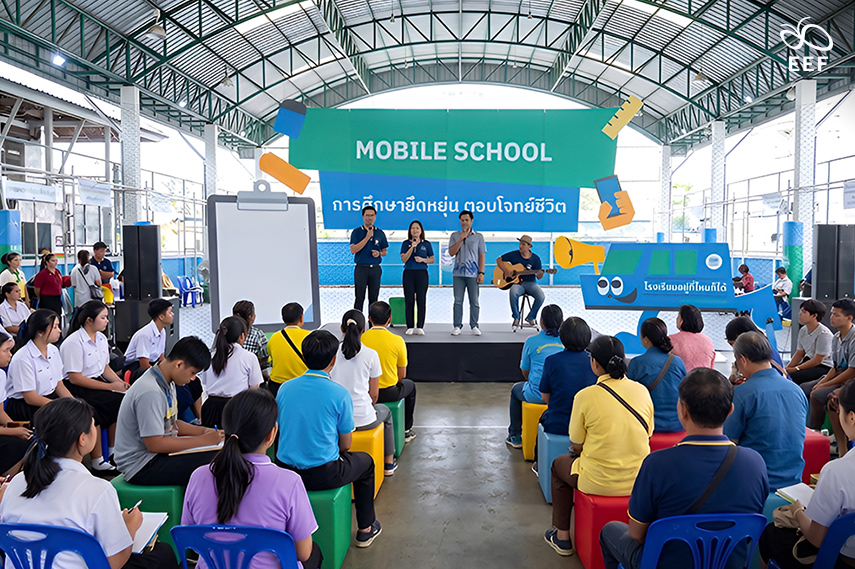
What Thailand Is Already Doing: Early Moves Toward Flexible Learning
Between 2023 and 2026, cross-agency database integration engineered by the Equitable Education Fund (EEF) Thailand reduced the unlisted learner population from over one million to approximately 600,000, establishing the foundation for a more flexible, data-driven education security system.
- Identification and Diagnostics: While Thailand Zero Dropout Plus (TZD+) identifies missing individuals, the Adult Skills Assessment in Thailand (ASAT) and the Provincial Adult Skills Assessment in Thailand (PASAT) map localized deficits in literacy, digital, and socio-emotional competencies.
- Flexible Delivery Channels: Under the 1-School-3-Models and Seamless 20-Year Educational Journey frameworks, individual schools manage formal, non-formal, and informal tracks simultaneously to transform the whole school system.
- Credential and Recognition Systems: Operating in tandem with the national Credit Bank, the Learning Passport allows out-of-school youth and adult workers to accumulate, transfer, and convert micro-modules and prior work experience into formal qualifications without restarting from zero.
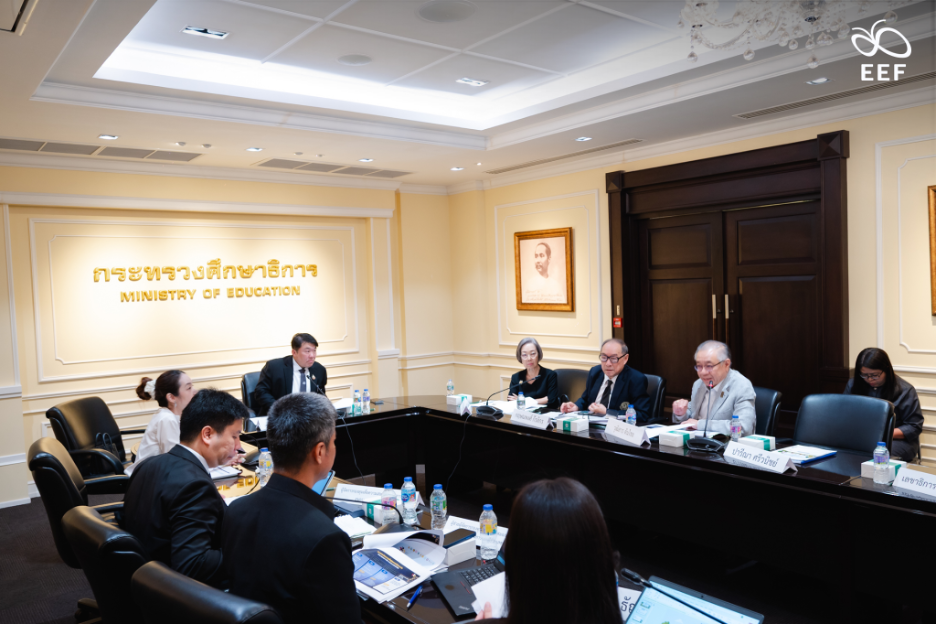
Looking Forward: A Thai Model of Flexible Adult Learning for ASEA
Through the Regional Policy Dialogue on Lifelong Learning—developed with UNESCO—and the expansion of the Thailand Network of Learning Cities, these mechanisms are integrated into provincial and municipal governance. As Thailand approaches its 2028 ASEAN Chairmanship, this infrastructure serves as the blueprint for a regional ASEAN Zero Dropout 2030 commitment. By actively looking beyond 2030, this framework secures a sustainable pathway toward global SDG4 targets.
Only when global data and local execution completely align can a truly flexible lifelong learning system take root, transforming early educational exclusion from a lifetime disadvantage into a bridge that brings every single learner back to school.
Source: