
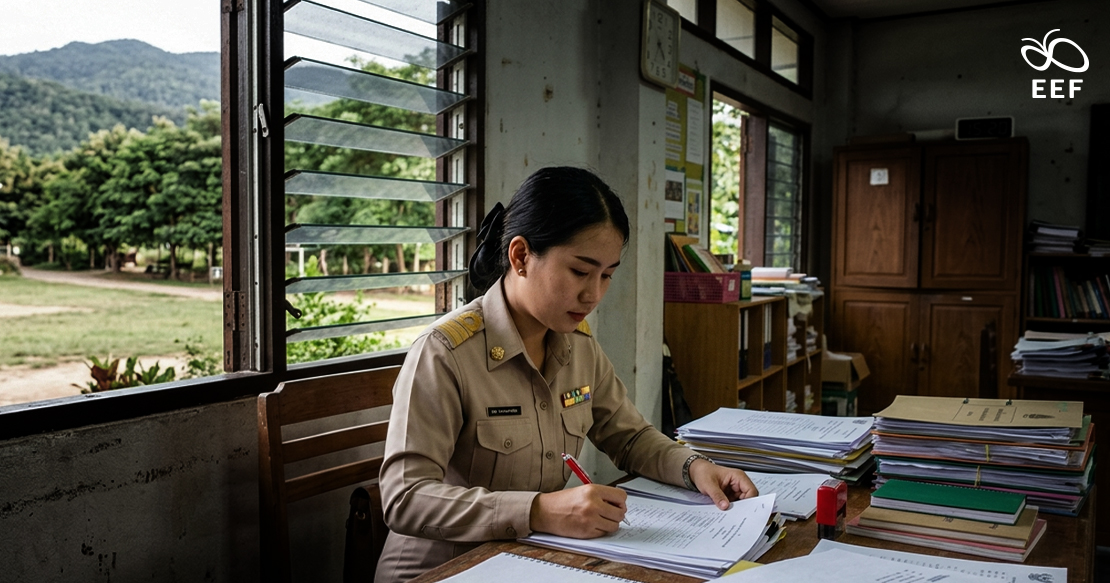
The heavy workload of teachers in Thailand’s small schools is a clear warning sign. These schools are showing that the current way the education system is run cannot survive in today’s fast-changing, unpredictable world (often called a VUCA world – volatility, uncertainty, complexity, and ambiguity).
Instead of waiting for students’ grades to drop before taking action, the Equitable Education Fund (EEF) Thailand believes we must act now. We need to use teacher workload data as an Early Warning System to see where schools are struggling before the students suffer the consequences.
A System in Trouble: The Reality of “Heavy Teaching”
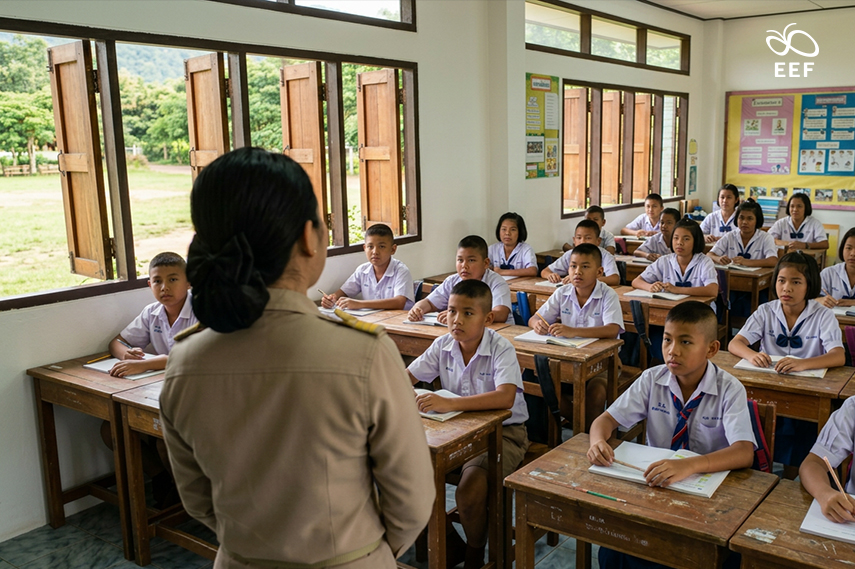
A recent study by the Equitable Education Research Institute (EEFI) looked at teachers across different types of schools. The data showed a severe problem: teachers in small schools teach an average of 27.31 hours per week. This is 37.6% higher than the Ministry of Education’s standard.
The study also found an unfair division of work. More experienced teachers often get fewer teaching hours, leaving new teachers to run “Heavy” schedules, teaching many different subjects and grade levels. This creates a trap: small schools, which have the least finances and staff, demand the most from their teachers. As a result, the disadvantaged students who need the most help end up getting the least focused teaching time.
Reading the Signals: The Hidden Paperwork Burden
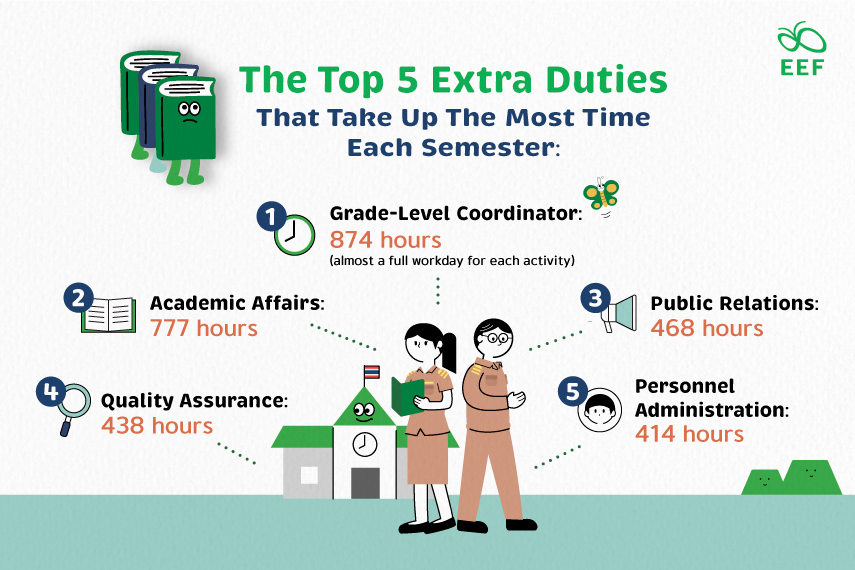
The pressure does not stop in the classroom. Teachers also have a huge amount of paperwork and side tasks. The study found the top 5 extra duties that take up the most time each semester:
- Grade-Level Coordinator: 874 hours (almost a full workday for each activity)
- Academic Affairs: 777 hours
- Public Relations: 468 hours
- Quality Assurance: 438 hours
- Personnel Administration: 414 hours
The research points out that schools urgently need to hire trained professionals for these jobs. Schools need: 1) PR staff for news and media, 2) Technicians and maintenance workers for equipment and buildings, and 3) Admin and finance staff for paperwork and budgets. Forcing teachers to do these jobs without training takes away from their teaching time and causes mistakes in school management.
The Human Cost: When Teachers Burn Out
When teachers are pushed to the limit, students pay the price. The extreme workload is ruining both teaching quality and the teachers’ health:
- 47.7% of teachers say their heavy workload lowers the quality of their teaching.
- Only 29.7% say they have sufficient time to prepare lessons effectively.
- 63% report that their work-life balance is completely broken, leading to high stress and burnout.
We cannot expect tired, stressed teachers to inspire and build strong, capable students.
Looking Beyond 2030: Building Stronger Schools
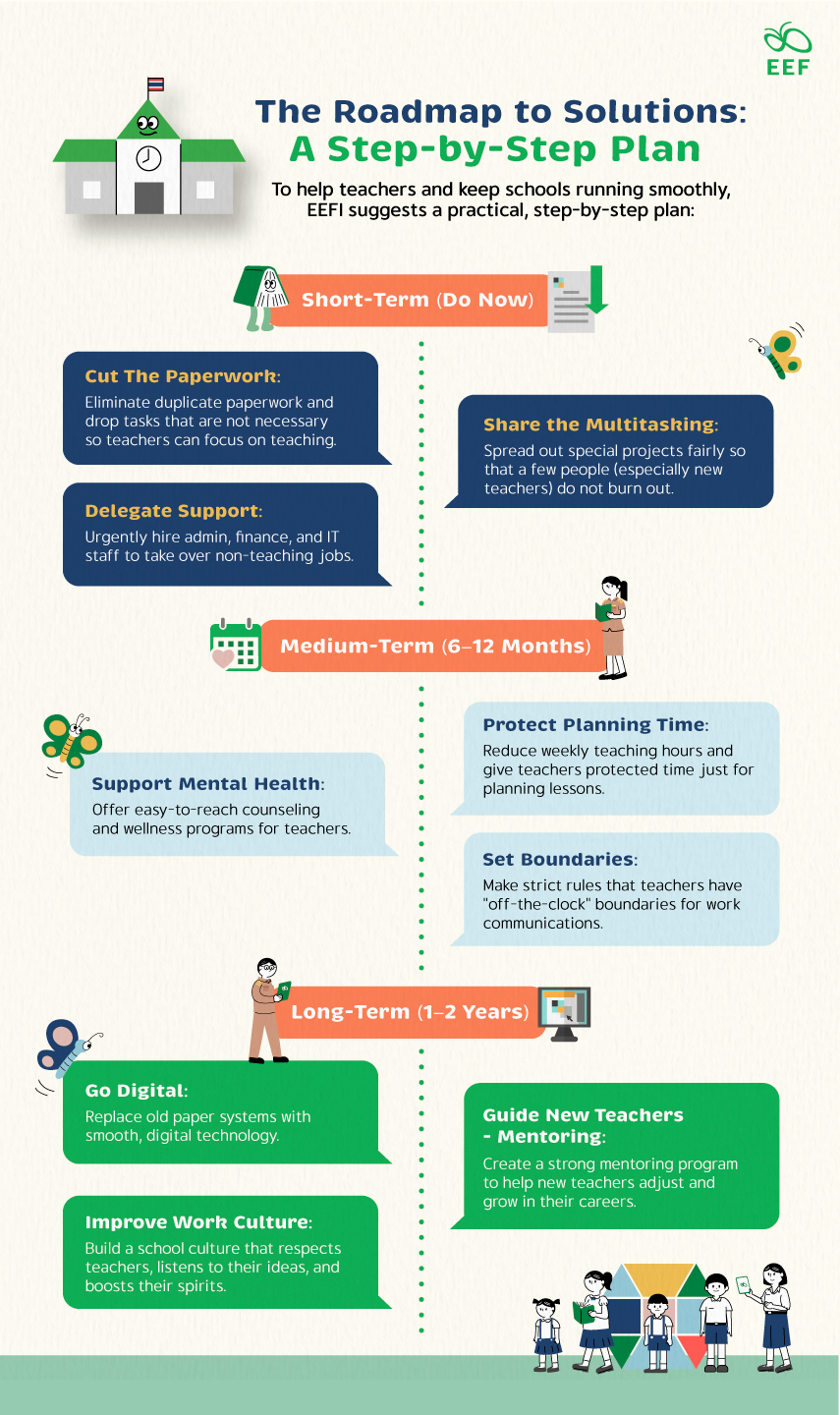
These steps are part of a bigger goal under the EEF’s “Looking Beyond 2030” plan. We can no longer treat teacher burnout as just a daily complaint; it is a major threat to the future of our education system. By using workload data as an early warning sign and following this step-by-step plan, we can fix the problem. This will help us build a school system that is fair, flexible, and ready to handle whatever the future brings.
Discover More Insights If you would like to read more about EEFI’s research or explore in-depth data and insights into equitable education issues and crises in Thailand, please visit: https://research.eef.or.th/en/
Original Source: https://www.eef.or.th/news-170126/