
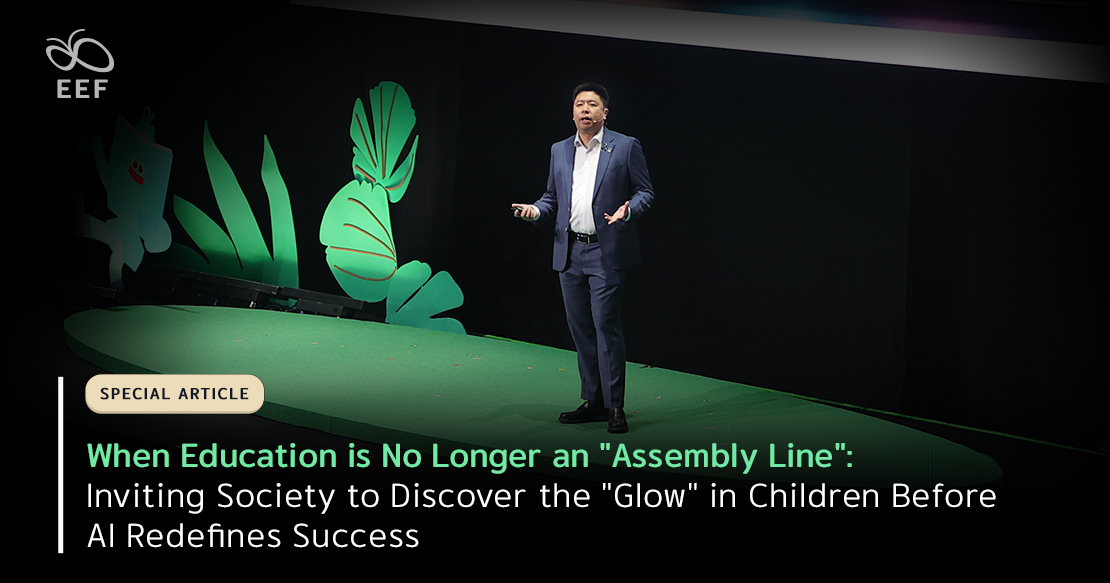
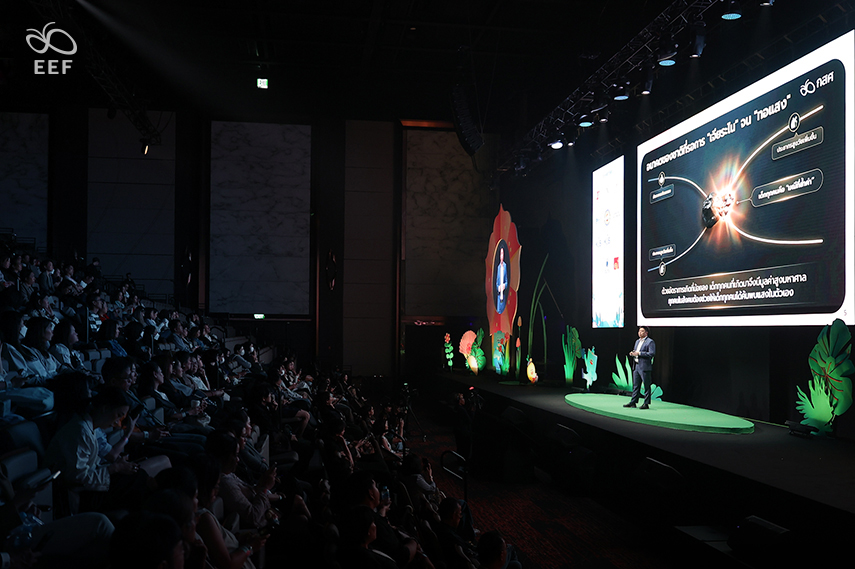
“Have you ever experienced a day when a child discovers something they truly love, and it feels as though a certain energy or light is radiating from within them?” This thought-provoking question from Dr. Kraiyos Patrawart, Managing Director of the Equitable Education Fund (EEF) Thailand, at the Alpha Skills Summit & Expo 2026 under the topic “Glowing Together: Unlocking Thai Children’s Potential Through Self-Discovery,” serves as a crucial milestone challenging society to rethink the definition of growth. In an era where technology evolves faster than school curricula, simply “Growing Together” may no longer be enough. The new goal is “Glowing”—the exact moment a child discovers their true self and radiates from within. This inner light will become the compass guiding their lives in a time when AI is completely redefining what success means.
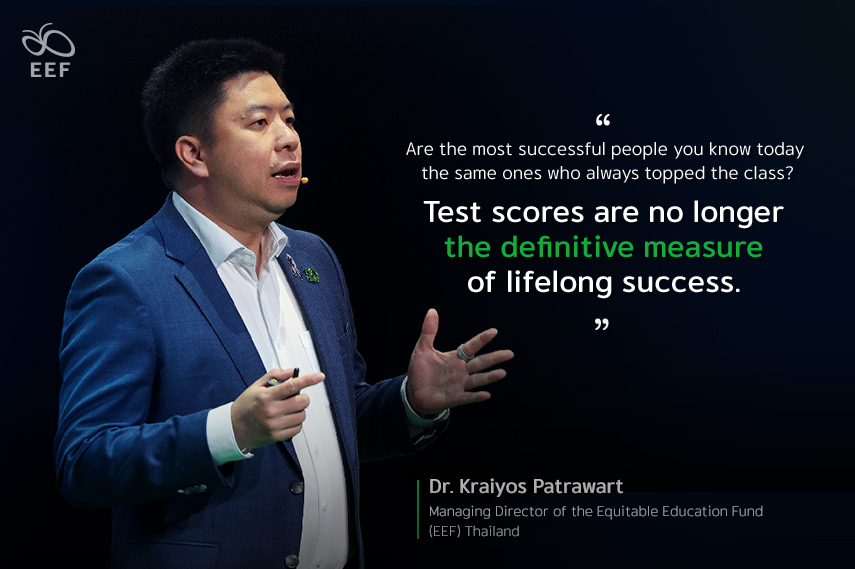
Breaking the Assembly Line: When Grades Are No Longer the Only Measure of Life
For decades following the Industrial Revolution, educational systems worldwide were designed much like manufacturing assembly lines. The focus was on producing a workforce for the economy by teaching rigid subjects and measuring success through test scores and rankings. However, today, technologies like Artificial Intelligence (AI), automation, and robotics can perform repetitive tasks much faster and more accurately than humans. Simply doing the same work faster is no longer the skill the world needs. Dr. Kraiyos pointed out that the education system must break free from merely being a tool that feeds people into the labor market. Instead, it must focus on building “humanity”—the skills that technology cannot replace.
The Demographic Crisis: Fewer Children Means Everyone Must Shine
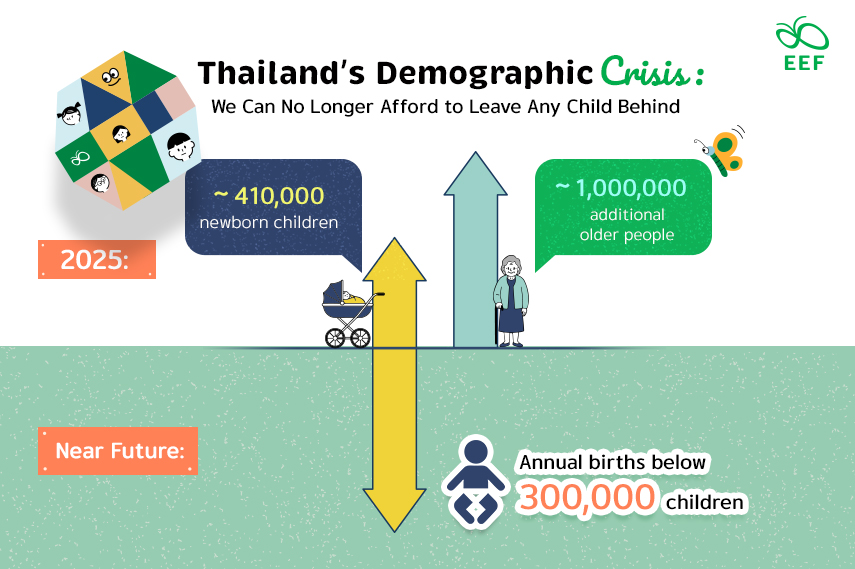
A concerning crisis is that in 2025, Thailand will have only about 410,000 newborns, contrasting sharply with an elderly population that is increasing by the millions. It is also projected that by 2026, the number of newborns may drop below 300,000. With the number of children decreasing so significantly, Thai society must shift from screening children with a single, one-size-fits-all ruler to polishing every single child as if they were a precious gemstone. The education system must allow each child to discover their identity and “glow.” This mission cannot be achieved by the children alone; it requires collaborative support from families, teachers, the education system, and society. Everyone has a role to play.
Success Is Not Built Alone: It Starts With Someone Who Sees the Potential
Dr. Kraiyos highlighted lessons from world-class athletes like U.S. figure skater Alysa Liu and major champion golfer Rory McIlroy. Their stories reflect that talent can only grow when there is a “supporter” who sees it. Behind their success were parents who observed what their children loved, accepted the natural rhythms of life—both the pauses and the progress—and sacrificed their own hard work to support their children’s paths. This reinforces the fact that a child’s potential will fully blossom only when they are in an environment that allows them to grow in their own unique way.
The Changing Role of the Family: From Sending Kids to School to “Learning Designers”
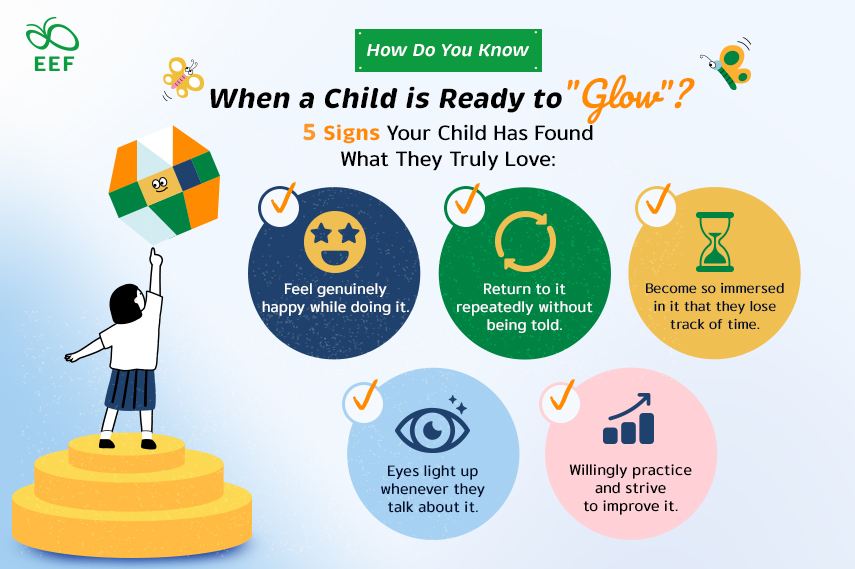
Dr. Kraiyos emphasized that the role of the family is no longer just about sending children to school on time, but stepping into the role of a “Learning Designer.” Even though children spend 8 to 10 hours a day at school, their time at home makes up two-thirds of their lives and remains the most important space for self-discovery. This transition can start by shifting the family’s mindset:
- Change how success is measured: Stop asking about test scores and instead pay attention to whether the child is making progress toward their own goals.
- Move from Standardization to Personalization: Stop pressuring children to be the same and to compete with others. Instead, open up space for them to compete against their own life goals.
“Future You”: An AI Innovation to Discover Identity and Reduce Inequality
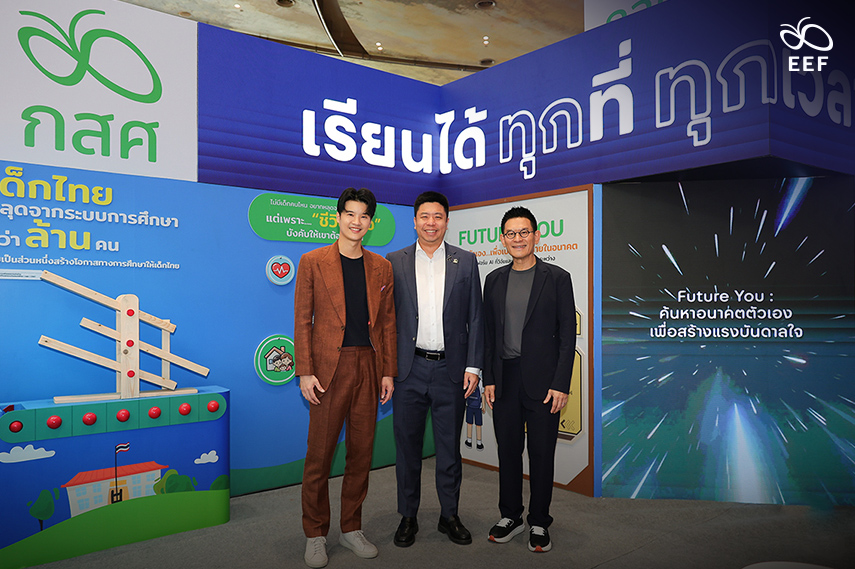
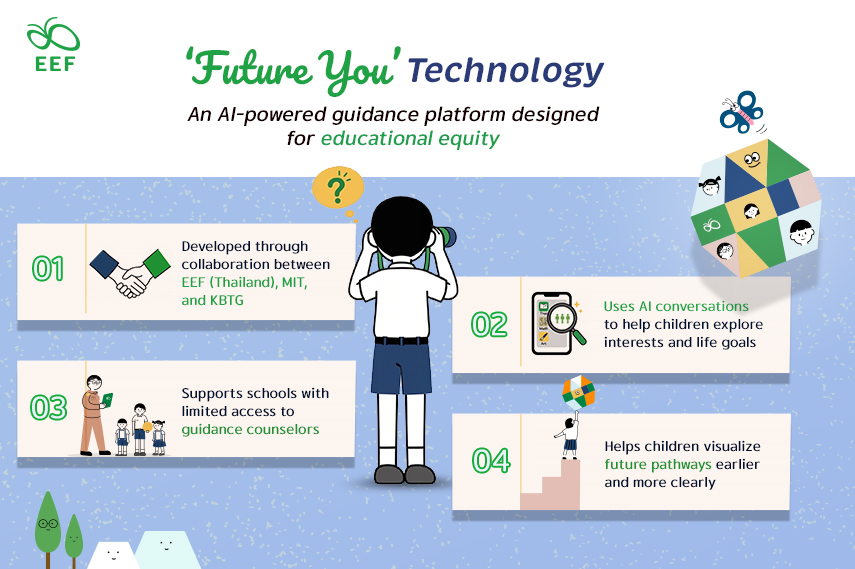
EEF, in collaboration with world-class organizations like MIT and KBTG, has launched “Future You,” an AI chatbot tool designed to help children discover their interests, aptitudes, and simulate their future life goals through conversation. This tool is not just a technological innovation, but an innovation to reduce inequality. Especially in remote schools that lack guidance counselors, “Future You” helps open up the world of careers, letting children learn firsthand that “the entire world can be a classroom.”
Toward a Future Where Every Child Glows and the Country Grows Sustainably
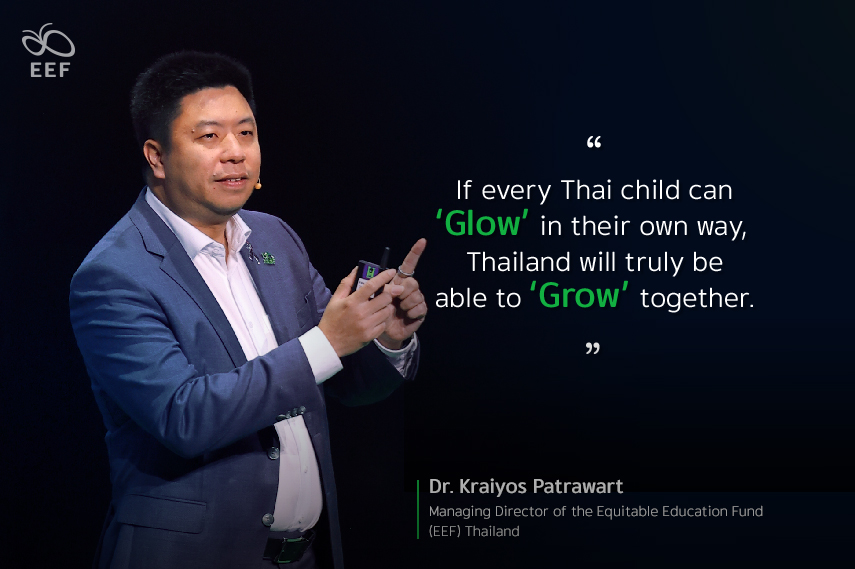
In closing, Dr. Kraiyos reiterated that education for the future is not a system trying to produce identically smart people. Instead, it is an ecosystem that embraces and supports each child to discover themselves and use their potential toward meaningful life goals. “Self-discovery” is the true starting point of educational planning. When children see their goals clearly, learning becomes meaningful. And on the day that every child can “Glow” in their own way, that is when Thailand will truly be able to “Grow” forward sustainably.
Source: Panel discussion at the Alpha Skills Summit & Expo 2026 on the topic “Glowing Together: Unlocking Thai Children’s Potential Through Self-Discovery,” by Dr. Kraiyos Patrawart, Managing Director of the Equitable Education Fund (EEF) Thailand.