
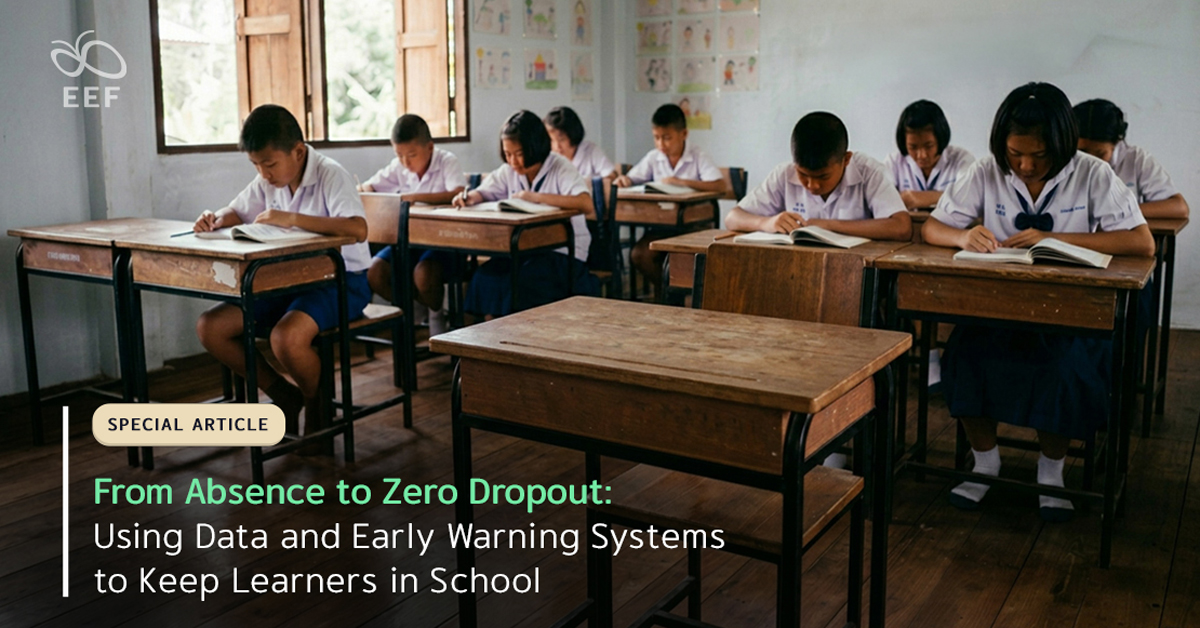
When a student disappears from the classroom, it is rarely just a behavioral issue or a matter of discipline; instead, it is an early warning sign of a much deeper crisis of inequality. To address this global challenge, the Organisation for Economic Co-operation and Development (OECD) recently hosted the international webinar “Getting Students Back to School and Keeping Them Engaged” to delve into the findings of their new report, Every Day Counts, which analyzes the sharp rise in student absenteeism worldwide, while aligning with European Union (EU) data regarding early school leavers. The consensus from these global platforms is clear: dropping out cannot be solved with punitive measures; instead, systems must rely on robust data, early interventions, and a shared responsibility across all sectors of society.
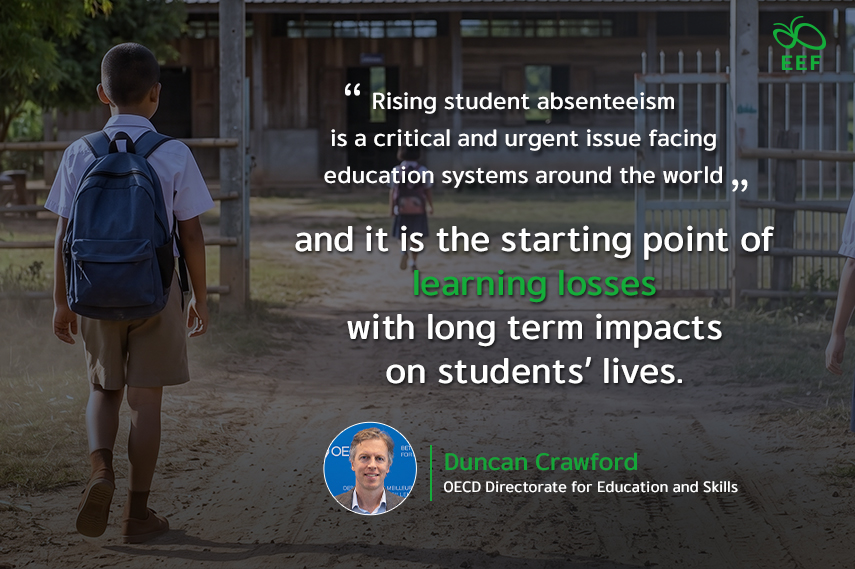
Absenteeism Crisis: Massive Cost of Human Capital Loss
European experiences indicate that the EU aims to reduce the proportion of early school leavers to below 9% by 2030. While several member states have already achieved this target, those who leave school early face severe long-term struggles, with only about 46% successfully entering the labor force. This represents a massive economic loss and a critical depletion of human capital.
Concurrently, data from PISA reveals that students who miss more than three consecutive months of school suffer a drop of 35 to 59 points in mathematics achievements. Absenteeism is not merely a loss of academic hours; it severely stunts social and emotional skills development and exponentially elevates the risk of a student permanently dropping out of the educational system.

Shifting the Paradigm: Proactive Support and Care
The OECD forum highlighted a critical shift in perspective: punitive measures—such as forced grade repetition—only further alienate vulnerable children. The true keys to retention are data-driven insights and positive engagement.
- England focuses on real-time data:
“We have focused on improving the timeliness and granularity of attendance data so we can understand the reasons behind absence and spot problems before they escalate.” – Alex Turner, Department for Education, England
- Luxembourg implements a tiered, integrated response:
“When a student is repeatedly absent, the system sends alerts to parents and coordinates with child protection services through a clear, stepwise process, emphasizing collaborative support rather than punishment.” – Claude Sevenig, Luxembourg Permanent Representation to the OECD and UNESCO
- Civil Society prioritizes empathy and active listening:
“The key is not to blame families, because when they feel accused they pull away just when we need them to talk openly so we can work together to bring their children back to school.” – Hedy Chang, Executive Director and Founder of Attendance Works
4 Policy Lessons: Toward Ensuring No One Is Left Behind
By synthesizing insights from global experts, four core policy design principles emerge:
- Treat Absence as an Early Warning Signal:
Educational systems must maintain individual-level tracking databases to detect attendance anomalies and project dropout risks early. - Build Safe Spaces and School Belonging:
Students who feel recognized, safe, and connected to at least one trusted adult or teacher exhibit a significantly higher likelihood of staying in school. - Strengthen Support During Educational Transitions:
The transition between school levels (e.g., primary to lower secondary) is the most fragile moment where students are prone to slip through the cracks. Seamless data transfer and dedicated guidance counseling are vital. - Foster Multi-Sectoral Shared Responsibility:
Bringing children back to learning is not a burden for teachers to carry alone. Lasting solutions require deep integration between schools, families, healthcare systems, social welfare departments, and local governments.

From Global Lessons to Thai Context: Driving the Thailand Zero Dropout Plus Initiative
The progress observed in the European Union and the empirical evidence provided by the OECD demonstrate that a “Zero Dropout” reality is fully attainable through systemic adaptation. This international framework directly mirrors Thailand’s domestic strategy driven by the Equitable Education Fund (EEF) Thailand through the Thailand Zero Dropout Plus (TZD+) initiative.
EEF (Thailand) has successfully shifted its paradigm—moving away from viewing dropouts as individual failures, and instead identifying systemic loopholes that require immediate institutional remedies. By building an Early Warning System and ensuring complete learner visibility through integrated, individual-level databases under the Education Security System, Thailand has achieved monumental progress. Between 2023 and 2026, the country successfully tracked, supported, and reduced the number of out-of-school children and youth from over 1.02 million down to 603,095 individuals. This marks a milestone transition from merely counting dropouts after the fact to practicing rigorous proactive prevention.
Lessons from the global stage validate that Thailand’s policy direction is fundamentally correct. Looking ahead, the EEF (Thailand) and its multi-sectoral networks intend to leverage Thailand’s upcoming ASEAN Chairmanship to champion the ASEAN Zero Dropout 2030 agenda. The goal is to elevate data-driven tracking, proactive early warnings, and seamless learner support into a unified, sustainable regional standard that protects every child’s right to education across Southeast Asia.
Sources:


