
Cities were established because the clustering of people and the agglomeration of industries increased production efficiency. In the 21st century, however, urban areas are no longer spaces of industrial production. Cities have been developed into complex spaces of consumption, services, residential functions, and learning centers.
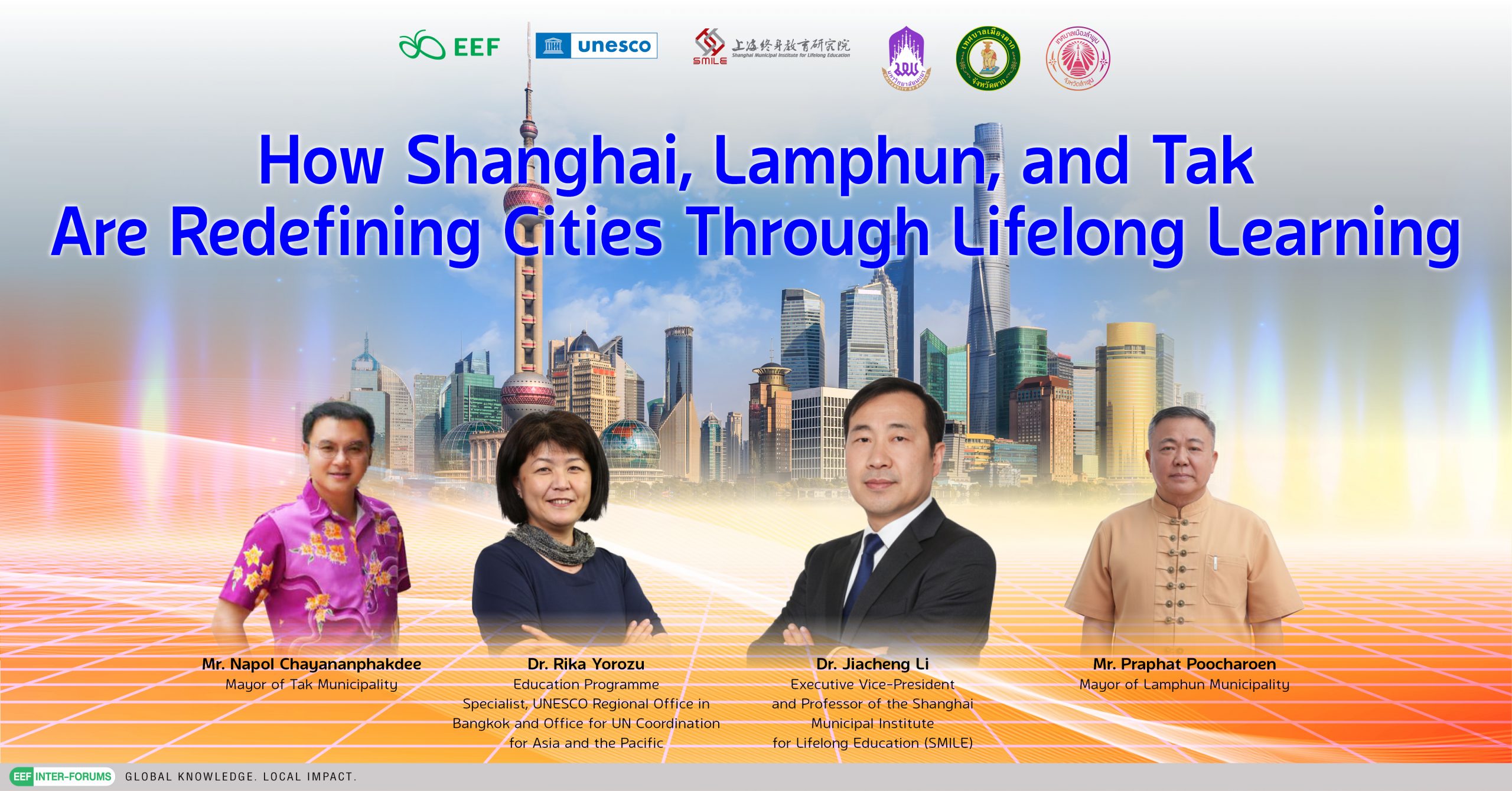
Therefore, on November 25, 2025, the Equitable Education Fund (EEF) Thailand organized an online seminar titled “Shanghai Learning City: Advancing Human Capital for Innovative Future” to discuss how cities can grow together with human development.
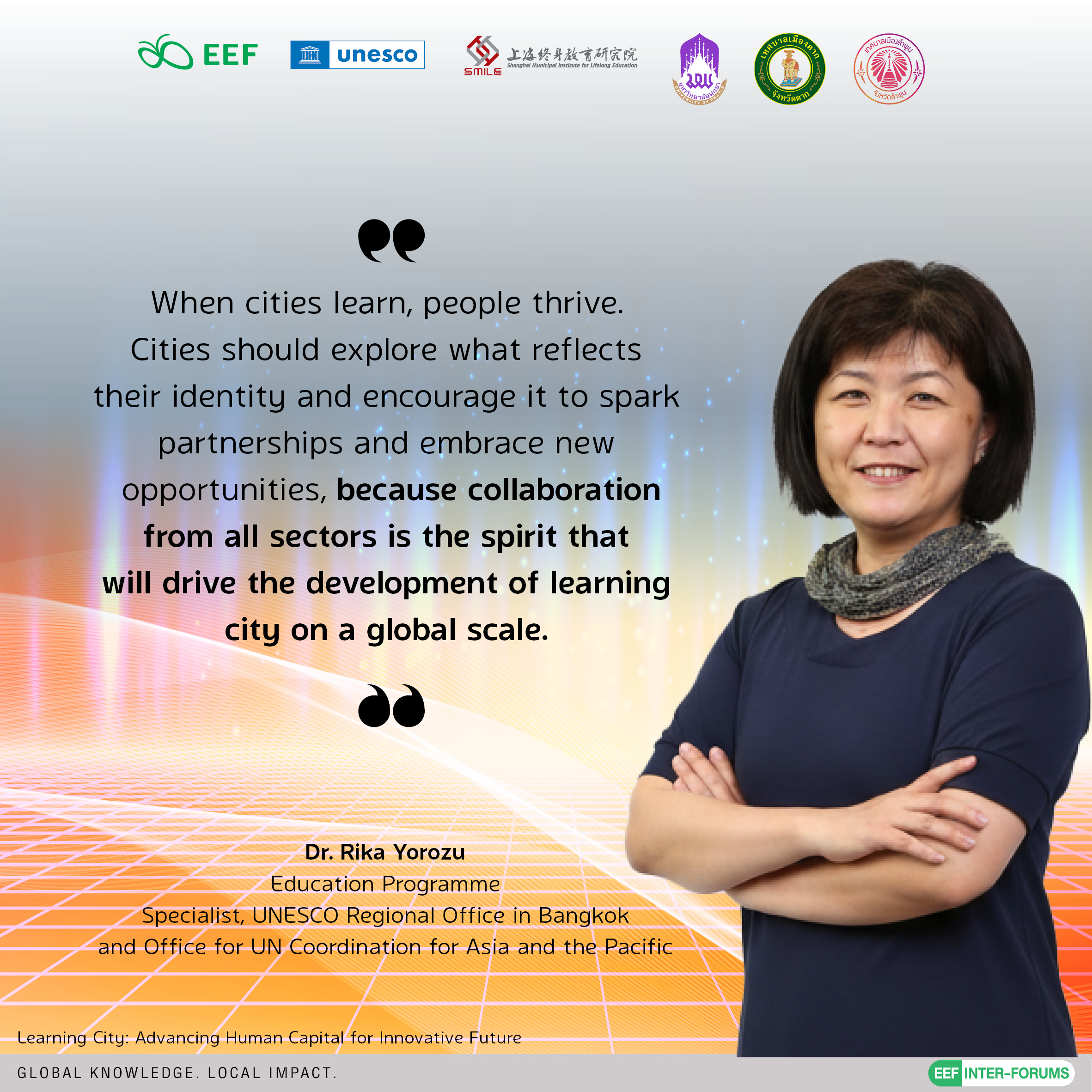
Speakers include Dr. Rika Yorozu, Education Programme Specialist, UNESCO Regional Office in Bangkok and Office for UN Coordination for Asia and the Pacific, Prof. Dr. Jiacheng Li, Executive Vice President and Professor, Shanghai Municipal Institute for Lifelong Education (SMILE), East China Normal University, Praphat Poocharoen, Mayor of Lamphun Municipality, and Napol Chayananphakdee, Mayor of Tak Municipality.
Shanghai has seen a shift from an industrialized city into an innovation-driven city from the 1990s. This transformation has, however, produced a gap between the skills of current residents and the skills required for emerging industries. The municipal government therefore aims to align urban development with human capital development.
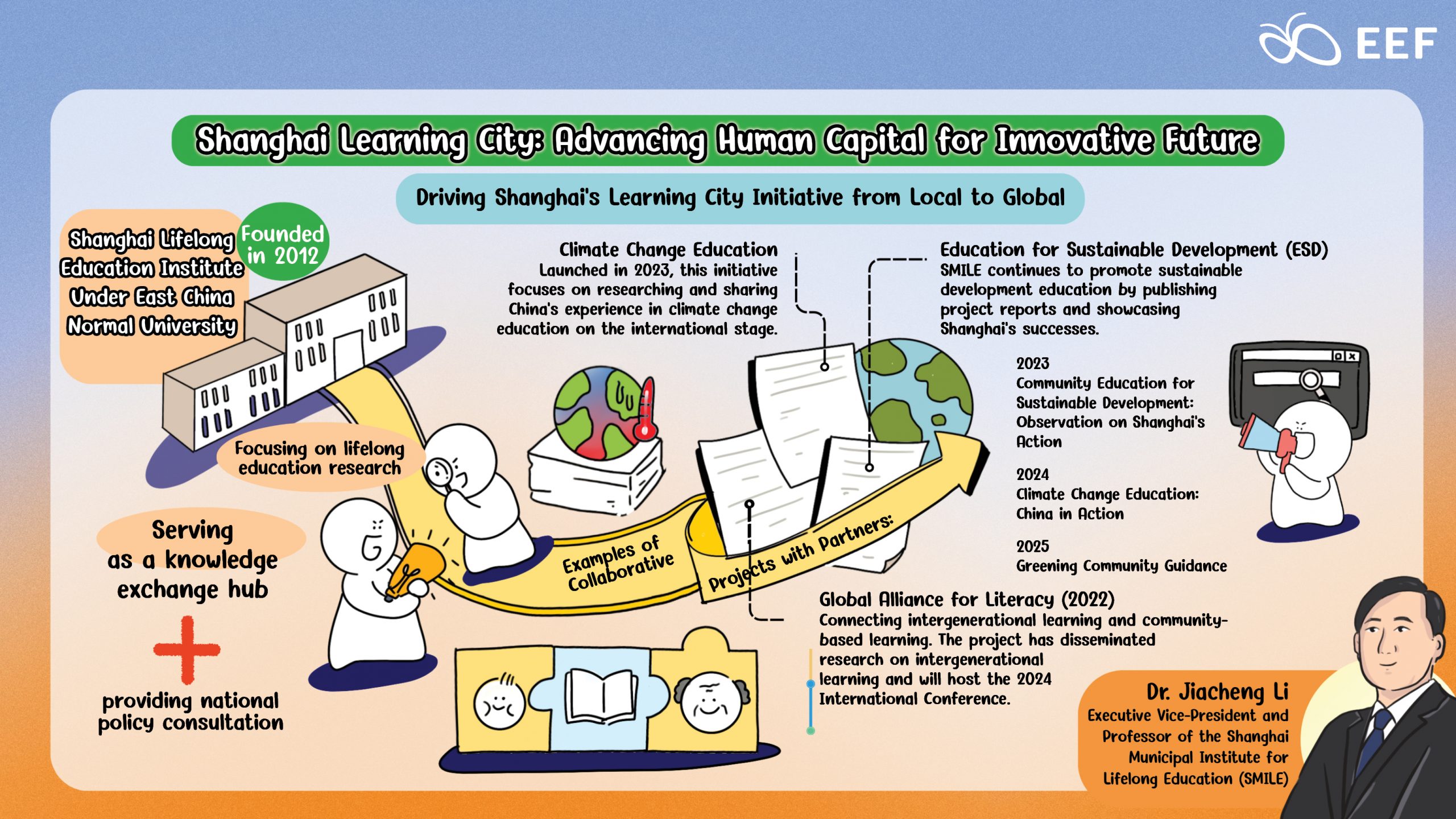
After 2000, Shanghai has plans to develop a new economy and learning center.
Shanghai: From Industrial to Innovation City
According to Prof. Dr. Jiacheng Li, Executive Vice President and Professor, Shanghai Municipal Institute for Lifelong Education (SMILE), East China Normal University, Shanghai’s learning city is created through strong collaboration between various stake holders, from government agencies, universities, local communities, and NGOs.
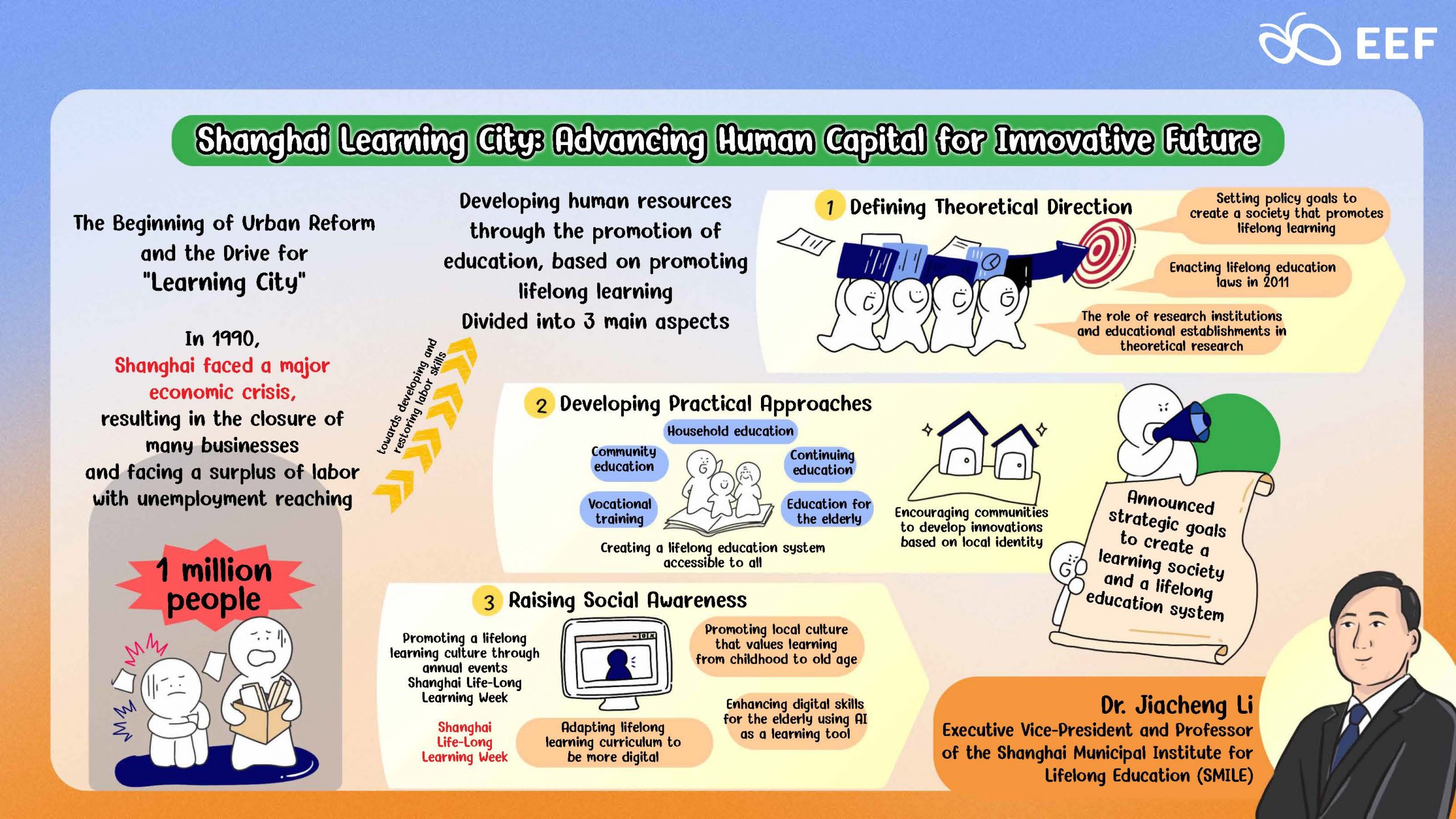
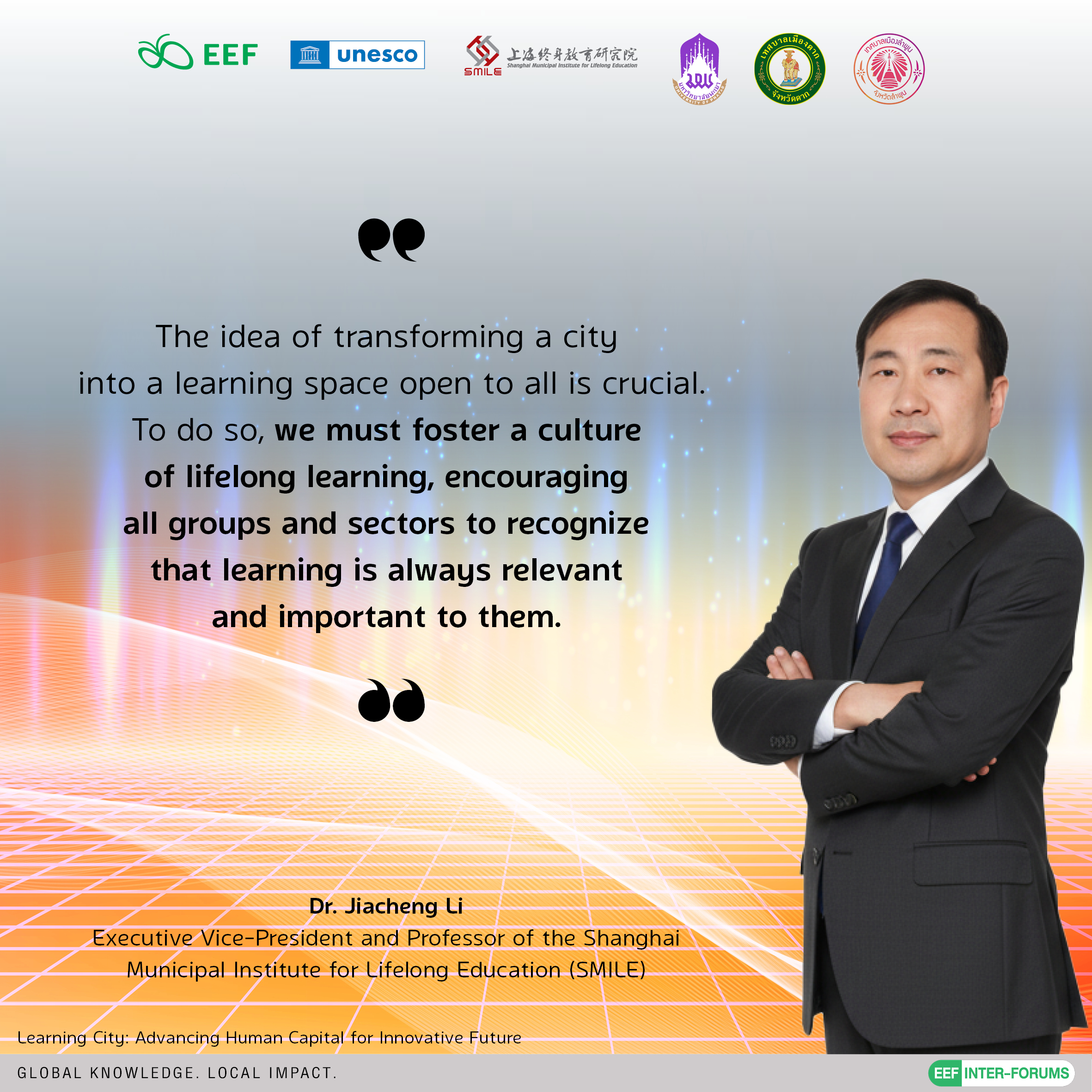
He further explains that the implementation of the learning city concept is based on three core pillars: 1.) on policy level, the city implemented policy to help shape new skills, develop talent, and create a lifelong learning ecosystem in the city 2.) on district level, it involves diverse stakeholders across the city, and 3.) community level, it supports intergenerational learning and encourages exchanges with other cities.
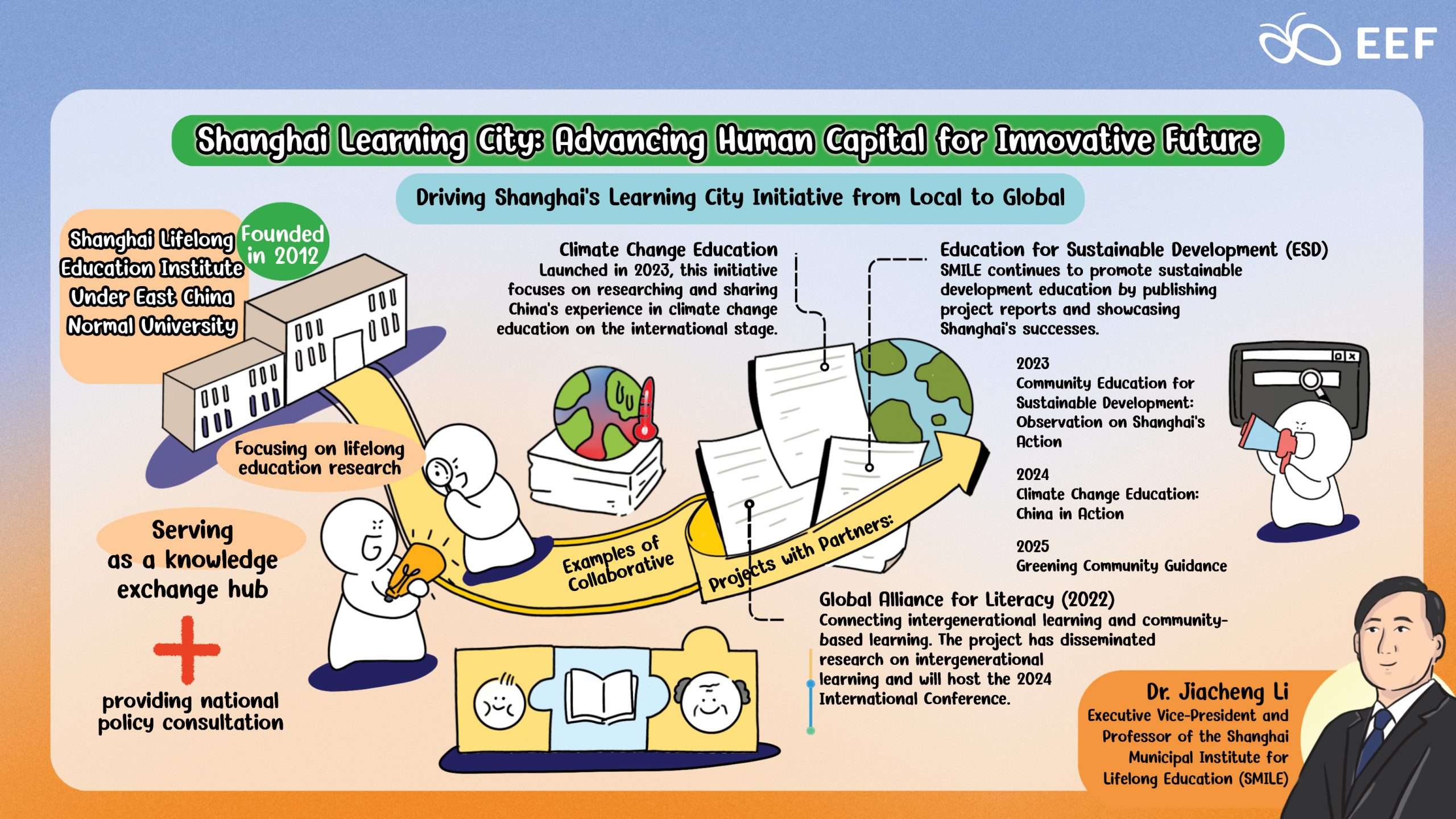
Now, sixteen districts in Shanghai are focusing on economic and financial trade, and the city is aiming to develop into a sustainable learning city,” Dr. Li explained.
Shanghai is therefore a member of the UNESCO Global Network of Learning Cities (GNLC), as it aims to share its know-how as well as gaining insights from international peers to strengthen the global learning ecosystem
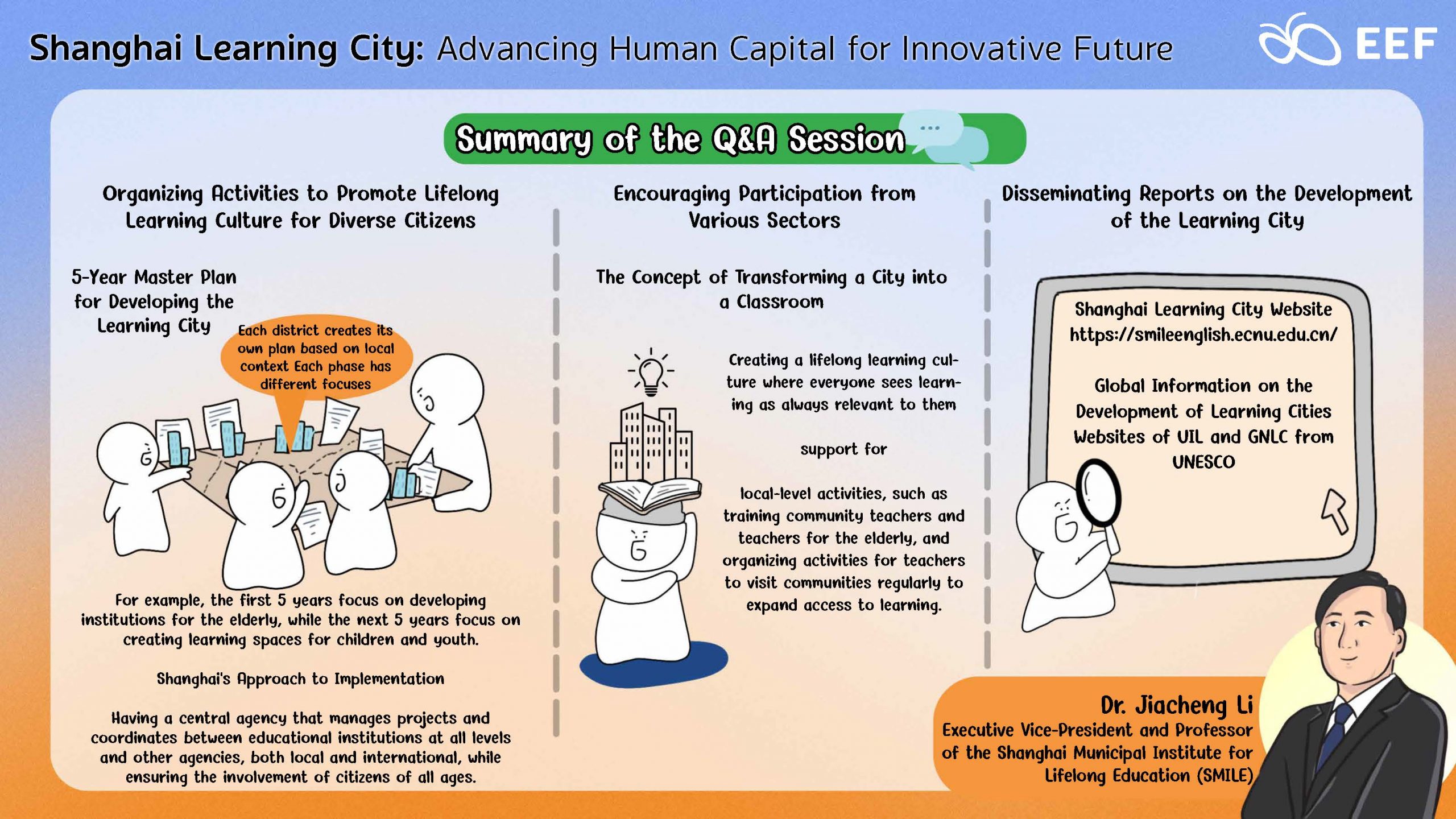
The city thus focused on three levels of human development: shaping skills and lifelong learning at the policy level; engaging various stakeholders at the district level; and promoting cross-generational learning and external collaboration at the community level.
Successfully creating the learning city requires not only strong local governance, but also international collaboration. Shanghai has been part of the UNESCO Global Network of Learning Cities (GLCN) in order to share and learn from other cities as well as to strengthen collaborations.
Thailand has also adopted the Learning City concept, with more than 14 provinces participating in the GLCN, such as Tak and Lamphun. Compared to Shanghai, these two cities are of different sizes, having different traditions, culture, and contexts. However, they share the same objective: to build a lifelong and inclusive learning environment for their cities.
Lamphun: Using Culture and Technology to Create Learning City
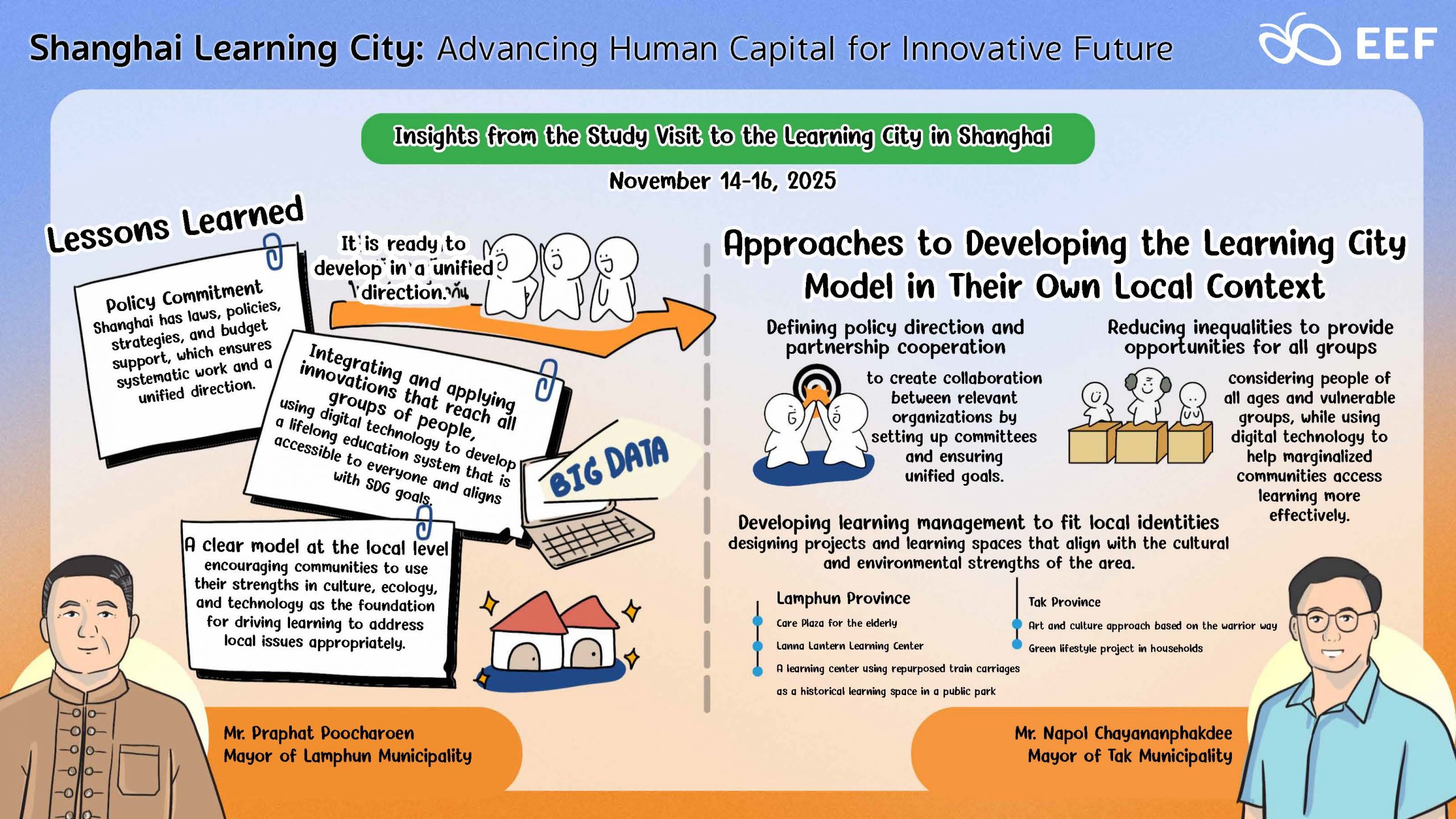
In contrast to Shanghai, Lamphun is a compact, traditional city with its different culture and high number of elders. Therefore, according to Praphat Poocharoen, Mayor of Lamphun Municipality, the province’s learning city vision highlights using cultural heritage as learning resources.
Inspired by Shanghai during the visit on November 14-17, 2025, Praphat also says it is important to apply technology in both learning and to create a lifelong learning city. All these are to improve quality of life.
Praphat explained that Lamphun aims to create a modern learning ecosystem by using its culture, cross-generation learning, and technology.
Tak: City as Inclusive Learning Space
Similar to Lamphun, Tak Municipality implemented the learning city concept by combining technology, local strengths, and innovation. Instead of just doing policy transfer, according to Napol Chayananphakdee, Mayor of Tak Municipality, the city adapted and applied to its own context.
Napol highlighted that Shanghai’s success comes from clear policy commitment and a strong ecosystem that connects schools, communities, universities, and families. Inspired by this, Tak has implemented the learning ecosystem through the use of technology, cultural identity, and cross-area knowledge learning.
By introducing digital tools for instance, the city can help residents learn while working. This can ensure that “everyone, regardless of age, religion, or wealth, can access education equally,” Napol added.
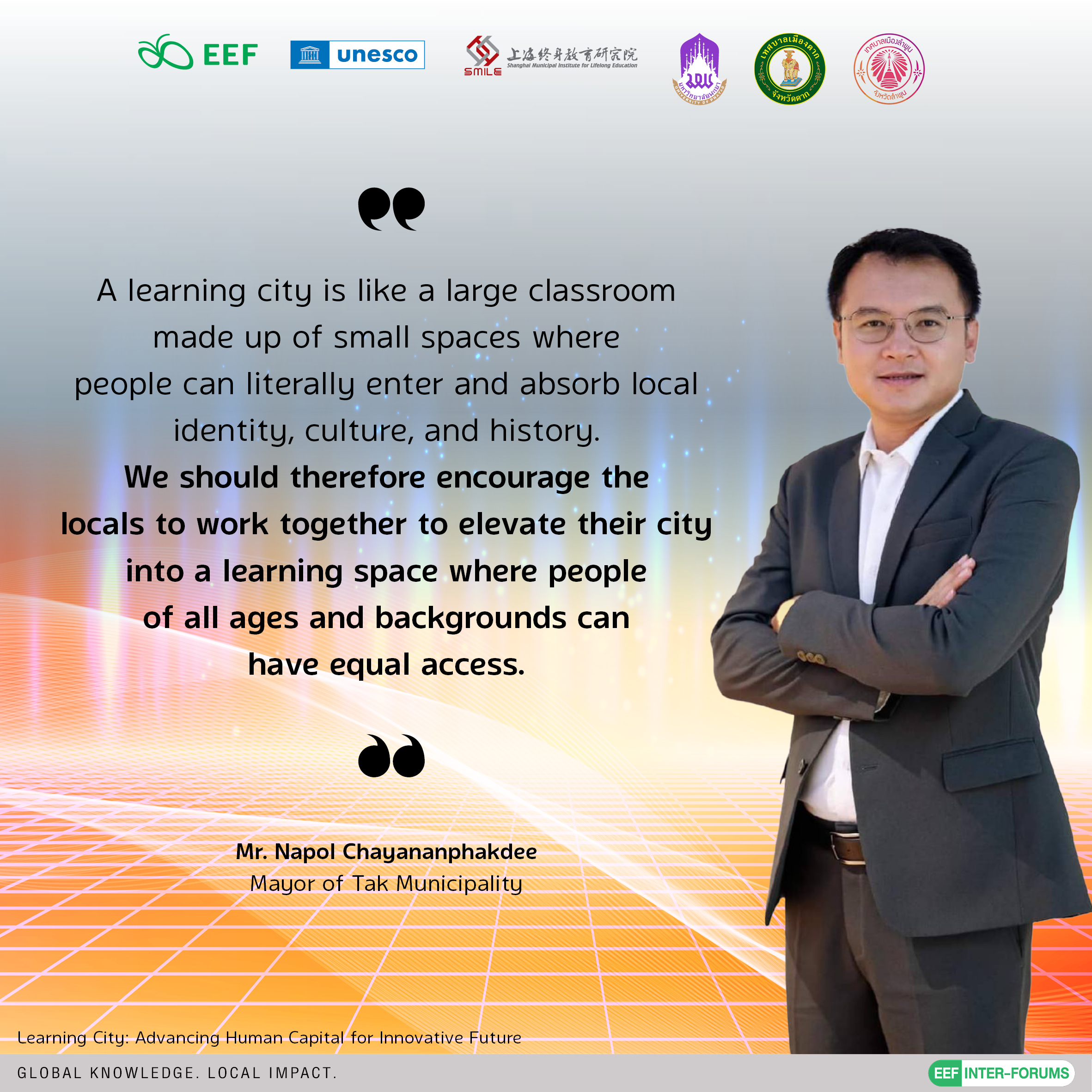
In terms of cultural identity as resources, Tak aims to turn its urban environment into a living learning space, a “large classroom” where residents can learn through everyday encounters with local traditions, food, history, and lifestyle.
Napol echoed the idea of using technology and the city’s existing strengths to build a learning city. He also added that the city should be a “large learning room” that is accessible to people from all walks of life.
“We try to change the whole city to be a classroom where we give space for everyone to learn. If you walk into the area, you can see different things such as local food, local tradition, cultures, so people can absorb and understand history and lifestyle of people. Everyone can access the space equally,” Napol added.
Throughout the webinar, there is a consistent theme in the experiences of Shanghai, Lamphun, and Tak: learning cities are created by people, local strengths, and collaboration. As cities change their functions, the webinar highlighted the urgent need to align human development with rapid urban development. To do so, local cultures, digital innovation, and strong governance must be integrated to make learning accessible, which would help address economic, technology and social challenges.


