
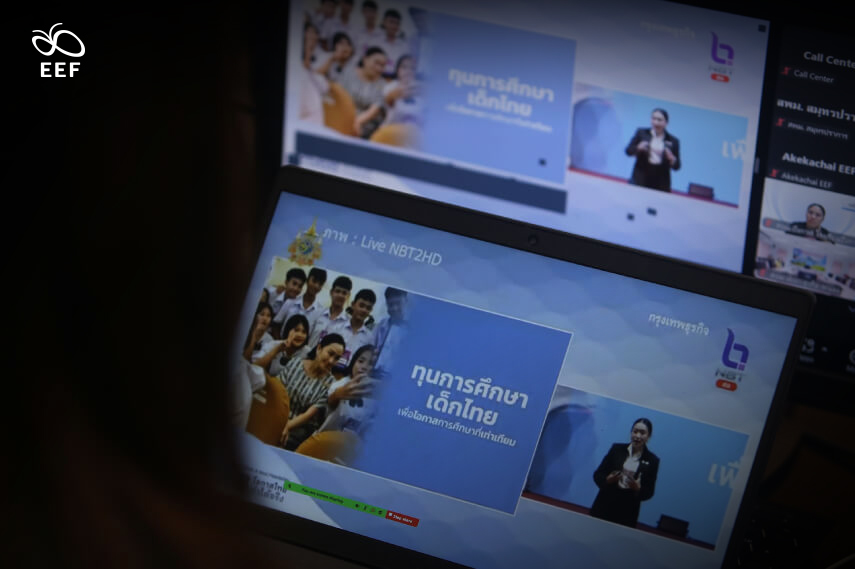
In 2025, at the Ministry of Education (MOE), the Chairman of the “Outstanding Development Opportunity Scholarship” (ODOS) Subcommittee on Criteria, Methods, and Conditions, led a nationwide teleconference briefing. The session announced the recruitment of Grade 12 and Vocational Certificate Year 3 students eligible for the newly revived ODOS initiative, aimed at expanding access to higher education. This fully funded undergraduate scholarship serves as a strategic lever to reduce inequality and strengthen Thailand’s future workforce.
Urgency now defines the government’s push to eliminate educational disparities. Students from low-income households are supported from the completion of compulsory education through upper secondary, vocational diploma, and undergraduate levels, spanning seven to eight years of fully funded study to ensure a seamless 20-year educational journey for all eligible learners. This effort is spearheaded by the Equitable Education Fund (EEF) Thailand under its overarching “Education Security System” initiative. To reinforce the national educational safety net, the ODOS initiative has officially revitalized following Cabinet approval in 2025 as a targeted investment in the country’s human capital, with a strong emphasis on science, technology, engineering, and mathematics (STEM) fields that form the backbone of future industries.
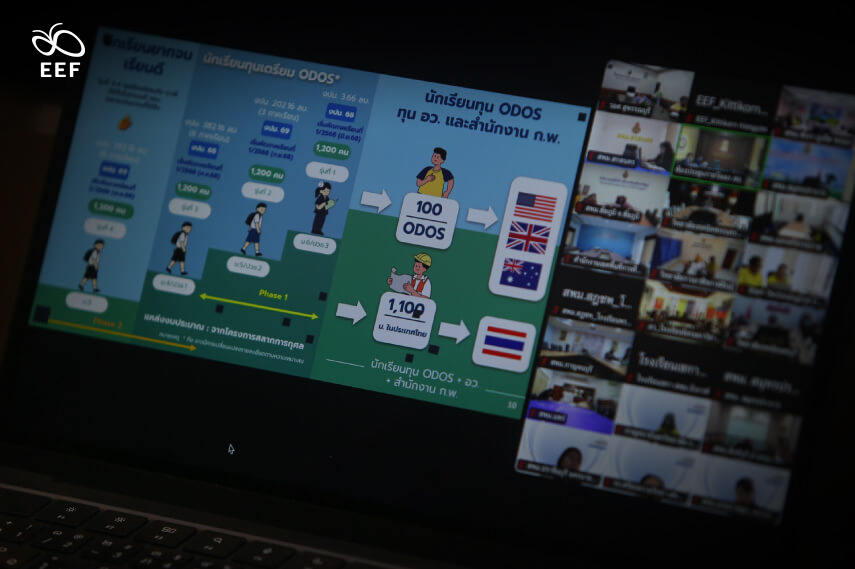
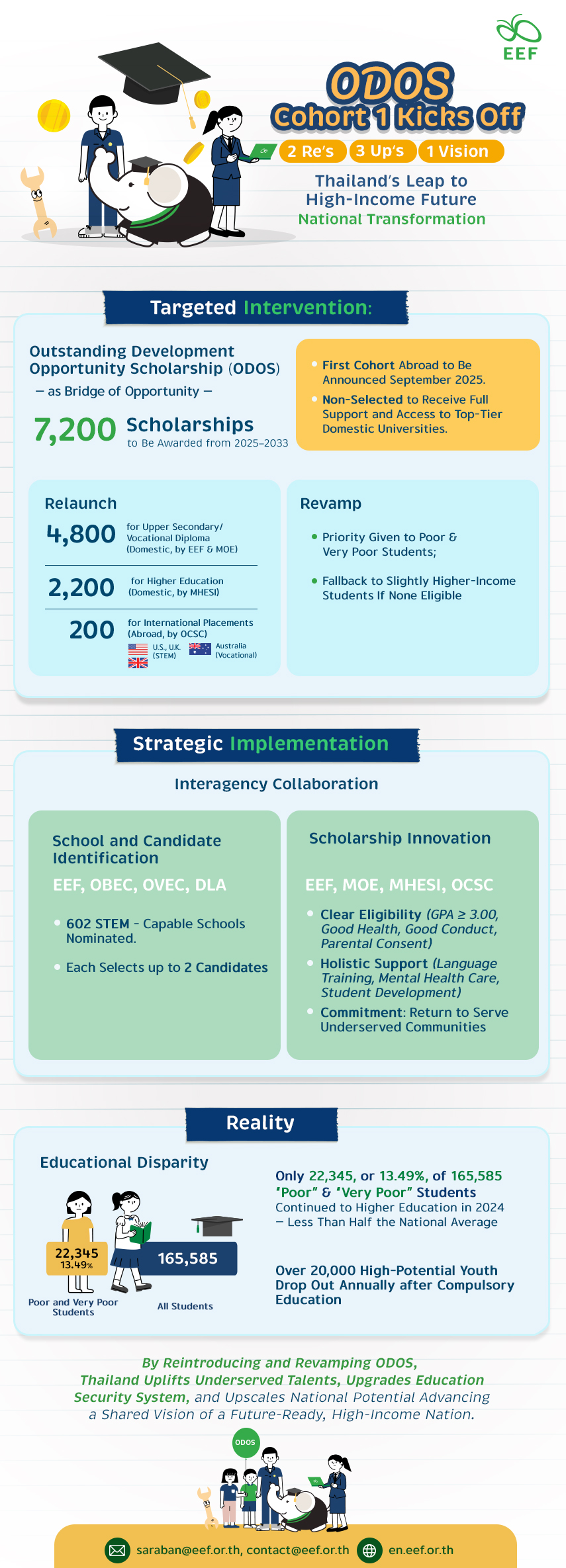
Yet, access remains unequal. Each year, over 20,000 high-potential students drop out after completing compulsory education. ODOS is designed to change that as the Chairman outlined the scholarship plan, saying, “The government aims to award 7,200 scholarships between 2025 and 2033. Of these, 4,800 will be allocated to upper secondary and vocational diploma students for study within Thailand, managed by the EEF and MOE; an additional 2,200—to higher education students through the TCAS system, overseen by the Ministry of Higher Education, Science, Research and Innovation (MHESI); and another 200—earmarked for international placements in the United States, the United Kingdom, and Australia, administered by the Office of the Civil Service Commission (OCSC).”
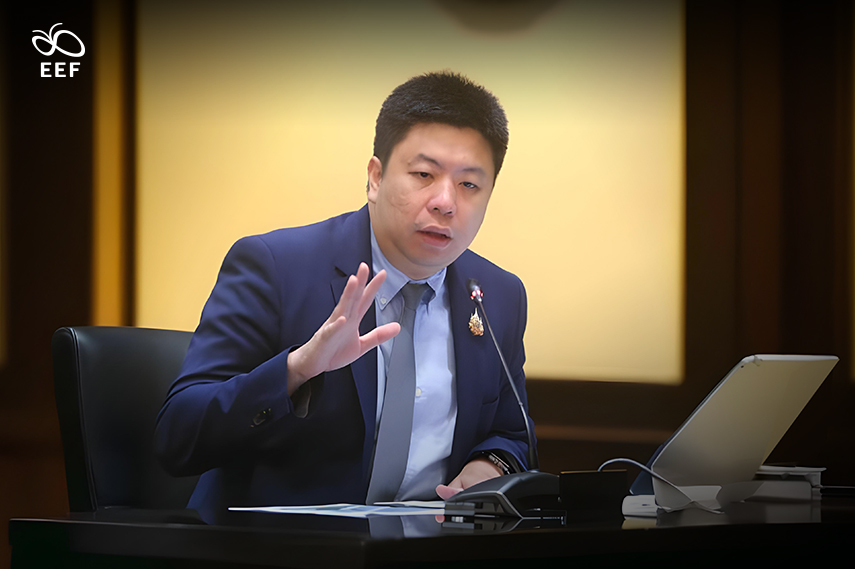
Redesigned with precision, the new ODOS addresses key shortcomings of its earlier iterations. Gone are the vague selection criteria, lack of preparation, and insufficient student support; in their place are clear eligibility standards, structured development, and comprehensive services, including language training and mental health care. Crucially, scholars are now required to return and contribute to national development, particularly in underserved areas. Pirohakul expressed confidence that this revamped ODOS will truly become “a bridge of opportunity,” enabling talented youth to overcome educational disparities and grow into quality citizens. She emphasized, “With tight deadlines, the selection process for the first cohort must be fast, accurate, and fair; schools play a pivotal role because they know their students best and can guide this opportunity to the right candidates.”
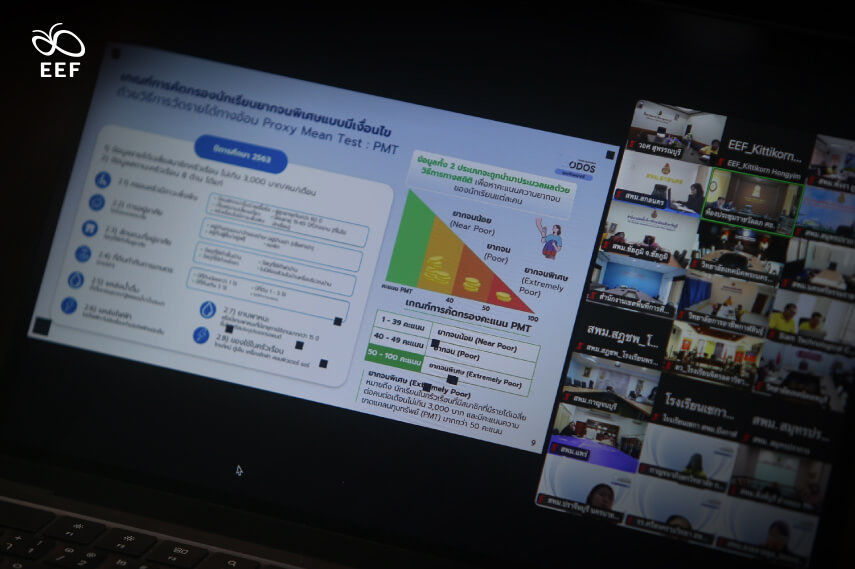
This renewed vision is collaborative at its core. Dr. Kraiyos Patrawart, Managing Director of the EEF, highlighted that ODOS represents a joint effort by the EEF, MOE, MHESI, and OCSC. Drawing lessons from the past, all stakeholders worked to refine every stage, from outreach to selection to long-term student tracking. For the initial round, priority will be given to students from the Poor and Very Poor groups. Where no such candidates exist, slightly higher-income students may be considered. Minimum eligibility includes a GPA of 3.00, sound health, good conduct, and parental consent for local or international study. “With each step, barriers are being dismantled, not merely lowered,” the Managing Director affirmed, underscoring the initiative’s transformative ambition.
To support implementation, three key educational bodies—the Office of the Basic Education Commission (OBEC), Office of the Vocational Education Commission (OVEC), and Department of Local Administration (DLA)—have identified 602 schools nationwide with the capacity to deliver advanced STEM and English instruction. Each of these schools may nominate up to two students for ODOS consideration. The first cohort of 100 scholars heading abroad will be announced in September 2025. “Students bound for the U.S. and U.K. will follow STEM+ tracks, while those placed in Australia will pursue vocational fields,” Dr. Kraiyos Patrawart noted. Unselected candidates will not be left behind; they will instead receive full domestic support, backed by the MHESI and charitable lottery funds, with access to top-tier local universities.
More than a scholarship, ODOS marks a systemic intervention against long-standing educational exclusion. Reintroduced in 2025 as another core component of the EEF’s upgraded Education Security System, it directly addresses one of the nation’s most pressing challenges: the low transition rate among disadvantaged youth. In the 2024 academic year, only 22,345—or just 13.49%—of the 165,585 students classified as Poor or Very Poor continued on to higher education—less than half the national average. ODOS seeks to close that gap by identifying and supporting exceptional students across 602 STEM-focused institutions. With full scholarships and wraparound support, students not only stay in school, but also step confidently into their full potential.
The EEF’s Education Security System is more than a safety net; it is a lifelong, learner-centered framework ensuring continuous access to education from early childhood through adulthood. By linking every level—upper secondary, vocational, and undergraduate—it creates a seamless path from school to career. Jointly executed by the MOE, MHESI, OCSC, OBEC, OVEC, and DLA, and powered by real-time, personalized data, the system ensures no learner is left behind. With ODOS now fully reintegrated and cohort 1 now underway, the Education Security System enters a new phase: more closely knit, more collaborative, and more effective than ever before at reducing disparities, empowering talent, and shaping a resilient, inclusive workforce to drive Thailand forward, out of the middle-income trap to the high-income frontier.
All For Education is all about people; only when all is in for education is Education For All. Join the movement to reduce educational inequality. Support the EEF by donating to fund research, partnerships, and assistance for children, youth, and adults in need of educational support. Click the link to contribute today and help create a society where education is open and equal for all. Together, we can make a lasting impact.


