
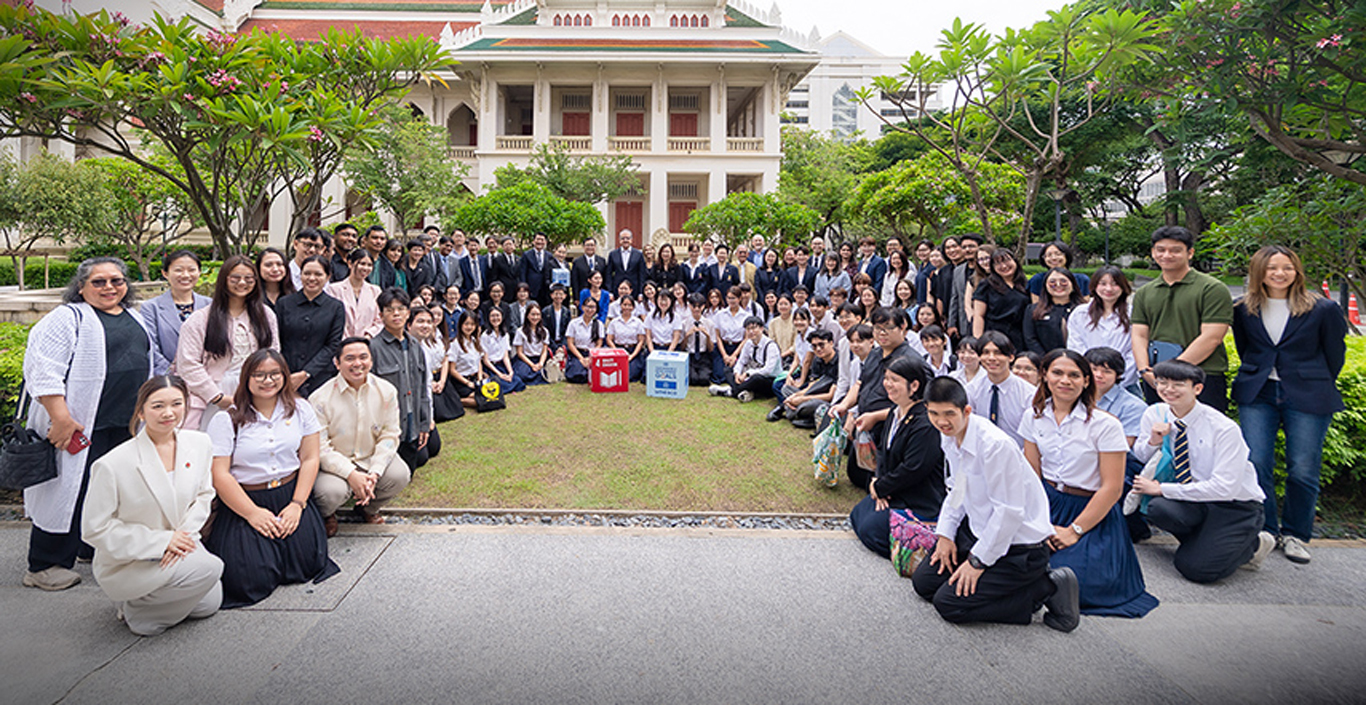
EEF Thailand Driving Youth-Led, Equitable and Resilient Education Goals
The Equitable Education Fund (EEF) Thailand joined the “Education Beyond 2030: Youth Dialogue to Shape the Future of Education and Learning,” organized by UNESCO on Saturday, 16 May 2026, at Maha Chulalongkorn Building, Chulalongkorn University, contributing Thailand’s perspectives to a regional dialogue on the future of education.
Representing EEF Thailand were Dr. Prasarn Trairatvorakul, Chairman of EEF’s governing board; Dr. Kraiyos Patrawart, Managing Director of EEF; Ms. Thanthida Wongprasong, Director of the Office of Innovation for Learning Opportunity; and university student representative under EEF programmes Mx. Bantita Makbamrung, who joined high-level leaders and student representatives from across the Asia-Pacific region in advancing flexible and resilient education models that can adapt to the realities of children and youth.
The dialogue also highlighted Bantita’s lived experience of returning from being out of the education system back onto a learning pathway through EEF’s nationwide “Thailand Zero Dropout Plus” initiative and the adaptive “4-Square-Meter School” model.
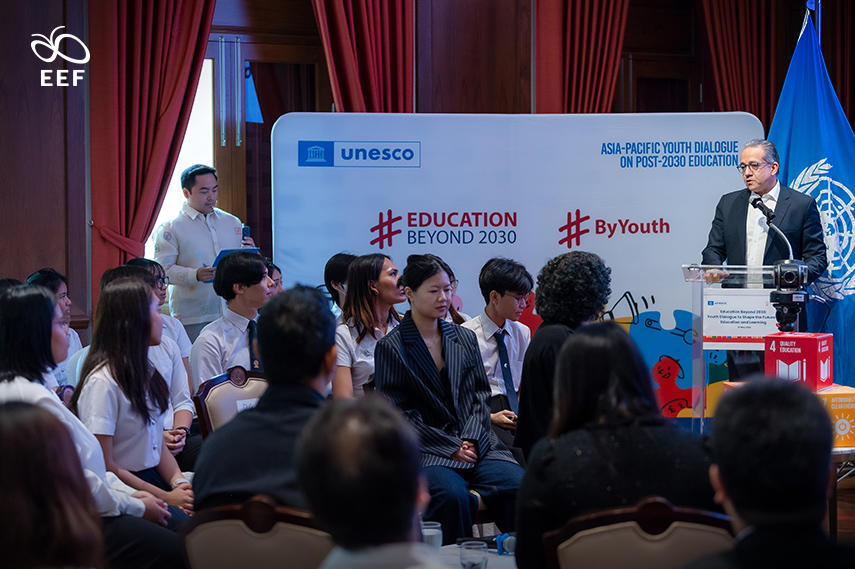
Post-2030 Education: Launching a Shared Regional Conversation Led by Youth
Anchored in Sustainable Development Goal 4 (SDG 4) and the “Education 2030 Agenda,” the dialogue addressed widening inequalities, escalating climate challenges, and rapid digital transformation across the Asia-Pacific region.
The sessions focused on Shared Vision, Positive Transformation, and Collective Action before concluding with reflections from participating institutions. Central to the discussion was the principle that education for the future should not merely be a promise made to young people, but a future built together with them.
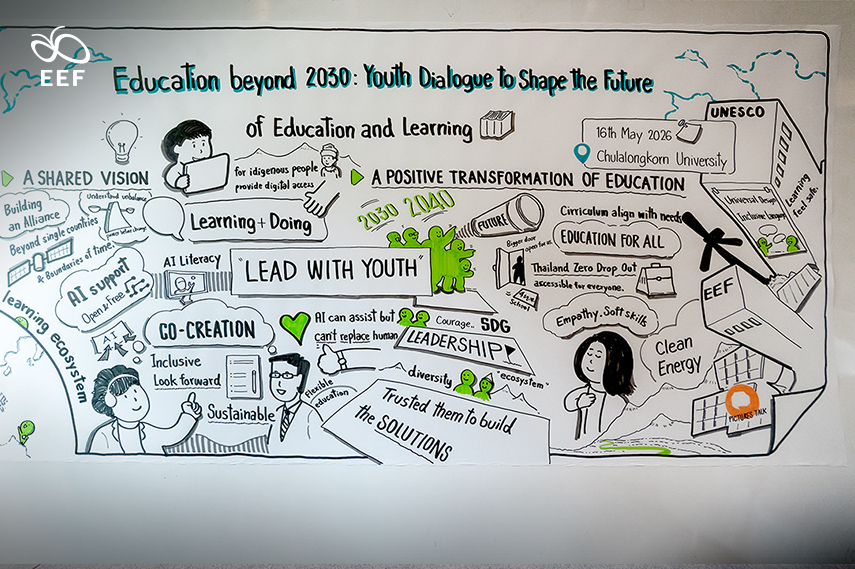
Co-Designing a Flexible, AI-Enhanced Education Ecosystem
The transition toward a future-ready post-2030 education paradigm requires a structural transformation that elevates children and youth from being merely consulted stakeholders to becoming active co-designers alongside teachers and institutions. The goal is to ensure that education systems are built directly with young people, not simply for them.
This vision integrates AI in classrooms with both online and offline learning resources to support a personalized lifelong learning ecosystem that emphasizes creativity, well-being, and leadership, while helping bridge the gap between learning and practical application. However, achieving this transformation requires overcoming deeply rooted systemic barriers, including rigid legacy systems, budget limitations, and teacher shortages. At the same time, there is an urgent need to strengthen AI literacy to ensure technology supports—rather than replaces—human thinking and critical analysis.
Ultimately, targeted structural and financial reforms are needed to align curricula with real-world challenges, adapt education systems to evolving labor markets, and reconnect marginalized children and youth who remain excluded from formal databases and learning opportunities.
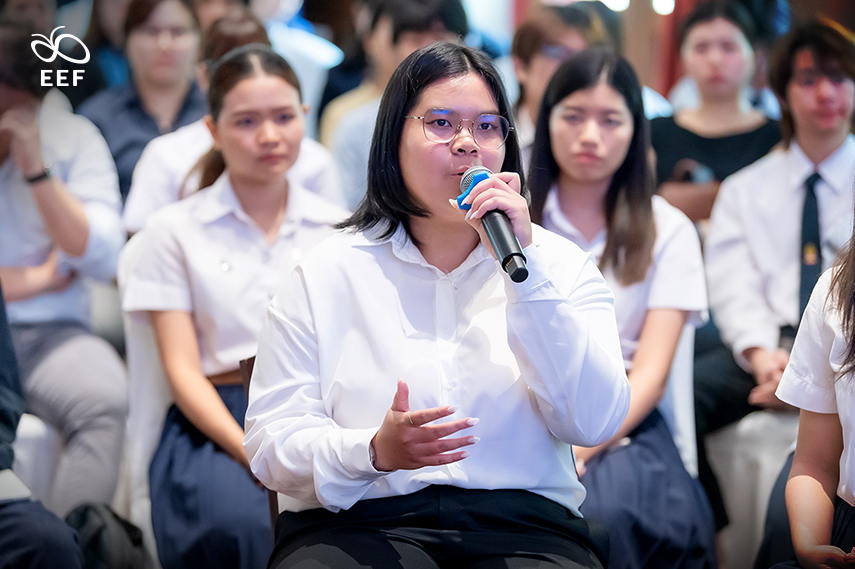
Thailand Zero Dropout Plus and 4-Square-Meter School Model: Expanding Educational Opportunities through Flexible Learning
After spending nearly a full year as an out-of-school youth who felt invisible—not because they lacked the desire to learn, but because the traditional education system had no place for them—Bantita Makbamrung’s journey reflects the structural limitations of rigid educational models that force children to adapt until opportunities are lost.
Through EEF’s “Thailand Zero Dropout Plus” initiative and the “4-Square-Meter School Model” project, Bantita rediscovered a personal learning pathway. These initiatives provide safe and supportive spaces where out-of-school youth can discover their identity and embrace what they do not yet know without fear of being judged by the standards of others. Now studying Public Administration at Uttaradit Rajabhat University, Bantita’s story stands as a powerful testament to the importance of opening new pathways for flexible learning that embrace every child and youth regardless of geography, culture, socio-economic status, or past mistakes.
Speaking on behalf of children and youth who still lack opportunity, Bantita called for education systems that “bend toward learners” rather than “forcing learners to bend,” ensuring that every young person can grow in their own way and at their own pace.
“Everyone should have the right to choose how they learn, the right to make mistakes without being permanently defined by them, and the right to begin again each time as a better version of themselves,” Bantita emphasized.
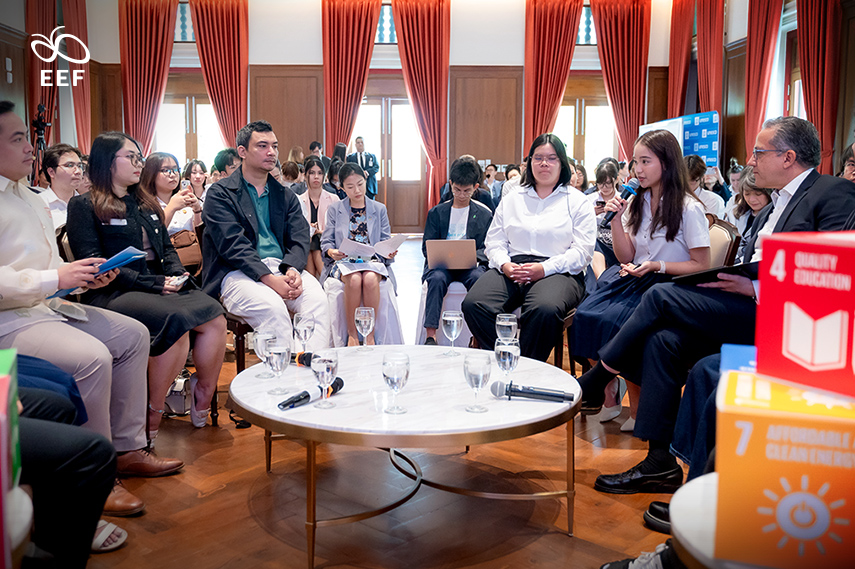
From Grassroots Action to Systemic Integration: Advancing Multilateral Policy Collaboration
In response to entrenched digital inequality and structural inequities within education systems, student-led initiatives—particularly among vulnerable and indigenous communities—are pioneering inclusive multilingual learning approaches, feedback mechanisms, and peer-to-peer teaching models to ensure all learners can safely express themselves and access education.
Sustaining these local efforts requires strong commitment from policymakers and institutions to reform existing systems. Recognizing this urgency, leaders from UNICEF, UNESCAP, the United Nations Development Coordination Office, and EEF (Thailand) pledged to institutionalize meaningful youth participation within regional policy frameworks to build more resilient and equitable education systems.
This collaborative momentum also reinforces the importance of multidisciplinary and integrative education approaches that cultivate critical thinking and genuine understanding, empowering students to question assumptions and actively shape their own futures.
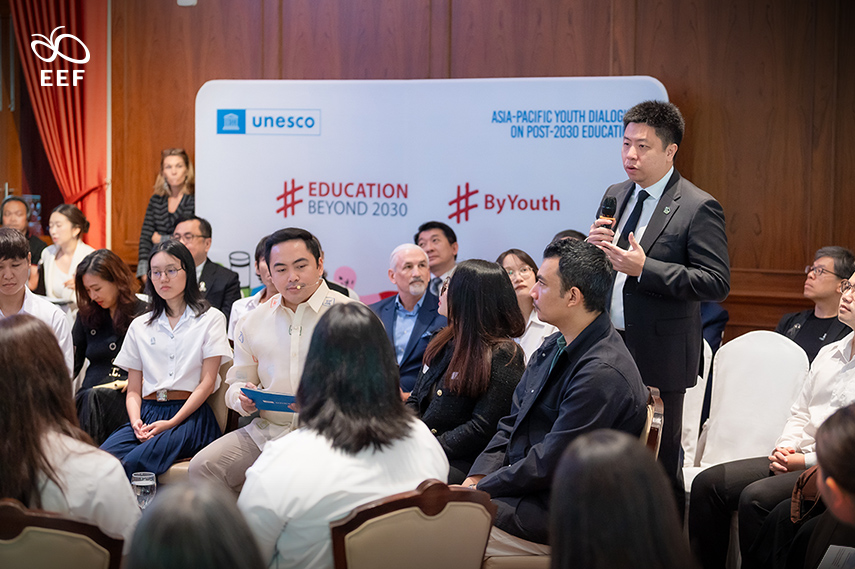
Post-SDG Education: Transforming Traditional Systems to Reach Every Child
Dr. Kraiyos Patrawart, Managing Director of EEF (Thailand), presented a strategic roadmap for scaling this intergenerational movement and outlined a vision for establishing new regional benchmarks for educational equity across the Asia-Pacific. According to Dr. Kraiyos, post-SDG education frameworks must be grounded in flexible learning systems intentionally designed to proactively reach and embrace children, fundamentally reversing the traditional institutional model.
“More than three decades ago, the Jomtien Declaration on Education for All was adopted as a commitment to make basic education a reality for every child, youth, and adult,” Dr. Kraiyos stated. “Today, as we stand in the final stretch of that unfinished agenda and look toward education beyond 2030, we are reminded that Education for All will only succeed when we truly become All for Education.”
To protect learners’ rights from future political, financial, or public health crises, EEF emphasized the importance of building resilient systems capable of continuing to deliver educational opportunities under any circumstances. Ultimately, the integration of youth leadership, lived experience, and systemic reform reinforced one of the dialogue’s core messages: placing youth at the center does not mean giving them a voice only after decisions have already been made—it means empowering them to actively build the future themselves.
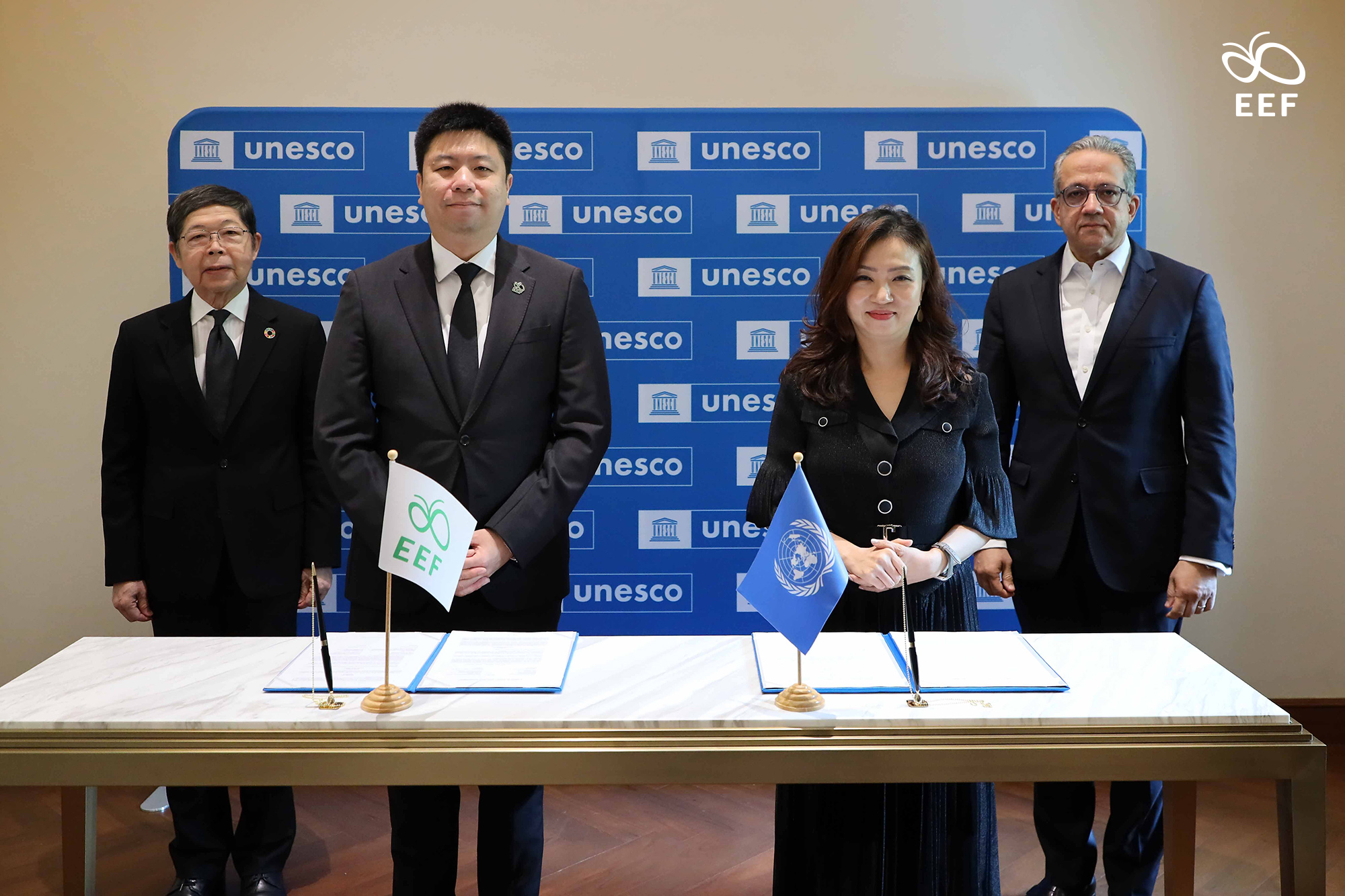
UNESCO–EEF Strategic Partnership: Advancing Post-2030 Education into Practice
The “Education Beyond 2030: Youth Dialogue to Shape the Future of Education and Learning” dialogue also led to a landmark partnership agreement between UNESCO and the Equitable Education Fund (Thailand). The agreement was signed by Dr. Kraiyos Patrawart, Managing Director of EEF (Thailand), and Ms. Soohyun Kim, Director of the UNESCO Regional Office in Bangkok, with Dr. Prasarn Trairatvorakul, Chairman of EEF’s Governing Board, and Dr. Khaled El-Enany, Director-General of UNESCO, serving as witnesses. The partnership formally advances the post-2030 education vision through the initiative “Equitable Education in ASEAN+: Stronger Regional Partnership for Practice-Based Knowledge and Policy Advancement.” This strategic collaboration aims to address the crisis of Out-of-School Children and Youth (OOSCY) by scaling innovative financing mechanisms, supporting the “Thailand Zero Dropout Plus” initiative, and developing the “ASEAN+ Toolkit on Flexible and Inclusive Learning” to transform shared aspirations into concrete structural reforms.
To sustain this inclusive, cross-border educational ecosystem across the Asia-Pacific region, the EEF (Thailand) extends an open invitation to global networks, grassroots organizations, and educational stakeholders to collaborate, share data-driven insights, and join these long-term regional actions.


