

UNESCO convened a global dialogue to address the crisis of out-of-school children and youth, amid data showing over 273 million children and youth are still missing out on learning. Meanwhile, Thailand presented its “Thailand Zero Dropout Plus” model on the world stage during the high-level launch of the GEM Report 2026: Countdown to 2030 – Access and Equity in Paris, France. Dr. Kraiyos Patrawart, Managing Director of the Equitable Education Fund (EEF) Thailand, representing Thailand and the Asia-Pacific (APAC) region, presented a solution focused on “Real Data to Flexible Learning” through the “Thailand Zero Dropout Plus” model, which is currently garnering significant international interest.
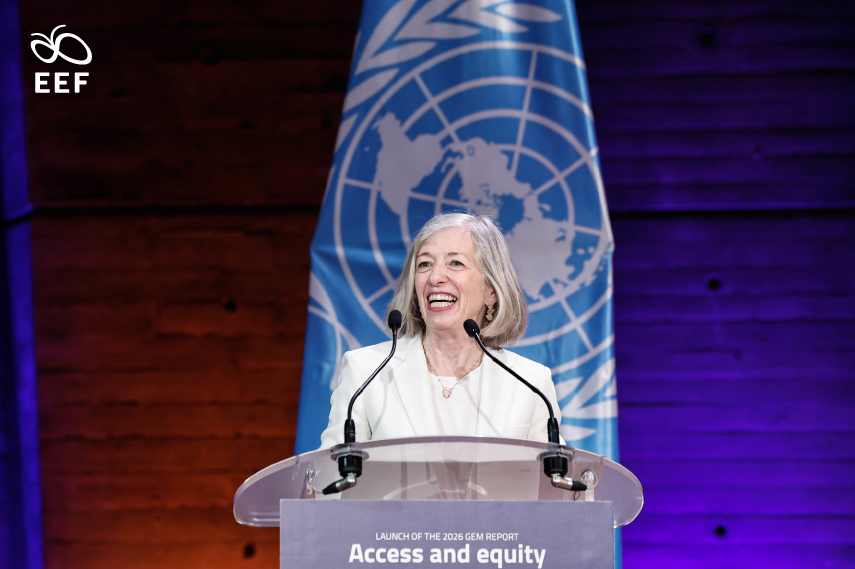
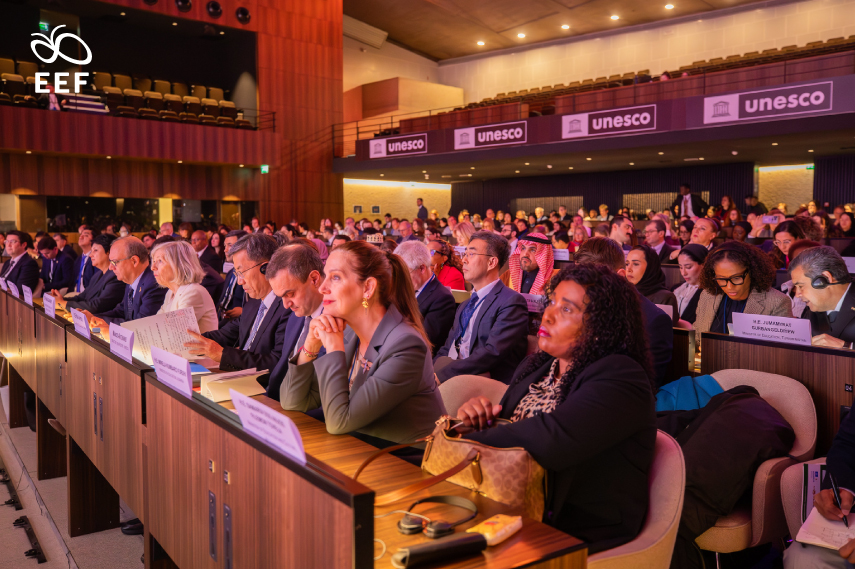
The event took place on March 25, 2026, at UNESCO Headquarters under the theme of a high-level global debate on policies to address the out-of-school challenge. Participants included Ministers of Education and policymakers from various countries, such as Italy, Mozambique, Haiti, and Armenia, reflecting the global urgency of the current educational crisis.
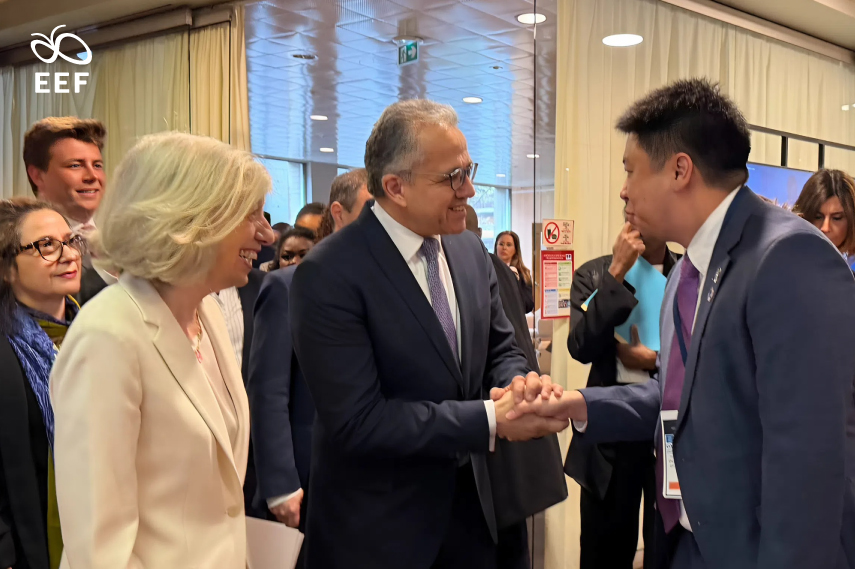
On this occasion, the Dr. Kraiyos Patrawart held discussions with Dr. Khaled El-Enany, Director-General of UNESCO, and Ms. Stefania Giannini, Assistant Director-General for Education. He emphasized Thailand’s role in driving the “Zero Dropout” policy during the final stretch before 2030, while preparing for collaboration to design global educational directions to achieve SDG 4.
Ms. Stefania Giannini revealed that there are currently more than 273 million children and youth worldwide out of school, a figure that has increased for the 7 consecutive year. She emphasized that “Access to education is meaningless without equity,” proposing that each country design an education system consistent with its own context and prioritize vulnerable groups first.

“Data” as the Starting Point for Systemic Change
Dr. Kraiyos Patrawart stated that the major turning point for Thailand in bringing children back to learning began with “having accurate data.” The EEF (Thailand) linked national ID numbers with the databases of over 30,000 schools nationwide, leading to the discovery of more than 1 million out-of-school children and youth.
This data became a crucial foundation for policy design and sparked collaboration from all sectors (All for Education). This included the public sector, which elevated the initiative to a national policy, and the private sector, which provided support through financial markets. A notable example is the fundraising through social bonds by Sansiri Public Company Limited to support the Ratchaburi Zero Dropout project, which ultimately served as the catalyst for driving the nationwide Thailand Zero Dropout Plus policy.
From “Door-to-Door Outreach” to “Life-Responsive Learning”
The EEF (Thailand) transformed data into proactive local action through community networks and volunteers to find and understand the individual needs of children. A significant finding was that nearly two-thirds of children did not wish to return to the traditional school system due to economic constraints and emotional scars. This led to the development of “Flexible Learning,” such as: The Learning Passport system and Credit Bank, which provide opportunities to accumulate learning outcomes from various channels, including learning centers and vocational training. Providing “Individualized” resource support so that learners can choose the life path that best suits them.

GEM Report Highlights the “Bottleneck” to University Education
The GEM Report 2026 also referenced EEF (Thailand) data to reflect structural inequality, finding that only 13.5% of underprivileged children who completed Grade 9 were able to enter university. This situation reflects a “bottleneck” in the Thai education system, resulting in a shortage of high-skilled labor and serving as a major challenge in escaping the Middle-Income Trap (Page 219). This underscores the critical need for flexible education and learning pathways to break through educational bottlenecks and sustainably reduce inequality in the future
EEF (Thailand) – UNESCO Move Toward the Future of Education
Ms. Marina Patrier, Deputy Director and Chief of Education Section at the UNESCO Regional Office in Bangkok and Office for UN Coordination for Asia and the Pacific, stated that Asia-Pacific still has over 127 million children and youth out of school. The collaboration between UNESCO and the EEF (Thailand) through the Equitable Education Alliance (EEA) thus plays a vital role in creating opportunities for vulnerable groups.
Joint research indicates that “Flexible Learning” is a game-changer in reducing the risk for youth not in education, employment, or training (NEETs), while innovations like Learning Coin have proven they can effectively link learning with educational opportunities. Furthermore, Thailand plays a key role in driving SDG 4 in the region and works with UNESCO to develop modern education, including the appropriate use of AI and the design of environmentally friendly education systems to create equity and sustainability for the future.
…………………………………………………………………………………………………………………………
Read the full content regarding the report: GEM Report 2026
Rerun of high-level launch of the GEM Report 2026: Countdown to 2030 – Access and Equity: https://www.youtube.com/live/DNMx3pB2xJ0?si=h2boK24cD167giYE


