
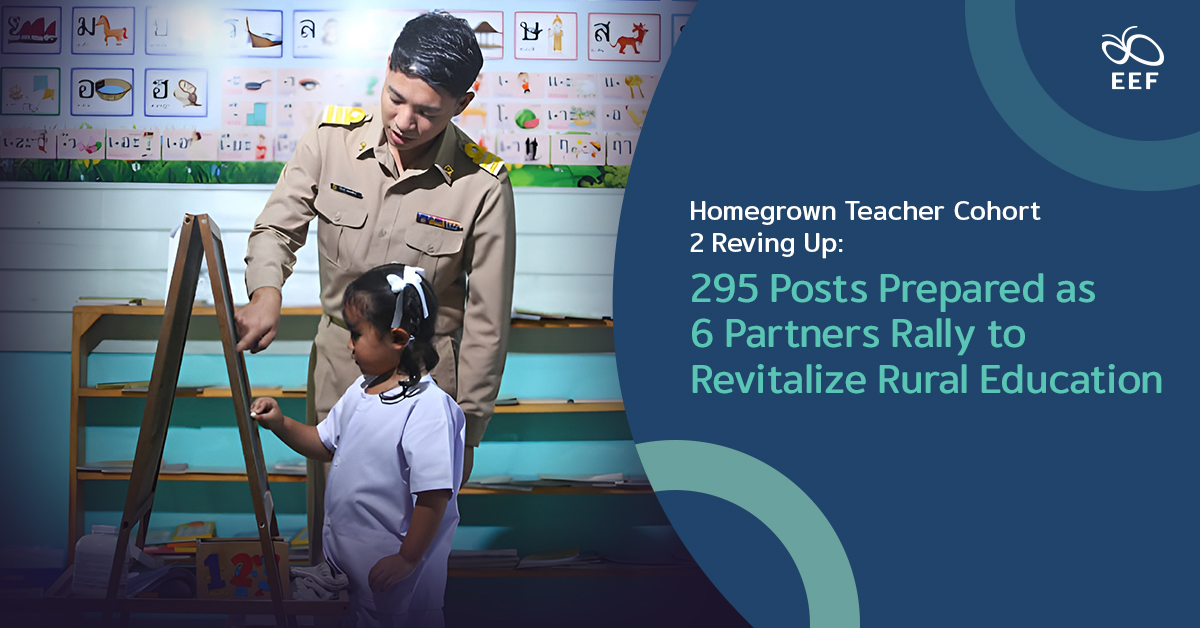
In June 2025, the Equitable Education Fund (EEF) Thailand, in collaboration with five pivotal national agencies—the Ministry of Education (MOE), the Ministry of Higher Education, Science, Research, and Innovation (MHESI), the Office of the Basic Education Commission (OBEC), the Office of the Teacher Civil Service and Educational Personnel Commission (OTEPC), the Secretariat Office of the Teachers’ Council of Thailand—convened a high-level virtual meeting to chart the course for the appointment of assistant teachers under the second cohort of the “Homegrown Teacher” initiative. Joining forces with educational service area directors and destination schools, the coalition aimed to clarify recruitment and placement procedures within the OBEC. A united front, they stand to integrate these specially trained teachers—nurtured in and for their home communities—into the public educational system, closing the gap between urban opportunities and rural realities and, ultimately, transforming educational equity.
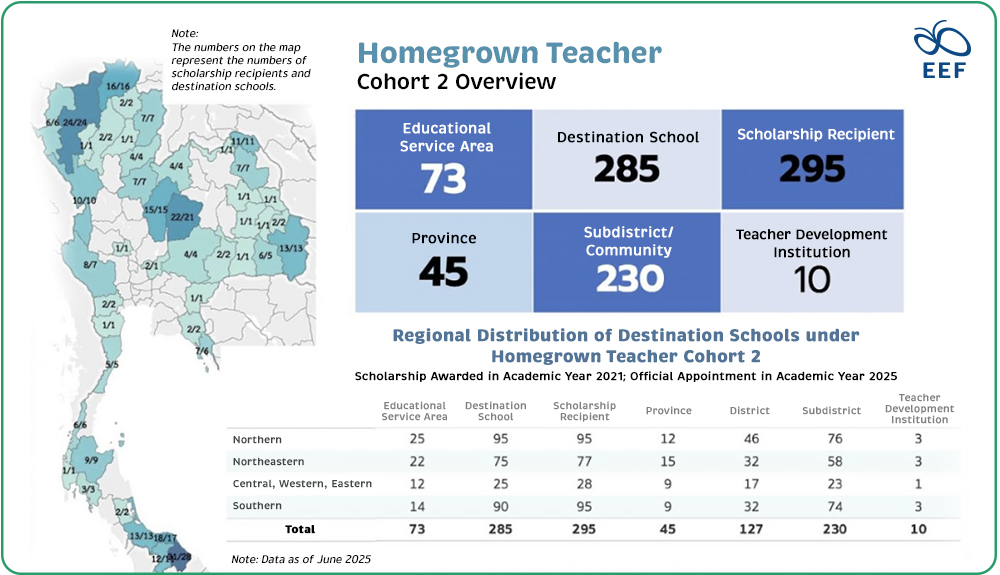
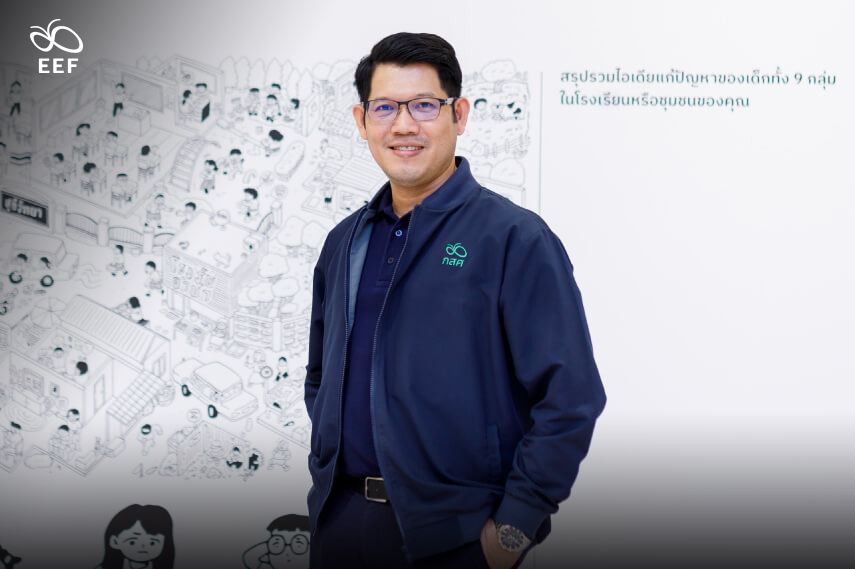
Opening the session, Dr. Udom Wongsingh, Director of the EEF’s Office for Teacher and School Quality Development, revealed key figures pertaining to Cohort 2: 295 graduates from 10 pioneering teacher development institutions now hold bachelor’s degrees, divided into 155 specializing in early childhood education and 140 in primary education. These graduates will assume assistant teacher roles under the OBEC, deployed to 285 small schools in remote areas across 73 educational service areas in 45 provinces, starting the second semester of the 2025 academic year. Before their official civil servant appointment, each candidate must pass interviews and receive formal approval from their respective educational service area offices.
Since June 2025, all cohort members have commenced volunteering at their assigned schools, supported by a living stipend of 8,000 Thai Baht monthly from the EEF until government salaries begin. Working closely with the OBEC and OTEPC, the EEF refined the onboarding process, drawing lessons from Cohort 1’s experience. “We have taken lessons learned from the inaugural round and built a stronger, more coordinated process,” affirmed the Director.
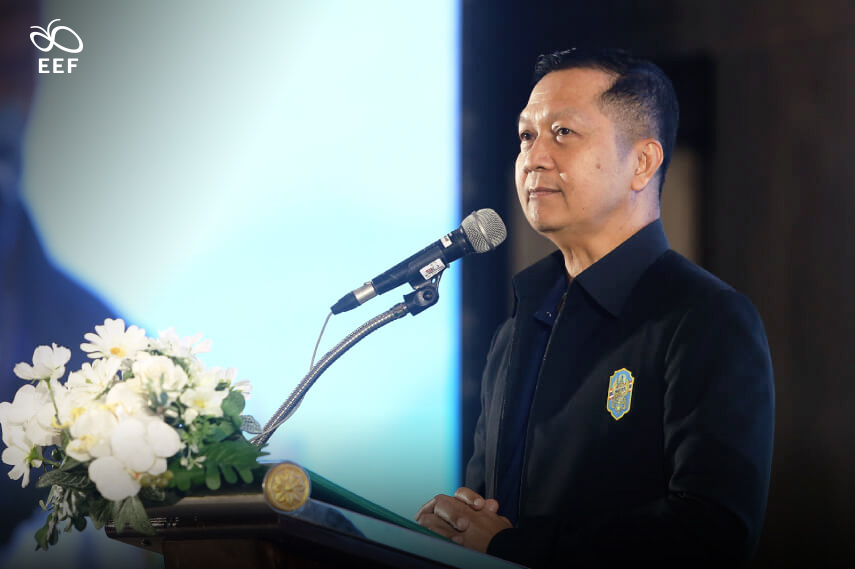
The full allocation of all 295 assistant teacher positions under the Homegrown Teacher Cohort 2 was announced by Dr. Pattana Pattanataweedol, Deputy Secretary-General of the OBEC. Their assignments span challenging terrains: mountaintops, islands, border zones, disaster-prone districts, ethnically diverse communities, and schools plagued by high teacher turnover. This distribution underscores the OBEC’s strong commitment to educational equity, targeting candidates eager to return and serve their hometowns. With intimate knowledge of local realities, these educators are uniquely positioned to deliver long-term, high-quality teaching where it matters most.
Often, newly appointed teachers request transfers from remote schools—a persistent complaint to the MOE. Yet, the Homegrown Teacher initiative flips this challenge into opportunity, by recruiting those genuinely committed to underserved hometown schools. Despite infrastructure limitations and chronic resource shortages, these 295 graduates from Cohort 2 have been rigorously prepared to serve with skill and dedication. “Not merely filling gaps, these teachers are anchors of change,” the Deputy Secretary-General remarked. Ongoing mentorship and support will remain in place, ensuring each teacher fulfills the minimum six-year commitment—a critical step in stemming turnover and strengthening rural education from within.
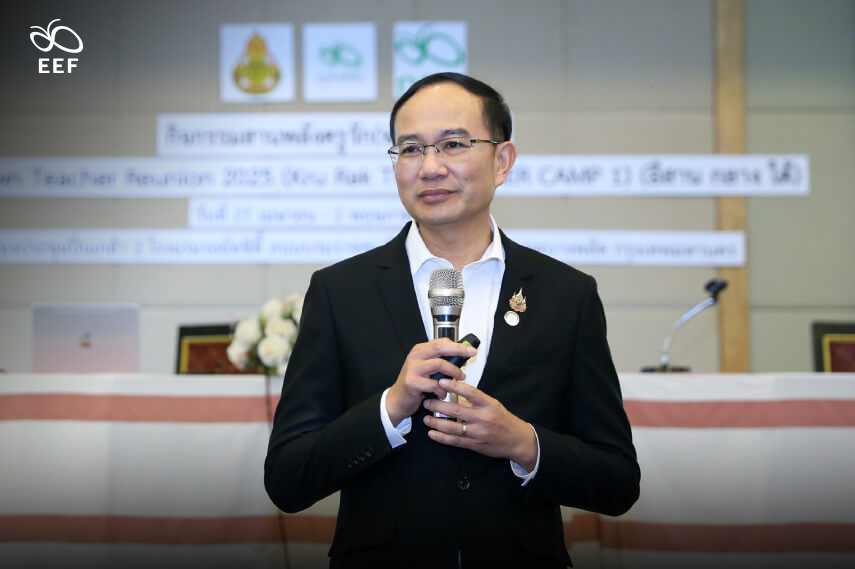
International recognition has been bestowed upon the Homegrown Teacher initiative, according to Associate Professor Dr. Prawit Erawan, Secretary-General of the Office of the Education Council and member of the EEF’s Subcommittee on Teacher Production and School Quality Development for Remote Schools. Pioneering sustainable education, the initiative aligns with the guiding principles of the Organization for Economic Co-operation and Development (OECD) by cultivating high-quality educators as agents of long-term equity, especially in underserved areas. Embedding teacher development within systemic school improvement, it bridges global policy with local action.
At the initiative’s core lies a shared aspiration among six partners: each recruit to become a catalyst of progress within their community. These educators are not only teachers but changemakers, beacons of opportunity igniting transformation in remote areas. “We are not just producing teachers; we are shaping beacons of change rooted in their own soil,” shared the Secretary-General.
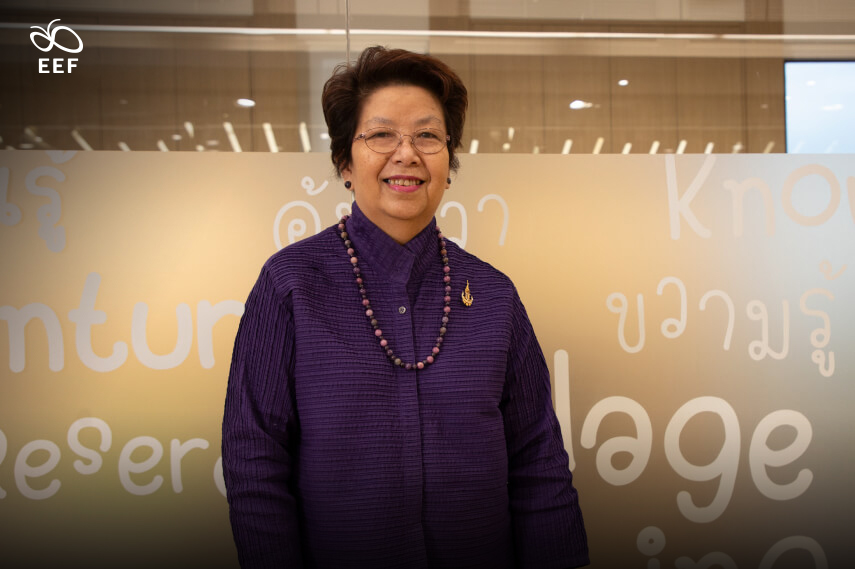
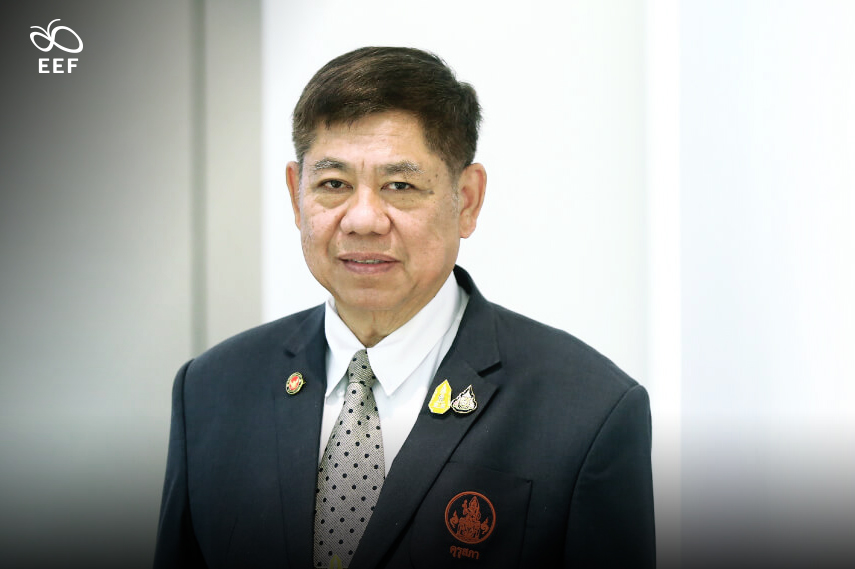
The meeting closed with calls from Dr. Benjalak Namfa, Member of the EEF’s Subcommittee on Teacher Production and School Quality Development for Remote Schools, urging school leaders and educational service area directors to nurture new teachers by encouraging innovative, community-tailored pedagogy. “Supporting fresh pedagogical creativity within the context of local communities is essential to transforming education in remote schools,” she emphasized. Building on this, Associate Professor Dr. Montri Yaemkasikorn, Professional Development Advisor to the Teachers’ Council of Thailand, reaffirmed the commitment to instill both professional skills and ethical integrity through ongoing Professional Learning Communities (PLC). “Instilling moral virtues alongside professional skills ensures rural teachers become inspiring role models both inside schools and throughout society,” he declared. Together, their perspectives reinforce a holistic approach that empowers educators as community-rooted agents of meaningful progress.
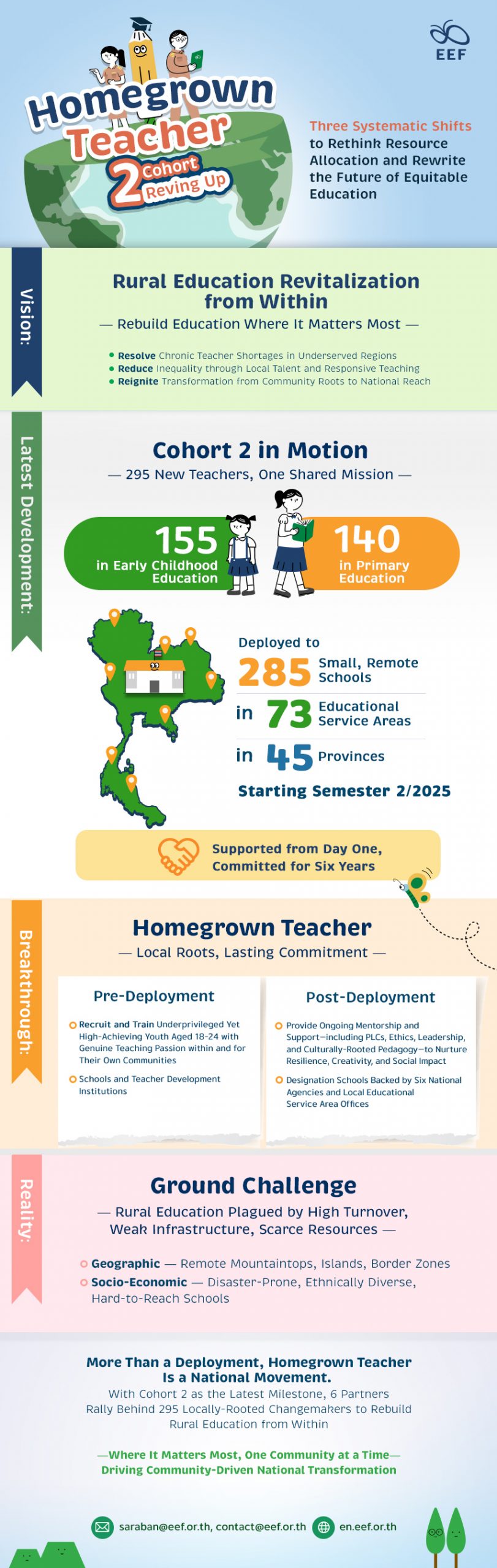
The Homegrown Teacher initiative serves as a lifeline for underprivileged yet high-achieving youth aged 18 to 24 who have completed upper secondary education and demonstrate genuine teaching passion. Carefully nurtured, these candidates pursue degrees in teacher-shortage fields aligned with urgent local demands. Upon graduation, they are appointed as civil servant teachers in remote schools within their own communities, tackling chronic shortages, incomplete grade coverage, and frequent relocations. Simultaneously, the initiative pioneers context-specific teacher training in higher education institutions, producing educators who not only teach, but also lead community development, while fostering prototype institutions for ongoing teacher development and research to enhance teaching quality and reduce educational inequality.
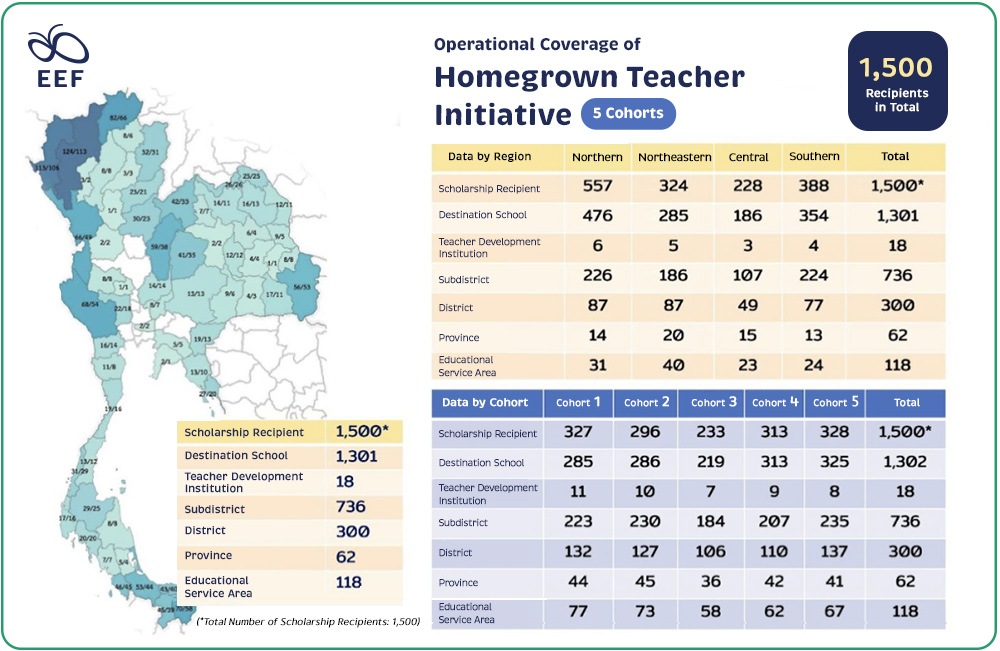

Momentum builds with the recent announcement of Homegrown Teacher Cohort 2’s deployment of 295 assistant teachers across 45 provinces. This milestone reflects a robust coalition of six key partners working in unison to resolve teacher shortages in marginalized areas by placing teachers deeply connected to their hometowns and bound by a six-year commitment. Transforming retention challenges into opportunities, these teachers anchor sustainable progress. Supported by continuous mentorship and professional development, the initiative reaffirms its role not just in filling vacancies but in revitalizing rural education and igniting community-driven transformation nationwide. Spanning five cohorts, the Homegrown Teacher initiative will ultimately deploy a total of 1,500 scholarship recipients across all regions of the country, embedding long-term change at the heart of local communities.
All For Education is all about people; only when all is in for education is Education For All. Join the movement to reduce educational inequality. Support the EEF by donating to fund research, partnerships, and assistance for children, youth, and adults in need of educational support. Click the link to contribute today and help create a society where education is open and equal for all. Together, we can make a lasting impact.


