
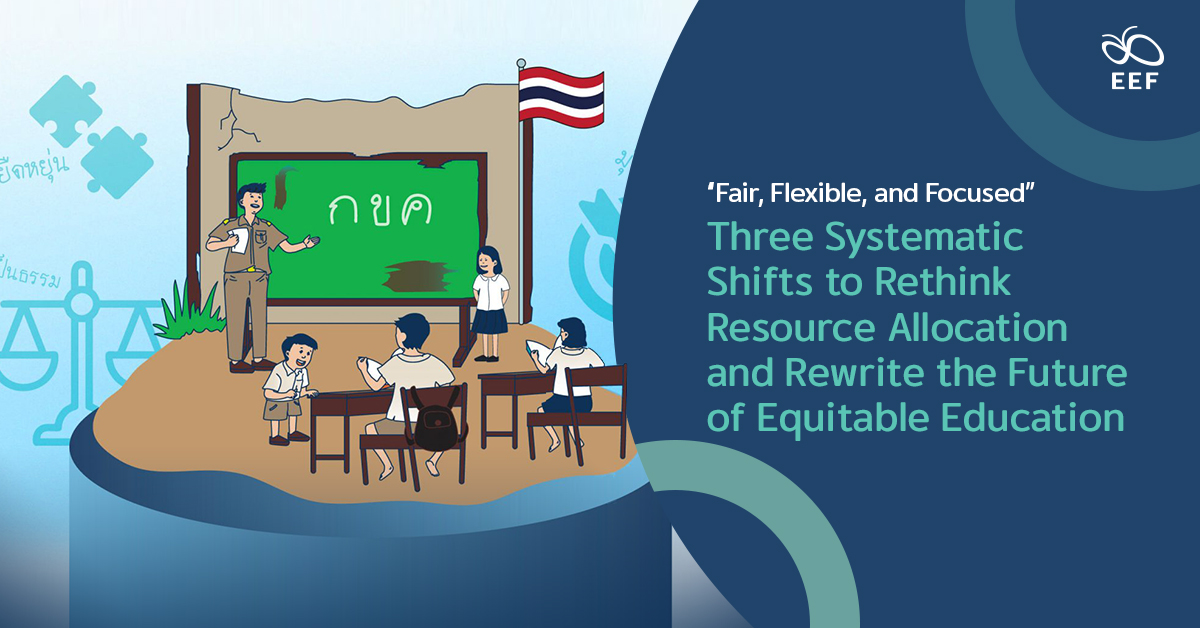
As Thailand’s education confronts the twin pressures of fast-evolving global dynamics and deeply entrenched structural inequalities, a bold policy vision has taken shape. Spearheaded by the Equitable Education Fund (EEF) Thailand, this vision reimagines how the country allocates educational resources. At its core are three guiding principles: fair, flexible, and focused. Unveiled at a high-level forum titled “Resource Support for Enhancing Educational Quality” convened by the Office of the Education Council, the strategy aims to reset the national conversation. The forum brought together key stakeholders for honest dialogue and idea exchange. Insights from this platform will shape a more adaptive and equitable system, one fit for the shifting demands of Thailand’s social, economic, and technological future.
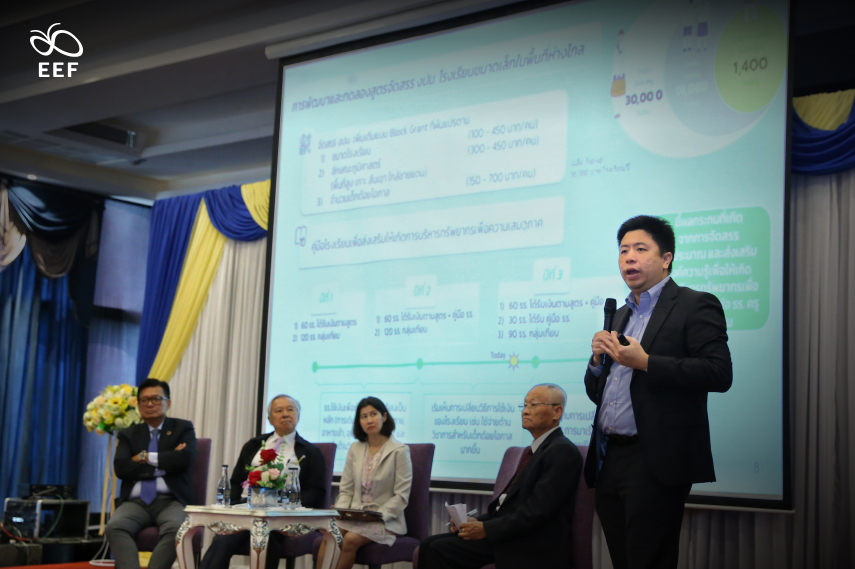
Guiding key stakeholders through the three pillars was Dr. Kraiyos Patrawart, Managing Director of the EEF, who laid out the vision with clarity and urgency, highlighting the need for systemic transformation grounded in equity and impact. The first pillar: fairness is not equal resources across the board. True fairness must reach into the roots of inequality. Per-head funding—long the default—assumes students begin from equal starting lines, but they do not. Children born into disadvantage face steeper climbs and greater barriers; they need more—more teachers, more time, more tools—to access the same quality of learning. Data from the Organization of Economic Cooperation and Development’s (OECD) PISA assessments makes this clear: students in fully staffed, well-equipped schools outperform their peers in reading, math, and science.
Yet, Thailand’s current funding model treats all schools alike. “You cannot fund a school of 3,000 students the same way you fund one with only 50,” the Managing Director stated. In economic terms, large schools, particularly those with more than 500 students, begin to generate “surplus”—per-head funding beyond the 500th student—that accumulates into administrative and infrastructural advantages. Small schools, in contrast, are caught in “deficit:” understaffed, under-resourced, and under strain, an environment that hinders learning rather than enables it.
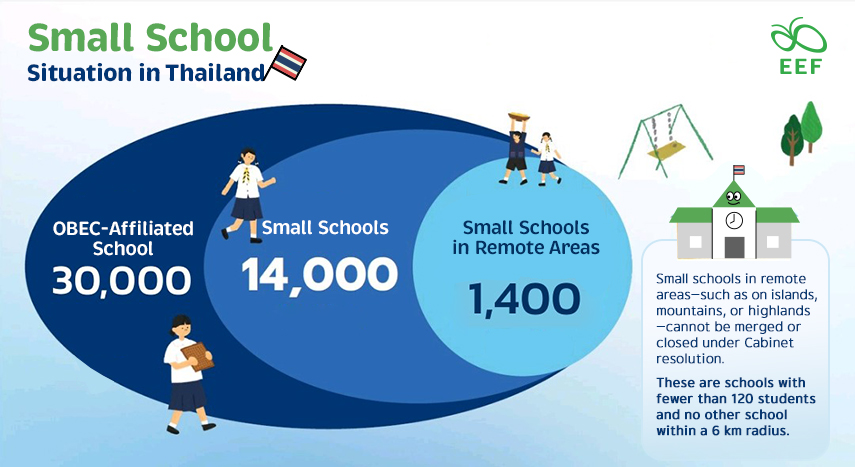
To close this structural gap, Thailand must reconfigure—not increase—its educational budget: redirect oversupply to where it is most needed. “We do not need more money,” Dr. Kraiyos Patrawart said, “we just need to move the variables to the other side of the equation.” And the need is vast: of the 30,000 public schools under the Office of Basic Education Commission (OBEC), nearly half—over 14,000—are considered “small,” with fewer than 120 students. Among these, 1,400 are isolated “standalone”—irreplaceable and unmergeable, as they are the only educational access points in their communities. But they are fragile: nearly 100% face staffing gaps—20% lack principals, 15% of teachers lack modern training—forcing 73% to handle non-teaching duties. Adding to this, 75% lack essential equipment, and 20% of students face nutrition or transport challenges that impede learning.
In response, a new block grant model has been introduced. It delivers targeted lump-sum support based on school size, location, and student vulnerability—flexibly deployed by the schools themselves. “Only 10% of Thailand’s 500-billion-Thai-Baht educational budget reaches the poor,” the Managing Director noted, “But if we invest equitably now, we reduce reactive responses later, grow the tax base gradually, and ultimately make truly universal 15-year free education possible—not just in name, but in practice, through strong state support sustained by a broader, better-balanced base.”

Flexibility—the second pillar—is not just allocating resources freely. The country’s working-age population, according to the World Bank, lag behind international standards in reading, digital, and socio-emotional skills. Meanwhile, nearly one million children and youth remain outside the educational system, and among Thailand’s poorest 165,000 young people living below the poverty line, only about 13% (22,000) make it to university, with the odds dropping sharply for those whose parents have only completed primary school. Wealthier families offer their children access, and with it, opportunity. The task now is to ensure a continuous pathway, not for some, but for all. Education must become a true engine of social mobility. The system must bend before learners break. Rigid models—where students must fit the mold—no longer serve a diverse country. “Flexible education means recognizing that not all learners are bound for university,” Dr. Kraiyos Patrawart explained. “It means recognizing individual potential, wherever it lies.”
To support this shift, new models are emerging, most notably the EEF’s “Mobile School,” “1-School-3-Models,” and “Hybrid Learning,” which offer multiple entry points. Formal schooling, workplace training, and community-based education now intersect. At the center of this is the “Credit Bank,” currently in development. It allows learners to collect and transfer credits from any form of learning—formal or informal, in any setting, at any time. “Education must evolve from a rigid mold into a flexible vehicle,” the Managing Director urged. “Only then can each child chart a course toward their fullest self—no one forgotten, no future forsaken—as inequality recedes, one child at a time, and every learner is empowered to pursue purpose, possibility, and productive paths, just as promised in the Thailand Zero Dropout vision.”
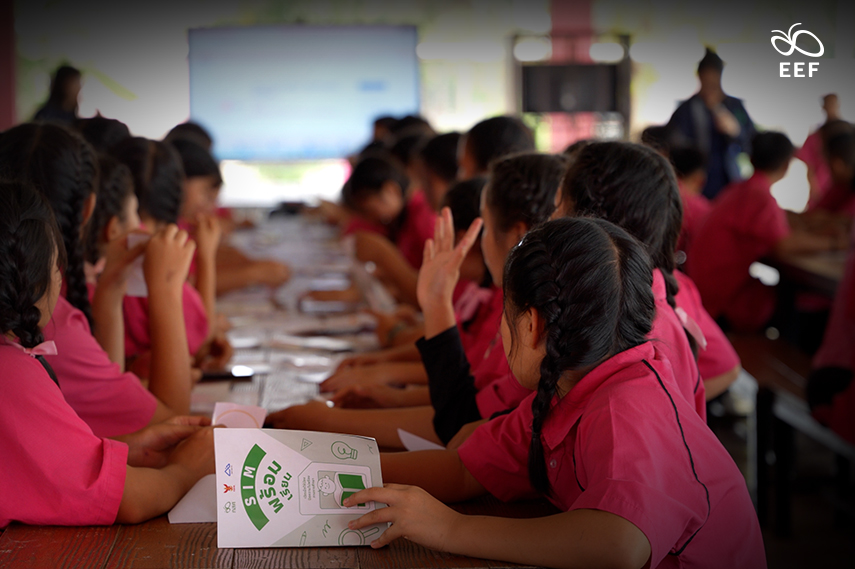
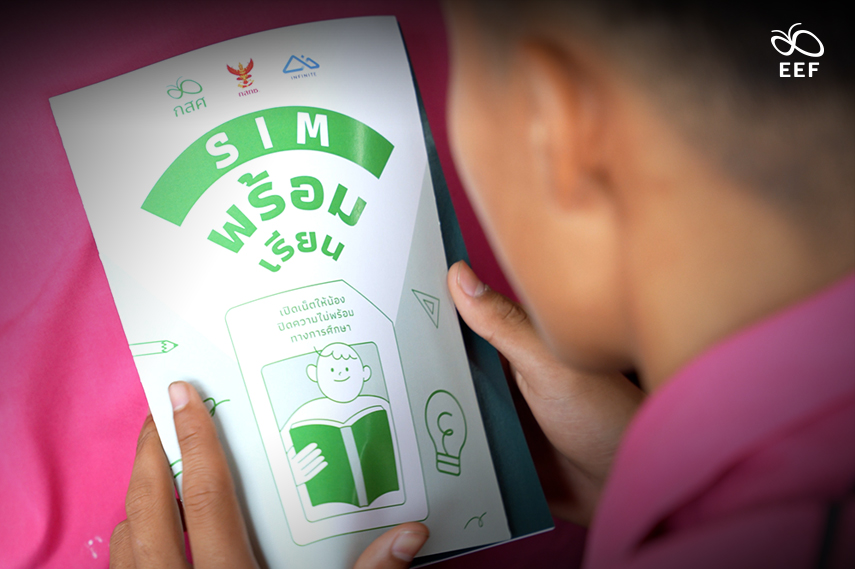
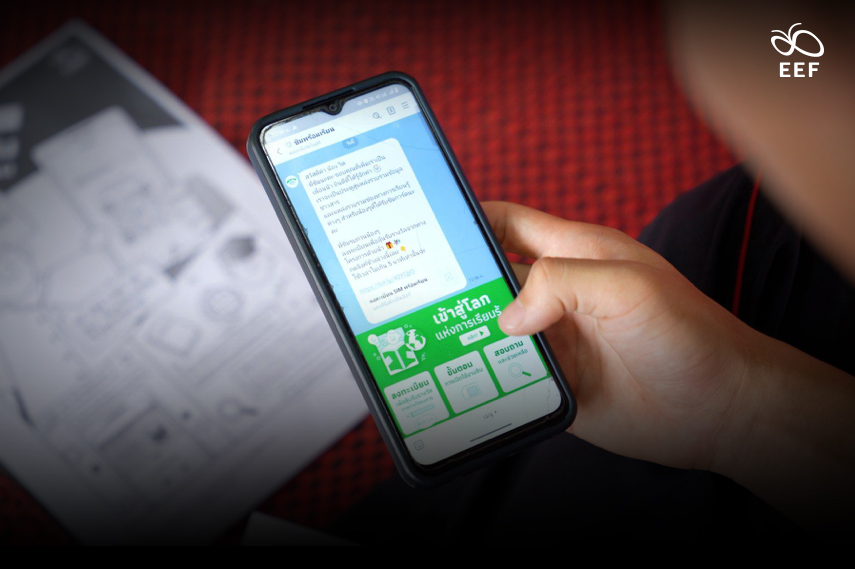
Finally, focus is not just targeting performance metrics. Educational spending must move beyond activity for activity’s sake; it must generate real impact—not just numbers, but lives changed. Each Thai Baht spent must act as a catalyst—not just maintaining systems, but multiplying opportunity. Here, private partnerships are vital. Education Investment Partners—businesses, philanthropists, and civil society—can extend the reach of government funds. But clarity is key. “If Thailand is to make its annual 500-billion-Thai-Baht educational budget truly transformative,” Dr. Kraiyos Patrawart asked, “we must start with this question: what will the spending actually achieve?”
Without that answer, no real trust can form; only with it, do possibilities grow. Every educational investment is outcome-oriented, and those outcomes must be built to last. Independent evaluation will be critical. Only transparent, credible assessments can ensure the public and private sectors work in alignment. And with confidence, scale follows; co-investment becomes strategic. Social returns matter, too—reducing inequality, lifting up the marginalized, changing lives. These are outcomes investors will support if the roadmap is clear: whom the investment serves, how it works, and what it changes. “If this model succeeds,” the Managing Director concluded, “the potential is enormous. Thailand’s educational system could plan on a grander scale, pursue longer-lasting goals, and pivot more proficiently to change—pooling resources beyond annual allocations, propelled by private partners’ global reach and a common cause.”

In charting a path forward for Thailand’s educational system, the EEF’s vision for “fair, flexible, and focused” resource allocation represents not just a policy adjustment, but a fundamental recalibration of the system itself. The strategy confronts longstanding imbalances head-on: moving funding toward schools and students with the greatest need, embracing alternative models that accommodate diverse learning journeys, and anchoring every Thai Baht of expenditure to outcomes that truly matter. These three pillars—fairness that targets inequality at its roots, flexibility that adapts to real-world learners, and focus that emphasizes impact over inertia—form the backbone of a new national approach. Together, they reshape the educational landscape from one-size-fits-all to one that sees each learner, supports each path, and serves the future with intent.
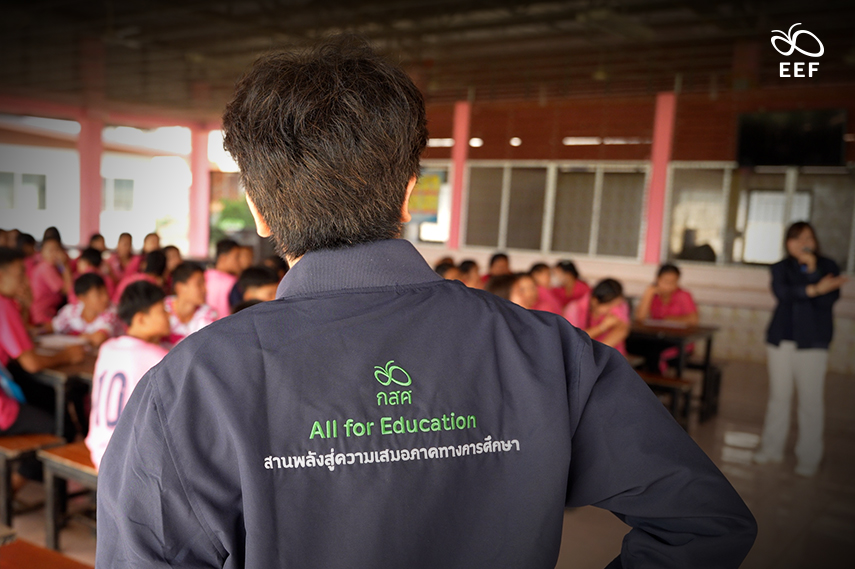
By rethinking how resources are distributed, Thailand is poised to rewrite not just the rules of educational finance, but the futures of millions of its children. “Fair, Flexible, and Focused” is more than a framework; it is a call to action, a collective reimagining of what education can and should achieve. It redefines success not by test scores alone, but by opportunity created and inequality undone. And it signals a system ready to move with the world, not lag behind it, where policy meets purpose, where funding fuels futures, and where every learner, no matter their background, is given the chance to rise.
All For Education is all about people; only when all is in for education is Education For All. Join the movement to reduce educational inequality. Support the EEF by donating to fund research, partnerships, and assistance for children, youth, and adults in need of educational support. Click the link to contribute today and help create a society where education is open and equal for all. Together, we can make a lasting impact.


